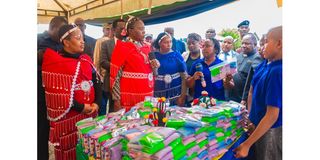
Arusha. The Minister for Community Development, Gender, Women and Special Groups, Dr Dorothy Gwajima, has sounded a warning against what she described as “digital parenting”, cautioning that leaving children to be raised by smartphones and social media is accelerating moral decline and fuelling violence within communities.
Speaking on 11 February 2026 during a visit to a child and youth development centre in Monduli District, Dr Gwajima underscored the irreplaceable role of parents in shaping the character and future of their children.
The centre is supported by churches in partnership with Compassion International Tanzania and focuses on strengthening the wellbeing of children, young people and families.
Dr Gwajima said parenting cannot be outsourced to digital devices or external institutions.
“I urge parents not to allow phones, social media or peers to raise their children. A parent is the first and most important guardian,” she said.
“Know where your child goes, who their friends are, and the challenges they face at home, at school and even in places of worship.”
She said weakened family structures and limited parental supervision have contributed to rising cases of violence against children, teenage pregnancies, child marriage, drug abuse and the erosion of moral values.
"A child who receives love, guidance and emotional protection at home will not seek validation in unsafe spaces,” she said, emphasising that strong family foundations are critical to building a safe and morally grounded society.
The minister called on parents to embrace positive parenting practices grounded in love, open communication and emotional support.
She said the responsibility of nurturing children must not be left solely to schools, religious leaders or the Government.
Her visit formed part of activities ahead of the International Day of Zero Tolerance for Female Genital Mutilation (FGM), observed annually on 12 February.
The day seeks to raise awareness about the health, psychological and social consequences of FGM and to reinforce national and community-level efforts to eliminate the practice.
Dr Gwajima reported that Tanzania has made measurable progress in reducing FGM prevalence, with national rates declining from 10 per cent to 8 per cent.
However, she acknowledged that several regions continue to record high prevalence, including Arusha and Manyara (43 percent), Mara (28 percent), Singida (20 percent), Tanga (19 percent), Dodoma (18 percent) and Iringa (12 percent).
“While national progress is commendable, we still have significant work to do in regions where prevalence remains high,” she said.
“Ending FGM requires collective action. The Government cannot succeed alone; we need the active involvement of religious and traditional leaders, parents, young people, civil society and communities at large.”
The theme for the 2026 commemoration is “Our Voice; End FGM.”
Dr Gwajima also commended Compassion International Tanzania for its collaboration under the “Child is Upbringing” campaign, which promotes positive parenting as a strategy to strengthen families and protect children.
Welcoming the minister, Compassion International Tanzania’s Programme Director, Merry Kasanga, said eliminating FGM demands respectful and inclusive community engagement approaches that build shared understanding.
She said that through partnerships with churches across multiple regions, the organisation has been providing education to parents, children and traditional leaders on the harmful effects of FGM — efforts that have contributed to a decline in cases and improved protection for girls.
“Despite progress, the challenge persists and requires sustained cooperation between the Government and stakeholders to eradicate it entirely,” she said.
Beyond the fight against FGM, she added, the country faces a broader challenge of inadequate parenting, which often underlies cases of violence against children.
She said Compassion International Tanzania currently operates in 22 regions across mainland Tanzania, covering more than 90 local government authorities in partnership with 590 child and youth development centres.
“The programme directly benefits more than 120,000 children and young people, equipping families with skills for nurturing care, effective communication and emotional protection.”