Creative sector urged to formalise decent work standards

What you need to know:

  • Officials from the National Arts Council (Basata) and the Trade Union Congress of Tanzania (TUCTA) emphasised the need for stronger legal frameworks, improved income systems and greater unionisation to safeguard artists’ rights and ensure the sector’s growth delivers real economic benefits.

Morogoro. Stakeholders have called for the formalisation of employment systems in Tanzania’s arts and creative industry, warning that without decent work standards the sector’s rapid growth may fail to improve the livelihoods of artists.

The call was made during a three-day dissemination workshop on findings of a study on promoting decent work in Tanzania’s culture and creative economy. The workshop was organised by the International Labour Organization (ILO) with support from Norway.

According to the study findings presented at the forum, although the culture and creative sector is making an increasing contribution to the national economy and youth employment, the growth has not been matched by adequate social protection, formal contracts or safe working conditions for many practitioners.

Speaking to journalists, the Executive Director of SEDEVA, Mr Izack Abeneko, said while the sector has become a major source of income and employment particularly for young people most artists continue to operate informally.

“Working conditions for many artists remain informal and unpredictable. An artist may secure a job today but has no certainty about the next opportunity. The government needs to establish systems that will ensure existing laws are effectively implemented and benefit all stakeholders in the arts sector,” he said.

He cautioned that without robust mechanisms to safeguard artists’ rights and formalise their activities, the sector’s growth would remain superficial, failing to strengthen individual incomes and, ultimately, the national economy.

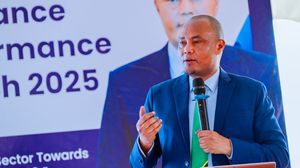
On his part, the Acting Director of Research and Marketing at the National Arts Council (Basata), Mr Mrisho Mrisho, said the workshop identified three priority areas: decent work in the arts sector, legal and policy frameworks, and artists’ income.

“We must examine how to formalise our sector in these three areas so that artists can operate within recognised and protected systems,” he said.

He added that beyond registration with Basata, artists need to be recognised within broader employment and social protection systems as legitimate workers.

Meanwhile, the Director of Occupational Health and Safety at the Trade Union Congress of Tanzania (TUCTA), Dr Kassim Kapalata, emphasised the importance of artists joining trade unions to safeguard their interests.

“Artists should organise themselves under trade union federations to gain legal recognition. Collective organisation will strengthen the protection of their rights and make it easier to achieve decent work standards in the arts sector,” he said.

Stakeholders urged the government and relevant institutions to utilise the study’s findings to develop strategies that will formalise the culture and creative economy, ensuring that its growth translates into tangible benefits for artists and the country at large.