Dar es Salaam. The era of Prof Ibrahim Lipumba at the opposition Civic United Front (CUF) has come to an end, following the Registrar of Political Parties’ (RPP) refusal to recognise his leadership.
On Saturday, February 14, 2026, the RPP annulled the general election that had confirmed Prof Lipumba and five other leaders more than a year after it took place.
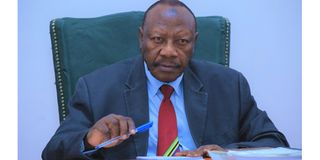
Those affected include Vice-Chairpersons Mbarouk Seif Salim (Zanzibar) and Othman Dunga (Mainland), Secretary-General Husna Mohamed Abdallah, and her deputies Magdalena Sakaya (Mainland) and Ali Juma Khamis (Zanzibar).
The election was invalidated because the chairman was announced despite failure to secure more than 50 percent of the votes cast by delegates, as required by CUF’s constitution.
The decision followed complaints lodged on December 19, 2024, by delegates alleging constitutional and procedural violations during the poll that elevated Prof Lipumba and his team.
Complainants included Maftaha Nachuma, Fatuma Athuman, Khamis Khamis Ameir, Ismail Issa Chitutuli, Zuwena Kitatichingi, Liwikula Omari Mohamed, Kassim Mossi Ameir, and Ruwaid Abdala Kassim.
The Registrar’s ruling ended Prof Lipumba’s long-standing influence over CUF, where he had served for nearly three decades.
Even after resigning in 2015, he returned in 2016, triggering an internal crisis.
That period saw a faction under the late former Secretary-General Seif Sharif Hamad break away to join ACT-Wazalendo, after the High Court recognised Prof Lipumba as CUF chair.
Election results
Following the RPP’s decision, an election was convened on Saturday, February 21, 2026, resulting in Mirambo Yusuf being voted the party’s new chairman, securing 257 votes from emergency congress members.
The election took place at Lekham Hall, Buguruni, Dar es Salaam. His closest rival, Mr Othman Omar Dunga, garnered 177 votes.
Mr Mirambo, who previously served as CUF chairman for Kigoma Urban District, becomes the party’s fourth national chairman, officially succeeding Prof Lipumba.
The third candidate, Nkunyunyika Siwale, received six votes, while another six ballots were declared invalid.
For Mainland Vice-Chairperson, Mr Miraji Mtibwiliko won 264 votes, defeating Mohammed Ngulangwa (88 votes) and Mussa Mbarouk (82).
For Zanzibar Vice-Chairperson, Haroub Mohamed Shamsi received 256 votes, defeating Mbarouk Seif Salim (171), while Ms Amina Rashid Salim withdrew before voting commenced.
CUF national council meeting
Elected chairman Mirambo Yusuf is set to preside over a crucial meeting of CUF’s National Council to approve the candidates proposed for executive positions, including the party’s secretary-general and deputies for Mainland Tanzania and Zanzibar.
During the Sunday, February 22, 2026, meeting, Mr Mirambo and his team will submit names of the proposed candidates to the National Council for discussion and assessment, ensuring they meet the party’s current needs, particularly amid leadership and financial challenges.
After approval, Mr Mirambo will formally announce the three executive leaders who, together, will form the party’s executive committee.
Subsequent internal meetings will determine other day-to-day appointments at CUF headquarters.
The Saturday’s session, held without the Registrar’s presence, raised questions about CUF’s future amid ongoing leadership disputes.
Members were initially inside the hall but were later escorted out while votes were being counted at party headquarters.
Some delegates described the moment as an opportunity to “reap the fruits” of years of service to the party, having endured marginalisation.
However, a faction believes the party risks its future if it continues to operate under a system perceived as influenced externally.
This debate was evident during campaigns for top positions, with some warning that adherence to old methods could leave the party worse off.
Despite this, the new chairman pledged during his campaign and address to unify CUF, working with all members regardless of prior disagreements.
Divisions within CUF
CUF remains divided into two main factions, a situation intensified after the RPP’s annulment of the election that reinstated Prof Lipumba and his colleagues.
One faction, led by Prof Lipumba, plans to challenge the Registrar’s decision in court, arguing it was issued without giving them a chance to be heard.
Some members of this faction still participated in the emergency election but did not succeed.
The other faction accepted the Registrar’s ruling, participating in the emergency election to fill the top leadership positions, reasoning that leaving the party without leadership could be disastrous.
The responsibility now rests with Mr Mirambo, CUF’s fourth chairman since its founding in 1992, to unite the party and establish a coherent leadership.
How he handles executive appointments will indicate whether CUF can move past Prof Lipumba’s era and consolidate its structure.
While he will face resistance from supporters of the previous leadership, the party hopes to capitalise on the new era after years of challenges under Prof Lipumba.
Implementing the RPP’s directives
CUF began executing the RPP’s directives by convening the National Council on Friday, February 20, 2026, at party headquarters in Dar es Salaam.
Neither Prof Lipumba nor his close associates attended the meeting, which approved the opening of nomination forms for the top three leadership posts.
Witnesses reported scuffles and shouting during the emergency session, which shortlisted candidates for a vote at the extraordinary general assembly the following day (Saturday, February 21, 2026).
The election process on Saturday, February 21, 2026, involved 20 cadres contesting for various leadership positions.
Delegates, some wearing caps bearing the image of the late Seif Shariff Hamad, received the names of returning cadres.
Prof Lipumba did not participate or submit forms, signalling the start of his retirement from CUF leadership.
The council approved three candidates for the chairperson post: Othman Omar Dunga, Mirambo Camil Yusuf, and Nkunyunyika Siwale.
For Mainland Vice-Chairperson, the approved candidates were Mussa Mbarouk, Mohammed Ngulangwa, and Miraji Mtibwiliko; for Zanzibar, Haroub Mohamed Shamsi, Mbarouk Seif Salim, and Amina Rashid Salim.
These names emerged after screening the 20 candidates and were submitted to the extraordinary emergency general assembly at Lekham Hall, where delegates elected the new leadership.
“We have completed the screening and approved three names for each position. One winner will be selected for each post,” said meeting chairman, Mr Haroub.
Delegates speak out
General assembly delegate Mohamed Said described the process as marking the end of Prof Lipumba’s tenure.
“He will no longer be a leader; he will become an ordinary member and retired leader. He will continue to be respected for his contributions,” he said, adding that CUF remains the second party to receive permanent registration in 1992.
Former MP, Mr Haroub Mohamed Shamsi said the election signalled a new chapter.
“Our constitution is clear; he (Prof Lipumba) remains an ordinary member. We will continue to consult him for advice. He had intended to retire and let young blood take over, but was persuaded by close associates to contest in 2024,” he said.
Asked whether the party could remain strong, Mr Shamsi said leadership resilience depends on member collaboration.
“I believe the party will perform well, although we face challenges such as economic issues and lack of unity. Success depends on the cooperation of our members,” added Mr Shamsi.
Register to begin your journey to our premium contentSubscribe for full access to premium content