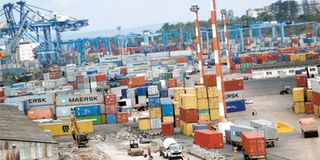
Dar es Salaam. The Tanzania Customs Agents Association (Tacas) has welcomed the government’s decision to reduce the Port Infrastructure Development (PID) levy from nine per cent to 4.5 per cent, while urging faster implementation of ongoing port expansion projects to match rising cargo volumes and regional trade demands.
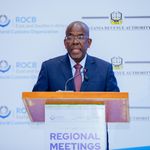
Speaking in Dar es Salaam on Monday, May 25, 2026, Tacas President Ephrahim Mwankysya said the reduction offers relief to traders and clearing agents, but stressed that infrastructure development must now keep pace with growing demand at Tanzania’s key ports.
“We are satisfied with the reduction of the PID levy to 4.5 per cent because it provides some relief to traders and clearing agents,” he said.
“However, we expect the implementation of infrastructure projects to move at a faster pace so that the ports of Dar es Salaam and Tanga can efficiently handle the growing volume of cargo and support regional trade.”
Earlier this month, the Tanzania Ports Authority (TPA) reduced the levy following concerns from traders and logistics stakeholders over rising import costs, even as it continues implementing its Sh16.1 trillion port expansion programme.
Mr Mwankysya said cargo volumes through Tanzania’s ports have increased significantly over the past two years, placing pressure on existing facilities and highlighting the need for modernised logistics systems.
“The growth in trade requires strategic investment in infrastructure capable of handling increasing cargo volumes and larger vessels,” he said.
The TPA’s expansion programme includes construction of cargo and oil berths at Tanga Port, development of the Bagamoyo deep-sea port, and expansion of additional berths at Dar es Salaam Port to accommodate larger ships and rising trade flows.
Plans also include a dedicated cargo road linking Dar es Salaam Port with Mlandizi and Chalinze to ease congestion in the city and improve transport efficiency to inland and regional markets.
Mr Mwankysya said these projects would improve cargo clearance efficiency, reduce delays and lower transport costs for businesses.
“Ports are central to economic growth. Once infrastructure improves, traders will benefit from faster cargo handling, reduced delays and better transport connectivity within the region,” he said.
He expressed optimism that the projects would be completed on schedule, saying improved infrastructure would strengthen Tanzania’s competitiveness in regional and international trade.
Transport Minister Makame Mbarawa earlier said improvements at the Port of Dar es Salaam had already boosted efficiency and increased cargo throughput.
He said cargo handled at the port rose from 16.27 million tonnes in 2020/21 to 27.76 million tonnes in 2024/25, representing a 70.62 per cent increase.
Monthly container handling capacity also increased from 61,000 twenty-foot equivalent units (TEUs) to 102,000 TEUs, while average waiting time for container ships at berth dropped from 10 days to three days.
Anchorage waiting time for conventional cargo vessels also fell from 46 days to seven days, reflecting improved operational efficiency.
The TPA plans to invest Sh16.1 trillion in port infrastructure upgrades across Dar es Salaam, Tanga, Mtwara and inland dry ports, with funding expected from both authority revenues and private sector participation under public-private partnership arrangements.
Register to begin your journey to our premium contentSubscribe for full access to premium content