Dar es Salaam. Members of Parliament have urged the government to establish a strong and independent Monitoring and Evaluation (M&E) framework, warning that weak oversight could undermine implementation of Tanzania’s Vision 2050 and long-term development plans.
The lawmakers were debating the proposed government plan and budget for the Long-Term Perspective Plan 2026/27–2050/51, the Fourth National Five-Year Development Plan 2026/27–2030/31 and the proposed National Development Plan for 2026/27, presented by the Minister of State in the President’s Office (Planning and Investment), Prof Kitila Mkumbo.
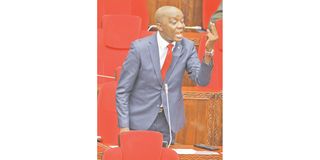
Contributing to the debate, Makete MP Mr Festo Sanga said the absence of a dedicated M&E unit had allowed stalled projects to persist while new ones continued to be launched, diluting development impact.
He called for a comprehensive assessment of both ongoing and completed projects, particularly in strategic sectors such as water and roads, many of which remain unfinished and offer limited benefits to citizens.
“The government should prioritise clearing stalled projects before committing resources to new ones,” Mr Sanga said, adding that an independent M&E body should be anchored in law to ensure accountability and effective use of public funds.
He stressed that the private sector would play a central role in implementing development projects, making it imperative for the government to strengthen revenue mobilisation. He called for greater reliance on the digital economy, robust and interoperable financial systems, and a shift away from cash-based revenue collection to enhance transparency and efficiency.
Ludewa MP Mr Joseph Kamonga echoed the call for independent oversight, proposing the establishment of a body to scrutinise self-financing projects, similar to the role played by the Controller and Auditor General (CAG).
He noted that while large sums of public money are invested in development projects, the absence of a clear M&E policy supported by legislation has weakened oversight and limited corrective action.
MPs also criticised the practice of government institutions largely evaluating their own performance, arguing that this undermines objectivity.
In developed economies, they said, oversight is often handled by independent institutions or even dedicated ministries to avoid conflicts of interest.
“To obtain truly independent views, we must establish a body that will help assess government performance,” Mr Kamonga said. “This will help change mindsets and strengthen implementation of Vision 2050.”
Meanwhile, Geita MP Mr Joseph Msukuma underscored the need to align implementation with national priorities, particularly in empowering local contractors. He observed that despite repeated commitments to support domestic firms, major tenders continue to be awarded to foreign companies.
Mr Msukuma said delays in paying international contractors often attract interest penalties, while local firms struggle to recover outstanding dues.
“If we want to achieve the 2050 vision, we must allocate dedicated funds to support Tanzanian contractors, retain capital within the country and strengthen the local economy,” he said.
He also raised concerns about leadership in public institutions, calling for competitive recruitment of board chairpersons to inject fresh ideas into governance structures.
He proposed clear age criteria to promote fairness and encourage participation by energetic professionals with modern expertise.
Other MPs weighed in on a range of issues, including agriculture and the role of local government authorities in driving development without undue interference.
On agriculture, Buhigwe MP Prof Pius Yanda called for greater involvement of young people in the sector as a strategy to curb rural-to-urban migration.
He urged the government to set aside land banks specifically for youth, similar to arrangements currently offered to foreign investors.
Prof Yanda said such an initiative could be implemented at regional or district level to absorb the growing number of graduates entering the labour market each year, noting that agriculture remains a viable source of employment and economic growth if young people are given access to land and opportunities.