Dar es Salaam. East Africa urged to place agroecology at the centre of agricultural, climate and food security policies to increase crop yields, household incomes, strengthen resilience and better prepare communities for climate shock and future public health emergencies.
The reports, released under the Civil Society Partnership of the Global Agriculture and Food Security Programme (GAFSP), draw on evidence from two projects implemented in Tanzania and Burundi, conclude that agroecology offers a practical pathway for transforming food systems while reducing farmers’ dependence on costly synthetic inputs.
The Tanzania policy brief, Agroecology as a Pathway to Climate-Resilient and Inclusive Food Systems in East and Southern Africa, is based on findings from the Baridi Sokoni project implemented under the supervision of the African Development Bank.
Meanwhile, the Burundi brief, Agroecology: A Pathway to Food Security, Women Empowerment and Pandemic Preparedness, examines lessons from the PARE-COVID project implemented between 2023 and 2026 by the Confederation of Agricultural Producers’ Associations for Development (CAPAD), under the supervision of the International Fund for Agricultural Development (IFAD).
Although implemented in different countries, both initiatives argue that agroecology should be mainstreamed across East and Southern Africa as governments seek solutions to climate change, food insecurity and rising agricultural production costs.
The Tanzania report found that farmers adopting agroecological practices recorded horticultural yield increases of between 25 and 40 percent while improving resilience to drought and erratic rainfall through practices such as mulching, composting and diversified farming systems.
Spice farmers also increased selling prices from Sh13,000 to Sh20,000 per kilogramme through collective marketing while reducing production costs by using locally available organic inputs instead of expensive synthetic chemicals.
The Baridi Sokoni project, implemented in Morogoro, Njombe, Kilimanjaro and Zanzibar, targets 10,000 farmers, 65 percent of them women. The project increased potato yields from 8 to 10 tonnes per hectare to between 12 and 14 tonnes while strengthening women’s economic independence and participation in household decision-making.
“The evidence presented in this brief demonstrates the need to mainstream agroecology within Tanzania’s policy and investment frameworks,” the report states, noting that farmers achieved “double productivity gains” alongside improved women’s financial independence.
Agriculture employs more than 65 percent of Tanzania’s labour force and contributes about 27 percent of the country’s Gross Domestic Product. However, the report warns that climate change, declining soil fertility, rising production costs and dependence on rain-fed agriculture continue to threaten food security and rural livelihoods.
The Burundi study reached similar conclusions.
According to the report, agroecological farming significantly improved agricultural productivity while making rural communities more resilient to economic and health shocks.
“PARE-COVID demonstrated that agroecology can increase yields, eliminate synthetic inputs, improve soil health and strengthen household nutrition, validating resilient agri-food systems as a cost-effective form of preventive health security infrastructure,” the report states.
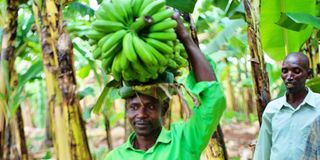
Banana yields increased from as few as five bunches per acre to about 20 bunches in some project areas, while bean production rose from around eight kilograms to 50 kilograms per half acre through agroecological farming practices.
Between April and July 2025, participating cooperatives produced 172 tonnes of bananas, with 57 tonnes processed into juice and wine through the SOCOPA processing factory in Ruyigi and another 69 tonnes marketed through farmer-controlled channels. More than 1,800 farmers also accessed loans worth 550 million Burundian francs, enabling them to store produce and sell when market prices improved.
“These productivity improvements directly translated into household food security resilience: farmers reported moving from one or two meals per day to three meals per day, enabling children’s school attendance and reducing healthcare expenditures,” the report says.
According to the Burundi study, CAPAD’s success was driven by composting, agroforestry, intercropping, organic fertilisers and farmer-to-farmer learning, which reduced reliance on chemical inputs while restoring soil fertility.
The report adds that integrating food security and health security into national development planning has become increasingly important.
“The evidence from Burundi 2020 to 2026 demonstrates that integrating health security and food security is not merely desirable, it is essential,” it states.
The Tanzania policy brief recommends integrating agroecology into the Tanzania Agriculture Master Plan 2050, allocating dedicated funding for implementation of the National Ecological Organic Agriculture Strategy (NEOAS), strengthening extension services and positioning agroecology within Tanzania’s Nationally Determined Contributions (NDC 3.0) to unlock climate finance.
Similarly, the Burundi report calls on East African governments to dedicate at least five percent of agricultural budgets to nutrition-sensitive agriculture and agroecology, strengthen coordination between agriculture, health and environmental sectors, and create favourable policy environments for farmer cooperatives.
It also urges the East African Community to integrate the food-health nexus into regional agricultural investment plans and strengthen cross-border collaboration on food systems and health security.
Both reports further call on development partners to increase direct support for farmer-led organisations and expand investment in agroecological programmes as part of climate adaptation and resilient food systems.