Ebola deaths reach 200 in DRC as cases rise in Uganda

Dar es Salaam. At least 200 people have died, and more than 850 suspected cases have been recorded in an Ebola outbreak in the Democratic Republic of Congo (DRC), raising concern across the region as neighbouring countries intensify surveillance.

Uganda, which earlier confirmed a single Ebola death, has now recorded five cases despite strengthening screening measures at border points and airports to prevent further spread of the virus.

The World Health Organization (WHO) has warned that the outbreak may be expanding more rapidly than initially assessed, increasing the risk of cross-border transmission in East Africa.

In response, Ugandan health authorities have stepped up monitoring at entry points along the border with the DRC, where health workers are carrying out temperature checks and public awareness campaigns on Ebola symptoms and prevention.

The measures come against the backdrop of Uganda’s repeated exposure to Ebola outbreaks, a severe viral disease spread through direct contact with the bodily fluids of infected individuals.

As East African nations remain on high alert, international humanitarian agencies have warned that the outbreak is placing a significant strain on health systems and emergency response operations in affected areas.

Médecins Sans Frontières (MSF) programme manager Kate White said there were growing concerns about the ability to deliver medical supplies and deploy specialised teams to outbreak zones in the DRC.

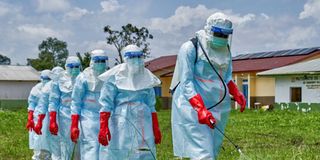
Ms White, who travelled from Manchester Airport in the United Kingdom as part of international response efforts, said demand for protective gear and medical resources far exceeds available supplies.

“We need to ensure that all health workers have adequate protective equipment because the situation on the ground is extremely dangerous,” she said.

Her comments follow the deaths of three Red Cross workers earlier this month who contracted Ebola while handling bodies in affected areas.

Experts say one of the major challenges is the absence of a fully approved vaccine for the current strain, although experimental vaccines are being tested and deployed in limited contexts. No definitive cure for the disease currently exists.

Ms White said the world continues to face recurring Ebola outbreaks despite years of experience, yet gaps remain in protective equipment, rapid diagnostic tools and treatment capacity, particularly in insecure regions.

She also noted that logistical challenges, including transport disruptions and restricted air routes, are slowing the delivery of critical supplies.

“The scale of supplies required is enormous at this stage. We need far greater capacity to move equipment and medical personnel quickly,” she said.

In some affected regions, treatment centres are receiving large numbers of patients while struggling to quickly determine whether symptoms are caused by Ebola or other diseases such as malaria, which present similar early signs.

Ms White said improved diagnostic capacity is essential to ensure that patients who test negative can be safely discharged and reunited with their families without delay.

Health experts say Ebola is a rare but severe disease caused by a virus transmitted from animals to humans, with an incubation period of between two and 21 days.

Early symptoms include fever, headache, and weakness, followed by vomiting and diarrhoea.

In severe cases, the disease can lead to organ failure and internal or external bleeding.

Experts warn that increasing urbanisation and human encroachment into wildlife habitats are heightening the risk of faster transmission compared with previous outbreaks.

Countries in the region, including Uganda, Rwanda, Tanzania, and Kenya, are closely monitoring the situation while strengthening border screening, surveillance, and public awareness campaigns to prevent further spread of the disease.