Experts urge spending curbs as CCM pushes fuel subsidy

CCM’s Ideology, Publicity and Training Secretary, Mr Kenani Kihongosi, speaks to journalists in Dodoma on April 7, 2026. PHOTO | COURTESY

By Katare Mbashiru

Dodoma. The government faces mounting pressure to shield the economy from the effects of rising global fuel prices, with economic analysts urging strict spending restraint while the ruling party (CCM) pushes for the introduction of a targeted fuel subsidy to cushion citizens.

As Parliament resumes in Dodoma to debate the Prime Minister’s budget estimates for the 2026/27 financial year, policymakers are weighing a mix of fiscal discipline and consumer relief measures amid sharp increases in pump prices driven by geopolitical tensions in the Middle East.

Petrol is now retailing at Sh3,820 per litre, up sharply from Sh2,864 in March. Diesel has risen to Sh3,806 from Sh2,858, while kerosene costs Sh3,684, up from Sh2,932.

The increases follow the February 28, 2026, US-Israel invasion of Iran and escalating tensions around the Strait of Hormuz, developments that have disrupted global oil supply chains and heightened uncertainty in energy markets worldwide.

Analysts are warning that without swift fiscal discipline, the price shock could cascade through the economy, driving up the cost of transport, food and essential services.

They argue that prudent spending decisions will be critical to safeguarding macroeconomic stability.

Speaking to journalists in Dodoma yesterday, CCM’s Ideology, Publicity and Training Secretary, Kenani Kihongosi, said the party was closely monitoring global developments affecting fuel supply and prices.

“We are committed to ensuring that fuel remains available at all times, and that immediate steps are taken to keep pump prices within a reasonable range,” he said.

Mr Kihongosi proposed the establishment of a special fuel subsidy fund, similar to the mechanism introduced in 2022 during the Russia-Ukraine war, when the government allocated more than Sh100 billion to stabilise prices amid global market disruptions.

He said reviving such a fund would help ease current pressures and provide relief to consumers.

While the subsidy proposal has gained attention, economists caution that subsidies alone cannot provide a lasting solution.

They emphasise the need for disciplined management of public finances and prioritisation of essential expenditure.

Dr Nasibu Mramba of the College of Business Education said strict expenditure control across government institutions was necessary to maintain fiscal balance during the current period of uncertainty.

“Public funds should be directed to essential services, and projects that can be postponed should be delayed until global conditions improve,” he said.

Tanzania continues to implement major infrastructure projects, including the Standard Gauge Railway (SGR), road expansion initiatives and preparations for co-hosting the 2027 Africa Cup of Nations.

While these projects are considered vital for long-term development, analysts say they are placing short-term pressure on public finances at a time of heightened external risks.

Experts also suggest reducing spending on non-essential activities, including large national celebrations such as Union Day, May Day and Independence commemorations, to free resources for priority sectors.

Dr Benedict Mwakabungu echoed calls to scale down recurrent expenditure, including limiting the purchase of high-cost government vehicles.

He also urged investment in alternative energy sources to reduce dependence on imported petroleum products.

“Due to escalating geopolitical tensions, it is time to reduce dependence on fuel and invest in alternative energy sources such as gas,” he said.

Tanzania possesses substantial natural gas reserves, yet adoption of compressed natural gas (CNG) vehicles remains limited.

Dar es Salaam currently has 11 CNG refilling stations, but conversion rates remain low, largely due to the high upfront cost of converting vehicles from petrol or diesel systems.

Despite the challenges, analysts note that CNG remains cheaper than conventional fuels.

One kilogramme of CNG can power a vehicle for roughly 13 to 18 kilometres at a cost of about Sh1,548, compared with 10 to 15 kilometres per litre of petrol at current market rates.

Legal and international affairs expert Dr Lutengano Mwinuka said improving operational efficiency within government could help reduce fuel consumption and manage expenditure pressures.

“I recommend reducing unnecessary domestic travel that consumes large amounts of fuel, reviewing tax policies on essential imports such as fuel, and expanding national storage capacity to cover between six and twelve months of supply,” he said.

Within Parliament, the issue has drawn heightened scrutiny. Tunduru North MP Ado Shaibu recently pressed the government to explain its preparedness in the face of potential supply disruptions that could affect transport and trade.

Prime Minister Mwigulu Nchemba said the government was limiting non-essential expenditure and conducting regular assessments to safeguard economic stability.

The call for restraint has also been echoed by Nyasa MP John Nchimbi, who questioned the logic of procuring expensive vehicles during a period of economic uncertainty.

“I don’t find it making sense to have over 400 expensive V8 vehicles valued at over Sh400 million each when the country’s economy remains unpredictable,” he said.

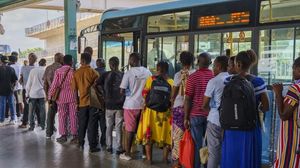
Beyond Parliament, the effects of rising fuel prices are already being felt by businesses and households. Transport operators have warned of possible fare increases as operating costs rise.

However, the Land Transport Regulatory Authority (Latra) has cautioned against unauthorised fare hikes and is expected to convene stakeholders to discuss the situation.

Meanwhile, Speaker Mussa Azzan Zungu has directed the Energy and Minerals Committee to consult with the Energy minister and report back to Parliament as budget discussions continue.

Despite the challenges, recent data shows that the Tanzania Revenue Authority (TRA) has exceeded its revenue collection target for the first half of the 2025/26 financial year.

This performance offers some fiscal space for targeted interventions, including possible subsidies or strategic investments.

However, analysts caution that strong revenue collection alone will not be sufficient to absorb sustained global shocks.

They stress that the effectiveness of government response will depend on its ability to balance short-term relief measures, such as subsidies, with long-term strategies that prioritise fiscal discipline, energy diversification and efficient public spending.

As global energy markets remain volatile, Tanzania’s policy choices in the coming months are expected to shape the resilience of its economy and determine how effectively citizens are protected from the ripple effects of rising fuel prices.