Fish project ‘not abandoned, affected by funding crunch’

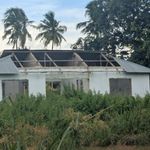
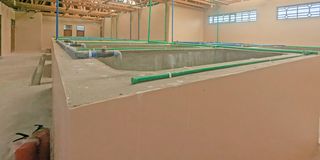
A section of the Ruvula Centre, located 40 kilometres from Mtwara Municipality, which is expected to become a hub for marine aquaculture. PHOTO | FARAJA MASINDE

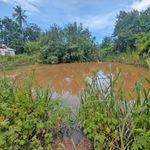
Lindi/Mtwara. As residents of Nyengedi continue to wait for compensation and clarity over the fate of their land, The Citizen investigation has established that financial and administrative constraints are being cited as the main reasons behind the project's suspension.

Speaking on the matter, Mtama MP Nape Nnauye acknowledged the challenge, saying the biggest obstacle was the lack of implementation funds despite the project being included in government budgets.
“The problem indeed exists, but as a lawmaker, there is little I can do because the main challenge is that the government has not released funds despite allocating money for the project in fiscal year budgets,” he told The Citizen.

“My advice is that you speak to the Minister for Livestock and Fisheries because he is the one who can provide accurate information on its status. I tried to discuss the Nyengedi project with him in Parliament, but he was unfamiliar with it,” added the MP.

Authorities acknowledge problem

Mtama District Council chairman Yusuf Tipu, who also serves as councillor for Nyengedi Ward, said he was unable to provide an immediate response.

“I don’t have an immediate answer for you,” he replied when The Citizen sought to know the status of the fish farming and hatchery dam project.

However, Mtama District Executive Director Anderson Msumba acknowledged being aware of the project, stressing that it falls under the Ministry of Livestock and Fisheries and is managed from Mtwara Municipality.

“The project belongs to the ministry, specifically the Ministry of Livestock and Fisheries, which has offices in Mtwara.

It was designed as a freshwater fish farming project involving fish production and the establishment of a hatchery,” said Mr Msumba.

“There were challenges related to compensation for land needed for offices and infrastructure and those issues have yet to be resolved. The project still exists, but the compensation issue is what has delayed implementation. It has not yet been handed over to us,” he added.

Project supervisor

Contacted for comment, the Southern Zone project supervisor Robert Nicholaus acknowledged delays in implementation but maintained that inquiries should be directed to senior ministry officials, insisting that he lacked the mandate to speak to the media.

“As a zone in-charge, protocol requires established procedures when providing government information.

In matters involving the ministry, I am simply an employee. I head the Southern Zone, but protocol must be observed whenever commenting on the project because I am not the official spokesperson,” he said, declining to provide details of the delays.

Ministry

The Permanent Secretary in the Ministry of Livestock and Fisheries, Ms Agnes Meena, attributed the delays to inadequate funding and said implementation would proceed once resources became available.

“When a government project stops, it does not mean it has been abandoned. It simply means the funds are not yet available. Both the Ruvula project in Mtwara and the Nyengedi project in Lindi have stalled because of funding constraints. Once funds become available, implementation will continue as planned,” said Ms Meena.

Responding to questions about why the projects continue receiving budget allocations without implementation, she said budget allocations and actual fund availability are separate issues.

“Allocating funds is one thing, but having the funds available is another. There are many projects competing for limited resources, not only these ones,” she said.

Ruvula-Mtwara project

The Ruvula Centre, located 40 kilometres from Mtwara Municipality, was expected to become a key hub for marine aquaculture development.

However, it continues to show signs of delayed completion despite substantial construction work.

Although the government, through the Ministry of Livestock and Fisheries, has repeatedly stated that the project is complete, observations on the ground suggest further work is required before the investment can be fully realised.

During a visit to the project on January 14, 2024, the then Minister for Livestock and Fisheries, Mr Abdallah Ulega, directed that it be completed quickly so local communities could benefit from initiatives such as sea cucumber farming, an activity with significant export potential, particularly in Asia.

“The demand for sea cucumbers, crabs, seaweed, lobster and milkfish is high in Asian countries, especially China.

We must therefore take advantage of the available opportunities.

That is why the government is providing education and support to citizens, particularly the youth and women, so they can engage in these activities and export their products to earn income and transform their lives,” said Mr Ulega.

However, two years after those directives were issued, the situation remains largely unchanged, although progress has been more visible than at the Nyengedi project.

A visit to Msimbati Ward in Mtwara Rural District, where the centre is located, found conditions largely similar to those observed during the minister’s tour.

A project supervisor, who requested anonymity because he was not authorised to speak publicly, said the facility was now 99 percent complete and awaiting a high tide to channel seawater into the system before production and hatchery operations could begin, including sea cucumber breeding.

The source said the project involved the construction of buildings and the installation of modern equipment and was close to becoming operational.

According to the source, the government has already ordered fingerlings from Kingolwira in Morogoro Region to facilitate the start of operations.

“The hatchery process is expected to be completed soon, after which fingerling production will begin. The centre’s main activities will include breeding sea cucumber juveniles and oysters. The primary water source will be seawater,” said the source.

Legal obligations

Residents’ expectations regarding the construction of aquaculture centres were based not only on promises made by leaders but also on provisions of the Fisheries Act (Cap. 279).

Section 9(1)(b) requires the Director of Fisheries to facilitate the development and rehabilitation of fisheries infrastructure and related activities.

Section 9(1)(d) further outlines the government’s responsibility to promote aquaculture through simple technologies and investments accessible to ordinary citizens.

Broadly interpreted, these provisions align directly with commitments to establish modern training and production centres.

However, years of inactivity have raised fundamental questions about accountability and the management of resources within the sector.

Particular attention has focused on the Fisheries Development Fund established under Section 29 of the Act.

According to Section 30(j), the fund is mandated to promote aquaculture development and fish stocking in natural water bodies.

Consequently, delays or failure to implement projects targeting the sector raise questions about the effectiveness of fund utilisation and, more broadly, the responsibility of the minister in charge, who under Section 3 is required to ensure ministry policies and programmes are fully implemented.

At the implementation level, the challenge has direct implications for local government authorities.

Under Section 15(1), such authorities are responsible for supervising and monitoring aquaculture activities within their jurisdictions.

However, the absence of demonstration centres and promised infrastructure undermines their ability to discharge that responsibility effectively.

Likewise, it becomes difficult for the Director of Fisheries to perform duties outlined under Section 10, which require robust systems for sector management and development.

As a result, fish farmers continue operating in an environment of uncertainty, witnessing a widening gap between legal requirements and the reality on the ground.