Food brings pupils back to class

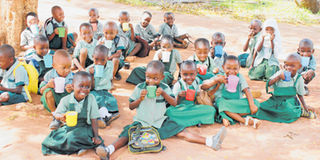
t break-time. Pupils enjoy porridge at Kitanga Primary School in Kisarawe. A good number of pupils had turned to shunning school after the feeding programme was stopped due to lack of funds. PHOTO|COURTESY

What you need to know:

  • “It is difficult to study on an empty stomach, and there is no hope of getting food until evening,” she says.
  • She is not alone. Apparently, hers is the plight of a significant number pupils across the country, who head off to school every morning without taking breakfast because their families cannot afford it.

Dar es Salaam. In her excuse for not showing up at school on several days every month, Julie Saidi always tells the teacher she is sick. Deep down, she knows she is not telling the whole truth. But the Standard 6 pupil insists that faking sickness is her only way out.

“It is difficult to study on an empty stomach, and there is no hope of getting food until evening,” she says.

She is not alone. Apparently, hers is the plight of a significant number pupils across the country, who head off to school every morning without taking breakfast because their families cannot afford it.
Indications are that many primary schools no longer provide break time porridge because of lack of funds.

In many areas, parents used to contribute a little money towards the feeding scheme. But since the government, in rolling out free education, banned compulsory contributions from parents, school coffers have been strained amid a sharp rise in enrollment.

Research shows that eating breakfast benefits cognitive performance in children. There are also suggestions that in addition to social factors, the more nutritious the breakfast, the better the literacy and numeracy scores.

A pupil at Kitanga Primary School in Kisarawe, Julie wakes up as early as 6am. She is lucky enough to enjoy a little food before leaving, but that little energy she gets is burnt on the way to school.

By the time it gets to break time, she will be hungry and no longer focusing on books.

“There are days I try to persevere till 4pm when we are supposed to knock off, but it’s difficult,” she says, “After walking the long journey, I quickly get hungry.”

So, with her friends, they devised a plan.

“We abscond or seek permission to return home before schools ends on the pretext of suddenly not feeling well.”

Her colleague Pauline Komba, also a Standard 6 pupil at the school, corroborates.

“It’s difficult to concentrate in school after 10am when there is no food in between; we cannot leave at 4pm,” she says.

The situation is so bad that many pupils are dropping out, according to Ms Neema Kalijuma, assistant head teacher at Kitanga Primary.

“We have suffered a sharp drop in numbers, of up to 65 per cent. There is no way pupils can stay up to 4pm after leaving home on a empty stomach,”she says.

“Without break time porridge, it has increasingly become difficult for us to keep these children in school.”

The school receives a grant of Sh165,000 every month from government courtesy of the free education allowance. That money is used for sports activities and administrative matters.

“We have tried to adopt several tactics to convince them to stay put, but mostly it doesn’t work. Concentration levels have significantly gone down,” notes the school official.

A non-governmental organisation known as Feed the Children is aiming to reverse this negative trend by launching a new feeding campaign that will ensure pupils have enough food to concentrate in school.

According to Ms Kalijuma, the NGO approached district authorities and schools with proposals to provide food, and help start self-sustaining income-generating projects.

The initiative is already running, and some positive results are showing, she says. Cases of absconding have declined.

“They normally bring us at least 10 sacks of enriched flour and 30 kilogrammes of sugar every month, and this has helped stabilise attendance.”

Parents too, have agreed to pay the school cook Sh2,000 every day.

Her school has started chicken rearing, bee-keeping and vegetable projects to sustain the meal programme that started January this year.

At Bwama Primary School in Kabuta District, Kisarawe Region, attendance has increased from 70 to 90 percent since the porridge programme started, according to the head teacher, Mr Rueben Shehemba.

“Before this, we witnessed a sharp drop in attendance levels because pupils could no longer endure learning on an empty stomach throughout the day,” he says.

The school gets a government grant of Sh190, 000 every month, but it’s not enough, he says. The school requires at least Sh350,000 every month to meet its most basic requirements.

“Since the grant is so small, we were not in a position to start the porridge programme after parents stopped their contributions, but we are glad Feed the Children has bailed us out.”

Feed the Children programme manager Elias Loidiso says they started the meal programme in 29 schools in Kisarawe.

“We also built a kitchen at all the schools where we were providing flour for porridge, while parents provide water and firewood,” he says.

Poultry and bee-keeping projects are meant at ensuring the sustainability of the projects after the organisation has pulled out. The projects are currently running at five schools, but will slowly be rolled out to other schools in the region.

Each school was provided with 300 chicks.

The NGO has supplied chicks, feeders and vaccination worth Sh82 million to five schools that will support the meal programme initiative