Tanga. When Dr Paul Msoka lost his sight shortly after completing primary school, many would have assumed his education had come to an end. Instead, the setback became the beginning of a journey that would eventually see him earn a PhD and become a lecturer at the Open University of Tanzania (OUT) in Tanga.
His story is one of resilience, determination and the transformative power of education.
Dr Msoka says he began his primary education in Tanga with no visual impairment and studied like any other child until completing Standard Seven.
However, shortly after finishing primary school, he lost his sight following complications linked to chloroquine medication prescribed while he was being treated for malaria.
"I lost my sight after completing Standard Seven. My parents never gave up. They looked for every possible way to ensure that I continued with my education," he says.
Rather than joining secondary school immediately, Dr Msoka spent a year learning Braille, enabling him to read and write despite his visual impairment.
After mastering the system, he enrolled at an inclusive secondary school in Shinyanga Region, where students with and without disabilities studied together.
He excelled academically while also learning to compete confidently alongside his peers.
Upon completing secondary school, he joined Mpwapwa Teachers' College to pursue a teaching diploma before being employed by the Tanga City Council as a teacher.
Despite securing a job, he remained determined to advance his education.
"I knew I was capable of going further. I never wanted a diploma to mark the end of my academic journey," he says.
While teaching, he sat Form Five and Form Six national examinations as a private candidate, passed them and secured admission to the University of Dar es Salaam, where he studied for a Bachelor's degree in Education.
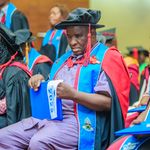
His academic ambitions did not stop there. He later completed a Master's degree before earning a PhD, achieving what many believed would be impossible after he lost his sight as a child.
The journey, however, was far from easy.
Dr Msoka recalls studying at a time when Braille machines were scarce, books in Braille were difficult to find and assistive technology was virtually unavailable.
"We had very few Braille machines, and most were old and worn out. Many times I had to ask other people to read books for me because they were not available in Braille," he says.
He says technology transformed his academic life after joining university.
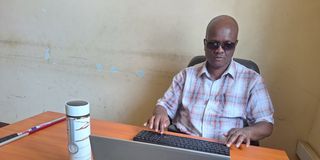
Using computers and smartphones equipped with screen-reading software, he was able to read, write, conduct research and prepare assignments independently.
"Technology has been my greatest enabler. Today I can prepare lectures, conduct research, read online books and communicate with my students without depending on anyone else," he says.
According to Dr Msoka, the greatest challenge was never teaching itself but convincing people that a blind person could stand before a classroom and teach sighted students effectively.
Even after obtaining his teaching diploma, some people advised him to work only in schools for learners with visual impairments.
"I told them to post me to an ordinary school. I wanted to prove that teaching depends on knowledge, not eyesight," he says.
He admits that many students and fellow teachers were initially sceptical about his ability.
However, by using interactive teaching methods, encouraging classroom participation and listening carefully to students' responses, he gradually won their confidence.
"My ears are my eyes in the classroom. By listening to students' responses and participation, I can tell whether they have understood the lesson," he says.
Today, Dr Msoka lectures at the Open University of Tanzania using digital technology to prepare lectures, develop PowerPoint presentations, conduct research and communicate with students through screen-reading software.
He credits much of his success to his parents, who never regarded his disability as a barrier to achievement.
Instead, they encouraged him to believe in his abilities and pursue his dreams.
He also believes society should change its perception of people with disabilities by recognising their abilities rather than focusing on their impairments.
"I do not want to be recognised because I am disabled. I want to be recognised for my work and the contribution I make to society," he says.
On inclusive education, Dr Msoka urges the government and other stakeholders to invest more in schools, teachers and learning materials to ensure children with special educational needs can access quality education close to their communities.
He also has a message for parents raising children with disabilities.
"Believe in your children. Disability is not the end of life. Education is the greatest tool they can use to overcome barriers and build independent lives," he says.
From losing his sight after primary school to becoming a university lecturer with a PhD, Dr Msoka's journey demonstrates how determination, education, technology and family support can overcome even the greatest obstacles.
Today, he stands before university students not only as a lecturer but also as a powerful reminder that no dream is beyond reach for those willing to pursue it.