Zanzibar’s capital markets plan is well-timed, but...

On June 11, Zanzibar's Finance and Planning Minister, Dr Juma Malik Akil, tabled a Sh8.52 trillion budget for 2026/27, a 22.11 percent increase on the current year.

Buried inside the fiscal detail was a line that should interest anyone watching East African capital markets: the government intends to establish a Zanzibar Stock Exchange and a Zanzibar Investment Bank.
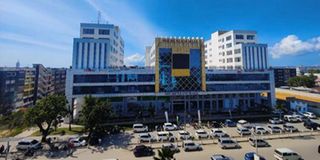
If realised, the Isles would join Dar es Salaam, Nairobi, Kampala and Kigali as a jurisdiction with its own securities market, a genuinely significant step for an economy of Zanzibar's size.

The ambition is well timed. Tourist arrivals rose 21.9 percent to 800,968, and the economy is projected to grow 7.5 percent in 2026, up from 7.0 percent last year. External financing dependence has fallen to 2.8 percent of the budget, a figure the government presents, reasonably, as evidence of fiscal self-reliance.

Priority spending is directed at tourism, fisheries, the blue economy and small and medium enterprises, with a Skills Development Levy cut from 4 to 3 percent and a 25 percent reduction in stamp duty on commercial vehicles.

Taken together, this is a budget built around momentum rather than caution, and momentum is not unearned. Zanzibar's growth rate outpaced the Mainland's in 2025, and the reforms on the table, tax relief for manufacturers outside ZIPA registration, digitised revenue collection, a finalised Zanzibar Development Plan for 2026 to 2031, are the kind of unglamorous groundwork that sophisticated investors actually look for.

But a stock exchange is not a line item. It is an institution that requires a securities regulator with real supervisory capacity, a listing pipeline of companies with audited accounts investors can trust, custody and settlement infrastructure, and, critically, a legal framework that does not simply replicate what the Dar es Salaam Stock Exchange already does thirty minutes away by air. Zanzibar's semi-autonomous status within the Union gives it constitutional room to build its own capital markets architecture.

It does not, on its own, give it the depth of listable companies or the regulatory bench strength that a functioning exchange needs on day one.

The announcement is the easy part. The institution building that follows will take years, not a budget cycle, and investors should treat the exchange as a medium-term thesis rather than a 2026 opportunity.

The tourism numbers deserve the same discipline of reading. Growth of 21.9 percent in arrivals is genuinely strong, and it is doing real work in the budget: it is the reason external financing dependence has fallen, and the reason overall growth has accelerated. That is precisely what should give an investor pause rather than comfort.

An economy where a single, weather and geopolitics-sensitive sector is the primary engine behind both growth and the reduction in aid dependence is not diversified, it is concentrated, and concentrated growth is fragile growth. Zanzibar's own budget documents acknowledge this indirectly, by naming fisheries, the blue economy and SMEs as priority sectors alongside tourism.

The intent to diversify is there. The capital allocated to it, relative to what still flows toward hospitality and tourism infrastructure, tells the more honest story.

There is also a debt picture worth reading carefully. As of March 31, 2026, Zanzibar's public debt stood at roughly Sh3 trillion, of which Sh2.987 trillion was domestic and only Sh14.6 billion external.

The government describes this debt as sustainable, and on the numbers, it is manageable today.

However, an almost entirely domestically financed debt stock, growing alongside a 22 percent budget expansion, draws on the same banking system that a future stock exchange will need for liquidity and underwriting capacity.

These are not contradictory policies, but they do compete for the same limited pool of domestic capital, and that tension deserves more attention than it has received in the coverage so far.

None of this diminishes what Zanzibar is attempting. A jurisdiction actively building capital markets infrastructure while cutting levies and courting SME investment is doing more than most peer economies of its size.

The question worth asking is not whether the ambition is credible, it is what sequencing, regulatory capacity and sectoral diversification will need to look like for that ambition to survive its first difficult tourism season. Investors watching the Isles should welcome the announcement and price the execution risk separately.

Those two things are not the same conversation, however often they are treated as one.

Amne Suedi is the Managing Director of Shikana Investment and Advisory, Honorary Consul of Switzerland in Zanzibar, and Chair of the Switzerland-Tanzania Chamber of Commerce. Views expressed are strictly her own