Government allays fertiliser fears amid Middle East conflict

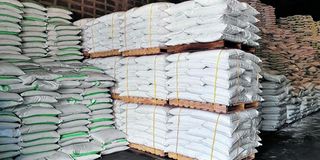
The government has reassured farmers that Tanzania has sufficient fertiliser stock to meet current needs despite the ongoing conflict in the Middle East. PHOTO | COURTESY

Dar es Salaam. The government has moved to reassure farmers that Tanzania has sufficient fertiliser stocks to meet current needs despite the ongoing conflict in the Middle East, which has raised concerns over global supply disruptions.

The Tanzania Fertilizer Regulatory Authority (TFRA) said existing reserves are adequate to cover the ongoing farming season and extend into the next planting cycle, easing fears of an imminent shortage.

Speaking to The Citizen, TFRA director of domestic production and joint procurement, Mr Louis Kasera, said the country currently holds more than 300,000 tonnes of fertiliser, which is expected to last through the current season ending in July and into the next season.

“We do not expect any disruption to fertiliser availability for now. Tanzania has sufficient stocks. We are also taking steps to ensure continued supply if the situation persists ” he said.

Mr Kasera noted that while the current situation remains stable, the government has already developed both short-term and long-term strategies to cushion the country against potential shocks should the conflict drag on.

He explained that Tanzania imports a significant portion of its fertiliser—particularly urea—from Middle Eastern countries, making global geopolitical developments a key factor in supply planning.

“We import much of our fertiliser, especially urea, from Middle Eastern countries such as Qatar. However, since the conflict is unlikely to end soon, we plan to shift to Russia as a short-term solution for imports during the August to October farming season,” he said.

According to TFRA, about 84 percent of fertiliser used in Tanzania is imported, with roughly 40 percent originating from the Middle East. National demand exceeds one million tonnes annually.

Despite this reliance on imports, Mr Kasera said Tanzania has the capacity to produce more than 1.2 million tonnes of fertiliser domestically, but uptake remains limited as many farmers continue to prefer imported products due to long-standing perceptions and habits.

He said the government is intensifying awareness campaigns to encourage the use of locally produced fertiliser, with expectations that adoption will increase in the coming seasons as farmers gain confidence in its quality and effectiveness.

On long-term measures, Mr Kasera said the government is in discussions with two factories to begin producing fertiliser using natural gas, a move expected to provide a sustainable solution and significantly reduce dependence on imports.

He noted that once operational, the initiative will help stabilise supply and prices, while enhancing the country’s resilience to global market shocks.

The reassurances come against the backdrop of an ongoing conflict involving Iran, which began on February 28, 2026, following joint airstrikes by the United States and Israel, triggering wider regional instability.

The conflict has affected key energy-producing areas and major global shipping routes, including the Strait of Hormuz, raising concerns over disruptions in oil and gas supply chains.

The situation has already pushed up global fuel prices and increased transportation and production costs, with potential knock-on effects on agricultural inputs such as fertiliser, which rely heavily on energy in their production and distribution.

Despite the government’s assurances, fertiliser importers have cautioned that prolonged instability could lead to price increases, particularly for urea.

General manager of TriaChem Tanzania Limited which imports fertiliser, Mr Adrian Moss, said the company had secured sufficient stocks before the conflict began, but future imports could be affected by market uncertainty.

“We imported seven containers of fertiliser before the conflict began, which are expected to last between six and seven months. Although we had planned to import larger quantities, uncertainty in the market has limited our orders,” he said.

Mr Moss warned that rising shipping costs and volatility in global markets are likely to push fertiliser prices higher if the conflict persists.

He said urea is expected to be the most affected due to its high demand among farmers, although other types of fertiliser may also see price increases, albeit to a lesser extent.

Overall, Mr Kasera maintained that the government remains vigilant and prepared to act, emphasising that safeguarding fertiliser supply is critical to ensuring food security and agricultural productivity in the country.