High-level global investors set for Tanzania’s Sh7 trillion investment summit
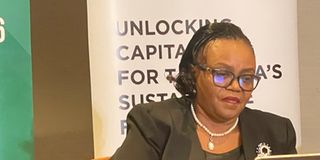
Economic and Social Research Foundation (ESRF) executive director, Prof Fortunata Makene, speaks at a press conference held in Arusha on Thursday, May 28, 2026, on the upcoming international investment forum. PHOTO | BERTHA ISMAIL
Arusha. Minister of State in the President’s Office for Planning and Investment, Prof Kitila Mkumbo, is expected to lead Tanzania’s first high-level global investment summit aimed at linking local and international investors with strategic development projects valued at about $2.85 billion (Sh7 trillion).
The Tanzania Investment Summit 2026 is scheduled for June 1 and 2 in Arusha and is expected to bring together investors, government officials, development partners, and financial institutions from more than 30 countries.
A total of 60 projects under the Tanzania Investment Growth Facility (TIGF) will be presented for potential financing and partnership.
The summit is an initiative of the Economic and Social Research Foundation (ESRF) and the United Nations Development Programme (UNDP), in collaboration with the Tanzania Investment and Special Economic Zones Authority (Tiseba) and the Zanzibar Investment Promotion Authority (Zipa).
The projects span key sectors, including tourism infrastructure, renewable energy, transport and logistics, the blue economy, agro-processing, water systems, Zanzibar development initiatives, and sub-national programmes.
Unlike traditional investment conferences, the summit is designed as a deal-making platform expected to move beyond dialogue into concrete investment commitments, financing agreements, and implementation partnerships.
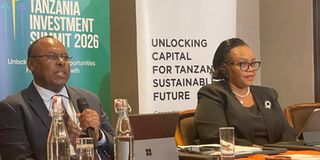
Speaking during a press briefing in Arusha on Thursday, May 28, 2026, ESRF executive director, Prof Fortunata Makene, said the summit has been structured to directly connect investors with bankable projects.
“This is not just a discussion forum. It is a platform that will connect investors directly with project owners to initiate negotiations and partnerships for financing and implementation,” she said.
She added that the initiative aligns with Tanzania’s long-term ambition of becoming a trillion-dollar economy by 2050, particularly as global concessional financing and grants become increasingly uncertain.
Prof Makene noted that nearly 70 percent of future development financing is expected to come from private capital, underscoring the need for structured investment mobilisation.
She said the government has already screened and prepared investment-ready projects to ease investor engagement.
“We anticipate strong interest in an initial wave of eight to 10 priority projects valued at around $100 million, which are expected to form the first round of transactions,” she said.
She added that the projects are backed by government commitment and a structured deal-room framework intended to accelerate negotiations and financial closure.
“Tanzania is ready with a screened pipeline of projects, committed government partners, and the necessary infrastructure to facilitate real transactions,” she said.
“We will continue tracking investor interest beyond the summit to ensure that projects progress from negotiations to financial closure and implementation,” she added.
UNDP Deputy Resident Representative, Mr John Rutere, said Tanzania’s approach reflects shifting global development financing realities.
“We cannot continue relying entirely on international grants and loans when certainty in global financing is declining. Countries must now identify sustainable ways to finance their own development,” he said.
He added that Tanzania has taken a significant step by creating a platform designed to attract both private and institutional investors.
UNDP, he said, will continue supporting efforts to ensure investments drive inclusive growth, job creation, and improved livelihoods.
“This is about investing in the future of a fast-growing Tanzania with ambitious economic goals,” he said.