Kigoma. The High Court has upheld the legality of the Presidential Commission of Inquiry into Criminal Acts Connected with the Violence during and after the 2025 General Election, throwing out a petition that sought to nullify it.
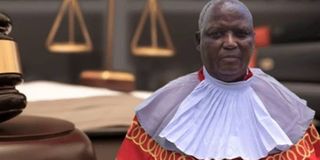
Justice Wilbert Chuma, sitting at the Kigoma Sub-Registry on Friday, July 17, 2026, dismissed the judicial review application with costs, ruling that the head of state acted well within her statutory powers.
“In those circumstances, this court finds that the application lacks merit and is hereby dismissed. Each party shall bear its own costs,” ruled Justice Chuma.
Popularly known as the Justice Lila Commission, the team is chaired by Court of Appeal Judge Shabani Ally Lila. President Samia Suluhu Hassan appointed the commissioners on May 18, 2026.
The probe team was formed following recommendations by a previous peace-breach inquiry panel led by former Chief Justice Mohamed Chande Othman, which submitted its report on April 23, 2026.
However, activists Bubelwa Ephraim Bubelwa and Joseph Daudi Mabugo filed an application challenging the appointments.
They named the Attorney General, Justice Lila, and commissioners Gad John Mjemmas, Awadh Mohamed Bawazir, and Aishieli Nelson Sumari, all retired High Court judges, as respondents.
The duo sought orders to quash the appointments and restrain the President from taking similar actions in future, arguing she exceeded her statutory boundaries, abused discretionary powers, and breached the Constitution.
The arguments
During the hearing, the applicants' advocate, Mpale Mpoki, assisted by Hekima Mwasipu, argued that under Section 21(1) of the Commissions of Inquiry Act (Revised Edition 2023), the President could not lawfully form another commission once the Chande team concluded its work.
Advocate Mpoki contended the President only had two options: file the report or direct legal action against named suspects.
He further argued that probing criminal acts falls exclusively under the Director of Public Prosecutions (DPP) through the National Prosecutions Service Act, meaning the President should have instructed the DPP to order police investigations rather than creating a parallel body.
Senior State Attorney Stanley Kalokola, assisted by Principal State Attorney Mark Mulwambo, strongly opposed the application.
State Attorney Kalokola submitted that Section 3 of the Act grants the President absolute discretion to establish commissions of inquiry on any matter of public interest.
He clarified that what the President formed was a fact-finding Commission of Inquiry, which is legally distinct from an investigative body.
He maintained that the law does not restrict the number of commissions the appointing authority can form on a single subject.
The ruling
Delivering his judgment, Justice Chuma noted that Section 3(1) of the Act broadly empowers the President to establish commissions to probe any matter serving the public interest, including criminal actions.
He explained that under Section 21(1), if the President deems further inquiries necessary after receiving a report, she can direct the DPP or implement any other measures she sees fit.
“The provisions are clear and require no judicial interpretation,” the judge noted, adding that nothing in the Act bars the President from setting up consecutive commissions.
Justice Chuma observed that while the applicants’ claim regarding the infringement of the DPP's constitutional mandate appeared persuasive initially, a deeper analysis revealed major legal flaws.
The judge pointed out that under Section 20 of the Act, a commission only acquires legal force after being published in the Government Gazette and after its members take their oaths of office.
“Under that provision, there is no dispute that, to date, the commission being challenged is not yet legally operational because it has not been gazetted and its commissioners have not yet taken the oath of office,” noted the judge.
Consequently, its specific terms of reference remain unknown, rendering any claim of interference with the DPP's duties groundless.
“It is therefore the court's view that, in establishing the commission and appointing its commissioners, the President acted within the law and within her powers, and there is no evidence that she thereby interfered with the authority of the DPP,” ruled Justice Chuma.
He concluded that the petition was brought prematurely, making it legally impossible to grant the orders to quash or restrain the President's executive decisions.
Register to begin your journey to our premium contentSubscribe for full access to premium content