Eyes on Monday as Tanzania launches maize purchases to stabilize falling prices

Dar/Upcountry. As maize farmers complain about falling prices, the government has urged them to remain patient until Monday, July 20, 2026, when it will issue official guidelines for the start of maize purchases by the National Food Reserve Agency (NFRA).

Maize prices are said to have dropped because large volumes of the crop have reached the market simultaneously, creating severe hardships for farmers.
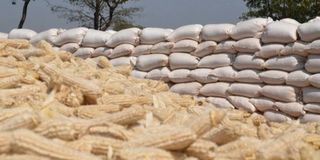
The Southern Highlands, comprising seven regions, is not only Tanzania's leading food-producing zone but also depends heavily on maize farming as the main source of livelihoods and a key contributor to national food security.

Currently, maize is selling for between Sh5,000 and Sh7,000 per a 20-kilogramme bucket, compared with last season when prices exceeded Sh8,000 in some urban areas.

Responding to the outcry, Agriculture Minister Daniel Chongolo recently said during a visit to Songwe Region that the government was aware of the sharp decline in maize prices caused by the simultaneous arrival of large harvests on the market, a situation that had enabled some buyers to depress prices at farmers' expense.

He said the government, through the NFRA, was in the final stages of launching maize purchases from farmers, a move expected to stabilise market prices and protect producers' interests.

“I advise farmers not to rush to sell all their produce immediately after harvest. Instead, they should sell only what they need to meet immediate expenses and store the rest until prices improve,” he said.

“The government will continue improving the business environment, ensuring access to quality agricultural inputs and working with all stakeholders in the sector to increase productivity, strengthen food security and grow the national economy,” said Mr Chongolo.

Eyes on Monday

The optimism expressed by the minister has been reinforced by the NFRA Makambako Zonal Manager, Mr Revocatus Bisama, whose office oversees Njombe and Iringa regions.

He urged farmers in both regions to remain patient until Monday, July 20, 2026, when the government will officially announce the maize purchasing programme and buying price.

He said, as directed by Minister Chongolo, the NFRA had no further information to provide at this stage and was simply preparing to implement the government's instructions.

“The minister announced that he will make an official statement on July 20. We are continuing with the necessary preparations. NFRA does not set indicative prices; that authority rests with the government, so we are waiting for guidance from the responsible minister,” said Mr Bisama.

Farmers' outcry

The statements by the government and the NFRA follow widespread complaints from farmers struggling with collapsing maize prices despite the high cost of agricultural inputs, prompting calls for government intervention.

A farmer in Mbozi District, Songwe Region, Agnes Mwashiuya, said maize production costs were far higher than current market prices and that the absence of a benchmark price allowed buyers to dictate the market.

“We are selling a bag for between Sh36,000 and Sh38,000, which is a huge loss for farmers considering the costs we incur from land preparation to harvesting,” she said.

“Input costs are also extremely high. A bag of basal fertiliser now costs Sh95,000, top-dressing fertiliser Sh80,000, while improved seed currently retails for up to Sh100,000 per bag,” she said.

“All we ask is for the government to secure a reliable market so that at least one bucket can sell for Sh10,000, as it did last year, enabling us to benefit from our farming,” added Ms Mwashiuya.

A farmer in Ileje District, Mr Joseph Mwampashi, said the government should strengthen reliable markets and expand maize purchases through institutions such as the NFRA.

“We ask the government and the NFRA to introduce a structured purchasing programme for maize, similar to the warehouse receipt system used for crops such as sesame, where indicative prices are available,” he said.

The concerns raised in Songwe were echoed in Rukwa Region, where Mr Rafael Mwembezi of Sumbawanga said farmers incurred high production costs only to sell maize at low prices.

“The lowest maize price is Sh635 per kilogramme, the highest is Sh800, with an average of Sh710. Currently, a bag of maize in Rukwa sells for between Sh40,000 and Sh55,000,” he said.

In Njombe Region, Ms Wema Ngwale of Chalowe Village in Wanging'ombe District said her expectations at the beginning of the farming season had vanished.

“We are now selling one bucket of maize for Sh6,000. This price does not reflect the costs we invested in production. If prices remain this low, many of us may not return to our farms next season,” she cautioned.

Her concerns were shared by Tula Msala from the same district, who said the cost of storing maize safely was another challenge.

Hermetic storage bags cost Sh4,500 each, while chemical treatments range from Sh4,500 to Sh7,000.

“Besides having to use these chemicals to protect the maize, they are not good for people's health, and storing large quantities of maize at home is also expensive,” said Msala.

The situation is no different in Mbeya Region, where Ms Witness Kamwela said that while a bucket sold for between Sh8,000 and Sh9,000 at the farm gate last season, this year prices had dropped to between Sh6,000 and Sh7,000 in some areas.

“This season has been very difficult for us. We invested heavily in both money and labour from planting to harvesting, but now we face the challenge of not having a reliable market,” lamentred Ms Kamwela.

Market forces

While farmers lament the falling prices, maize buyer Joseph Mwashilindi said traders were simply purchasing at prevailing market rates, although he acknowledged that the situation was hurting farmers.

Mr Mwashilindi said that in previous years the government bought maize through the NFRA, but this year's programme had not yet started, leaving farmers frustrated.

“We are all trying to earn a living. Some wealthy traders are buying maize for future resale because they expect prices to rise as demand increases. For now, however, it is the farmer who suffers,” he said.

Another buyer, Numenye Mbughi, said current prices remained favourable for traders, noting that they previously bought maize at Sh5,000 per bucket but were now paying Sh6,500.

“For us buyers, these prices are manageable because when larger traders arrive we sell at between Sh7,000 and Sh7,500 per bucket. We urge the government to improve the situation by securing reliable markets,” he said.

Although the low prices have become a major concern for farmers, they have benefited some buyers, according to Mr Julius Mwanalinze.

“While it is a major loss for farmers who invested heavily in production, low maize prices are good news for buyers. But for farmers who purchased expensive agricultural inputs only to sell their maize cheaply, the losses are enormous,” he said.