DEBATE: When the DPP appears before the court, he is just like any other officer of the court and here the boss is the judge
The cardinal duty of the Judiciary of Tanzania is the dispensation of justice. When cases are registered by registry officers of the respective registries, are sent to the Judge-in-charges who assign them to Judges who conduct the cases according to the laws and their individual calender.
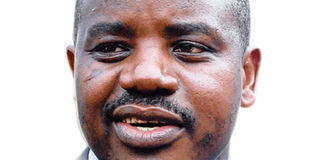
Since President Jakaya Kikwete appointed former Director of Public Prosecution Eliezer Feleshi a judge of the High Court, debate has raged on whether or not the appointment was a demotion. In this exclusive interview, Judges Thomas Mihayo and Juxon Mlay, both retired, speak with Senior Citizen Reporter Bernard James on this and other issues affecting the judiciary.
QUESTION: The recent appointment of former DPP Eliezer Feleshi as a judge of the High Court has been dismissed in some quarters as a demotion. What are your views?
MLAY: When we talk about the public service, we are talking of several cadres. We have the military service, the civil service and the judicial service. So when you talk of the DPP’s demotion or promotion you are talking of the judicial service and the civil service. There are schemes of service in each cadre in the civil service. The DPP falls in the cadre known as State Attorney. This cadre starts at grade three up to the level of principal state attorney--the highest stage. From grade three, you can be promoted to grade two, grade one, senior state attorney and finally principal state attorney. Within this scheme, the act of being elevated from a lower grade to an upper one is what you call a promotion. So an appointment to the position of the DPP can’t be said to be a promotion.
This is because the highest stage of promotion in this scheme of service ends with the position of principal state attorney. There can only be one DPP, but many principal state attorneys and senior state attorneys. You talk of a promotion in a scheme of service that rises from lower grade upwards.
Judges fall under the judicial service. Here you cannot talk of rising from a lower to higher grade. The post of a judge is part of the public service, so the position of a judge and that of the DPP are not comparable.
Those who view the appointment of the DPP as a judge to be a demotion--just because he used to head a department but now works in an institution manned by another person--are mixing up things. Those who see this move as a demotion think that because the former DPP is no longer the head of the department of prosecutions and is working under someone else have missed the point.
We must set the record straight. The DPP is both the person and the office. In the structure of the office of the Attorney General, where the DPP sits, he or she is just the head of one department as it is with chief parliamentary draftsman, deputy sttorney general and others. In that office, the DPP does not have administrative powers and responsibilities. The administrative responsibilities of that office are vested with the AG. So the perception that the DPP heads an institution is not true. What remains with the DPP in that office is the legal responsibility of controlling criminal prosecution. He has no say over the personnel. All staff in his docket are subject to the AG, who can assign them any duty.
MIHAYO: As my colleague has just pointed out, the office of the AG has several directorates. There we have chief parliamentary draftsman, the DPP himself and the director of human resources. When summoned by the AG, the DPP will appear before him like any other director.
MLAY: If the AG wants to consult on a legal issue or when preparing the budget of his office, he will summon all the directors--including the DPP--in the same capacity. To that extent, the DPP is administratively answerable to the AG, so his position is not comparable to that of the head of judiciary like the chief justice or principal judge. They are two different schemes of service and they have a different structure of operations.
A judge, unlike the DPP, sits in court. The powers of a judge are linked with the powers of the court he sits in. The High Court has unlimited committal jurisdiction in criminal matters. The DPP only decides whether a person should be charged in court or drop the charges but a judge has jurisdiction to hear all matters of criminal and civil nature and make decisions.
A judge also deals with several other aspects of administration of justice like probate and judicial review. The DPP has no place in that. He (the DPP) does not review anyone’s decision, so these two positions are not comparable at all.
MIHAYO: What we are saying is that the DPP deals with only one aspect of administration of justice, which is criminal justice, while a judge deals with all aspects--including criminal and civil matters. We should also not forget that a judge or even a magistrate presiding over a criminal case has powers to dismiss a charge brought before a court by the DPP or any other prosecutor, if it has serious legal glitches.
MLAY: There’s a time when the DPP is required to appear before the court personally and the court can summon him or her any time it feels so. There are also times when the DPP prosecutes a case personally, especially when they involve serious offences such as treason. When the DPP appears before the court, he is just like any other officer of the court and here the boss is the judge, not the DPP. That’s why saying that the former DPP was demoted in being appointed a judge is not fair and just creates confusion. For instance, the judge enjoys security of tenure, unlike those in other positions such as ministerial posts. The President can wake up one morning and fire any cabinet minister but he cannot do that to a judge, who he has the power to appoint.
MIHAYO: There is one very important thing which we would want people to know. Mr Feleshi is not the first person serving as a DPP to be appointed a judge. All those who have previously served as DPP have also been appointed judge, except one.
Q: A petition has been filed in the High Court to challenge the powers of the DPP. What are your views on this? Do you share the same view?
MIHAYO: I think people who question the powers of the DPP do not really know duties of the DPP. It is sometimes good to put someone up there with final say over sensitive issues. It is desirable to have a person with the final say on crime prosecutions.
Anyone who says those powers should be reduced is trying to introduce politics into administrative issues. Even in other aspects of administration--take, for instance, the permanent secretary in a ministry--there are things which are not questioned once he has made a decision.
This is because the DPP, in execution of his duties, does not act as an individual but as an institution that decides matters in a well-defined process within his or her office. To decide whether or not there should be prosecutions would depend on two or more things.
It is possible he can decide not to prosecute because of lack of evidence or in the public interest. There are cases where he decides that it is not wise to prosecute in court. There can be many justifications for this. I always say those shouting that the DPP decides things completely on his own do not know what they are saying. There are situations where taking a case to court does not serve any purpose. The implications of taking them to court can be even disastrous.
As a retired judge, I think it is in the best interests of our country that the DPP should keep his powers for purposes of safeguarding the integrity of criminal justice. That integrity must be protected because this is where human rights are often violated. And, you know, sometimes the police play politics. They can arrest people and justify that arrest even when there is no charge. Once they have done that, the police see no way out but to forward the case to office of the DPP. What do you expect the DPP to do in these circumstances? The DPP cannot take to court a case that lacks merits and evidence.
MLAY: Historically, people are always afraid that powers vested in one person can be abused. That perception can be real or imagined. There have always been calls to reduce even the powers of the President. The most important question we need to ask ourselves is: Why were those powers were created in the first place?
Let me start with investigative organs. I have in the past worked as head of the Prevention of Crime and Corruption Bureau (PCCB) when it was still called the Prevention of Corruption Bureau. I was there for more than six years. When crime is committed, there is always social pressure for the authorities to act. The culprit must be arrested and charged and that social pressure falls on investigative organs such as PCCB. In some cases, investigative organs acting under pressure may arrest anyone suspected of committing the crime and remand him or her.
Take the case of this man who was kidnapped, tortured and abandoned in a forest (Dr Steven Ulimboka). Acting under pressure from society, the police arrested a Kenyan citizen, Mr Joshua Mulundi. When this happened, the pressure cooled down. In my view, the police did not act maliciously. They were acting under intense public pressure.
But there is also political pressure. For example, we have spontaneous demonstrations. Police receive orders to stop the demonstrations at all cost. Because they (police) are acting on political pressure, they will do whatever it takes to stop the demonstrations and arrest anyone who defies their order--and they will take you to court even if they don’t have evidence.
Sometimes you(the accused) will have to wait until police call the witnesses, a process that can take even three years, while you languish in custody. The person who can intervene here is the DPP. That’s why his office ought to be kept free of political or social pressure. I recall a relative of a big shot who was charged with a serious crime. The DPP decided the man would be taken to court. He was summoned and told the case should not go there. But he stood firm and prosecuted the case to the extent that man was jailed.
Q: We have heard of many cases of Tanzanians who have died in mysterious circumstances but the mechanism to inquire into their death, like the coroner’s court, appear not to exist. What went wrong with the Inquest Act?
MLAY: It is unfortunate that the Inquest Act, which inquires into the death of any person suspected to have died violently or of unnatural cause, has been left to die. The death of journalist David Mwangosi and others who died mysteriously, called for an inquest to establish what really caused his death and under what circumstances. It is the verdict of such an inquiry that is forwarded to the DPP to decide on prosecutions. From there, the DPP will direct the police to collect evidence before the case starts.
If we had provisions for inquests, the deaths of Mwangosi and others who died in mysterious circumstances would have been thoroughly investigated.
Q: Two weeks ago, Minister of State Steven Wassira said he had lost an election petition against the former chairman of the Constitutional Review Commission, Judge Joseph Warioba, because judges favoured their fellow judge. This is a serious allegation.
MLAY: A judge takes an oath that he will do justice to all without fear or favour. There are things that are easy to claim but difficult to prove or even disprove. It is very unfortunate that a minister of state in the office of the president publicly questions the integrity of the judiciary on such flimsy grounds. It is irresponsible to issue such a statement.
First, the issue he alleged itself is not even factually true. Honourable Warioba has not been appointed a judge in Tanzania or sworn in to sit in any court of law in this country.
He was once appointed a Judge of the Law of Sea Tribunal. Now, where is the link between a judge sitting at the Law of the Sea Tribunal and a sitting judge in the High Court of Tanzania? There is no basis and justification for that allegation.
MIHAYO: For a senior minister in the Office of the President to utter such a statement about an institution established by the constitution, which he ought to defend, is evidence of a person who lacks credible arguments. I have served as a magistrate for many years and have jailed more than three fellow magistrates. I dared not favour them. Some judges have lost cases before judges. I respect him (Wasira) but this has tainted his image. I cannot remain silent when anyone attacks judges without credible evidence.
Q: Allegations have been levelled that some of those appointed as judges are professionally unfit and ethically unsuitable for the job. Your comments, please?
MLAY: To discuss an institution of justice on an issue questioning the integrity of that institution itself should not be taken lightly. The Judiciary has already issued a statement on this matter. The best person to respond to this is the head of the Judiciary. The people’s confidence in the judiciary is of paramount importance. It should not be so easy for anyone to level allegations against the Judiciary. Once people lose confidence in this organ, we are doomed. We are finished, even you journalists. So I decline to comment on it.
MIHAYO: There are two places an ordinary person can resort to when his or her rights are infringed--the courts and the media. They are forums where an ordinary citizen can confidently and freely speak because he or she is protected by the constitution as long as there is evidence. Appointments are not completely free of shortcomings. Those who make the appointments are human beings but concluding that some judges are incompetent is not right.
Q: For years now, the Corruption Perception Index and the East African Bribery Index have ranked the judiciary among the leading institutions in graft. Why is this so?
MLAY: I worked with PCCB for more than six years before I joined the judiciary. I also worked as the DPP and I had an opportunity to work with the police. In my experience, it is not surprising that there is high degree of corruption perception within these two institutions. They are the organs that deal with the day-to-day issues that affect people directly. These officers rub shoulders with citizens every day, so we should expect more complaints against them than other institutions.
There is little understanding of how these institutions operate among the majority of people who rub shoulders with them. In my view, that ignorance of how they operate opens the door to many interpretations of everything that does not go right such as corruption. We have perceptions that springs from ignorance of procedures. The same thing happens in police stations. The people do not know the procedures or they simply do not know their rights.
The problem we have is failure to do things the way they are supposed to be done. I worked as head of PCCB for six years--from 1981 to 1986. We were sent for training attachment at the Independent Commission against Corruption in Hong Kong. We visited each department and saw how they operated. We came to realise that back home here we were not doing things they way they should be done, despite the fact that we copied our law from them.
For instance, does PCCB have those reports on corruption you are referring to? Is there anyone who has asked them what they have done with them? Our hosts had discovered that the best way of dealing with corruption is not to focus on arresting people and charging them. So they created departments for prevention and others to help them to review their operations. There were those who checked why complaints were raised and the level of the institution where they were directed. A department would make an assesment, point out shortcomings and recommend ways to rectify them. They would tell you everything that was tarnishing your image. They do not just investigate corruption but also assess your operations and advice you accordingly.
When we returned from Hong Kong, I advised the government to establish a prevention department. That idea came up against strong resistance. I was finally given one staff member to start with but I was out of there before the projecte kicked off. As we speak today, we do not have a prevention department. This is the department that would have gone to the judiciary to tell the Chief Justice how to tackle corruption there. They are not similar to those coming to lay traps or planning sting operations to nab court clerks soliciting or receiving bribe.
MIHAYO: I will be lying if I say there is no corruption in Tanzania today. Because corruption is widespread, it is quite disturbing to note that even those who believe in justice think they have to offer bribes to win cases. People no longer fear approaching a judge with a bribe. They do not feel any shame in doing so.
I must also say that we have serious problems with our advocates. Some advocates are fraudsters who con their clients. They take money from their clients and tell them they will speak to a judge or magistrate to ask for favours.
Q: Lawyers are debating whether it is the right time for Tanzania to allow cross-border legal practice. Is this arrangement useful now?
This issue has been discussed since 1999, when I served as president of the Tanganyika Law Society. Cross-border legal practice, which they have been discussing is that of a lawyer from Voi in Kenya picking up his briefcase and travelling for a case in Tunduma in southern Tanzania. Even the United States, which is one country with 50 states, does not do it that way. There must be a procedure which Tanzania already has. Kenya has it too and so does Uganda. A Kenyan who wants to practice here would petition the Chief Justice asking to be allowed to appear in a case in Tanzania.
The Chief Justice would inquire about his or her accreditations from the home country and, if satisfied, will give him a certificate to practice. That is the agreed procedure. But to allow everyone claiming to be a lawyer to cross over at random is nonsense. Who will know if an advocate you allow to practice in Tanzania is barred in Uganda because of professional misconduct or vice-versa or if he has conned a client there?
We have cases of people appearing in court who do not qualify as advocates and have never been registered. If we do not take control, conmen may come in from any country and claim to be lawyers. So I do not agree. But it is not a bad arrangement if procedures are put in place.
Despite all the problems, there are good lawyers who can compete with Kenyans and Ugandans. The language barrier is not a big problem. Actually, they (Ugandans and Kenyans) may have a disadvantage. We have an advantage because we hear cases in both Kiswahili and English. The important thing is to set up a good system of checks and balances.
Q: The Court of Appeal overturns over half of convictions and sentences passed by lower courts upon these convictions being challenged. This has raised question about the credibility of the Judiciary. Why is this so?
MIHAYO: I don’t have much of a problem with overturning of decisions by the Court of Appeal. We say in criminal justice that it is better to let 100 guilty people go free than to convict one who is innocent. So where there is a doubt, acquit the accused. That is why procedural criminal law and appellate system are very important. The overturning of judgements does not deny me sleep as long as the Court of Appeal, being the highest court of the land, has applied the right test.
Q: The legal fraternity is concerned that the standards of our legal education have dropped considerably. Do you share this view?
MIHAYO: You cannot have equal standards where you experience the mushrooming of law schools. Also, looking at the education we received from primary school to university level in our time, things are quite different from what our youths have today. Any nation that disregards education is doomed to fail. The drop in education standards cannot be measured by just looking at one aspect of education. We must look at education in its entirety.