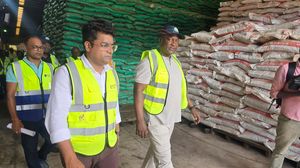
Kigoma. As the year draws to a close, members of the Kibondo Agricultural Marketing Cooperative Society (AMCOS) are celebrating a major milestone after successfully aggregating 865 tonnes of beans through the Kilimo Tija Kigoma (KITIKI) project.
The project aims to strengthen agricultural value chains in refugee-hosting districts, promote gender equality and foster peaceful coexistence between refugees and host communities.
Speaking to The Citizen, the Regional Agriculture Advisor, Mr James Peter, said that through KITIKI, farmers receive training in good agricultural practices, post-harvest handling and quality standards. This support enables them to produce crops that meet the requirements of formal markets. He noted that many of the beneficiaries are women, who play a central role in agricultural production but often face limited access to training, finance and markets.
“The success of Kibondo AMCOS is closely linked to the KITIKI project, which is funded by the Korea International Cooperation Agency (KOICA) and implemented by the World Food Programme (WFP), which will purchase the beans for its refugee response in Tanzania,” Mr Peter said.
He added that for farmers, the achievement represents far more than a successful harvest. “It marks a shift from uncertainty to opportunity, and from struggling to find buyers to securing a reliable market that guarantees fair prices and timely payments,” he said.
Mr Peter further explained that WFP’s bulk purchase strategy is designed to source food locally for refugees living in Tanzania, while at the same time strengthening the livelihoods of host communities. Kigoma Region hosts more than 190,000 refugees, and the approach demonstrates that humanitarian assistance and local economic development can go hand in hand.
One beneficiary, Mr Andrew Simon, a 57-year-old farmer from Kibondo, described the aggregation as life-changing. He said he received Sh21 million directly into his bank account after selling nearly eight tonnes of beans through the cooperative.
Like many smallholder farmers, Mr Simon admitted he was initially sceptical about cooperative marketing. After hearing that Kibondo AMCOS was selling beans to WFP, he decided to participate cautiously, first testing the system.
“I have never earned that much money from a single sale. The best part was that I did not have to chase buyers or bargain over prices. Everything was organised, transparent and fair,” he said.
The experience has since transformed him from a cautious observer into a committed cooperative member, firmly convinced of the power of collective marketing.
The Head of WFP’s Kasulu Office, Mr Saidi Johari, said that for decades farmers in Kigoma have struggled with volatile markets, unreliable middlemen and weak bargaining power, with prices often fluctuating sharply and leaving farmers vulnerable.
“The aggregation of 865 metric tonnes of yellow beans stands as clear evidence of what can be achieved when farmers are connected to structured and predictable markets,” Mr Johari said.
He added that the support helps farmers improve the quality of their produce to meet market standards, enabling them to access broader and more profitable markets, increase their incomes and strengthen food security.
Beyond income generation, Mr Johari emphasised that the initiative also plays a vital role in promoting social cohesion. By purchasing food directly from local farmers for refugee assistance, WFP injects resources into host communities, reduces competition over aid and strengthens local food systems.
“Refugees benefit from a steady supply of nutritious food, while local farmers gain assured markets and stable prices,” he said.
The project is implemented in partnership with World Vision Tanzania and Good Neighbors Tanzania, reaching more than 20,000 farmers and strengthening the management and marketing capacity of 35 agricultural cooperatives. By linking farmers to financial institutions, the initiative—running until 2027—also helps them access affordable loans to invest in better inputs, storage facilities and farm expansion.
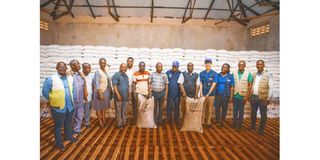
Reflecting on the progress made over the past three years, Mr Peter said the bustling AMCOS warehouse is clear evidence of impact. “The growth of these cooperatives is a direct result of the joint efforts of KOICA and WFP. This achievement lays a strong foundation for sustainable incomes and resilient livelihoods for farmers,” he said.
For farmers in Kigoma, the stacks of yellow beans in the warehouse symbolise resilience, dignity and hope—proof that with the right support, smallholder farmers can improve their livelihoods while contributing to national development and humanitarian goals.
As trucks prepare to transport the beans to support refugees across Tanzania, the celebrations in Kibondo reflect a simple but powerful truth: when local farmers thrive, entire communities—both hosts and refugees—are better nourished and more resilient.