Josephine Christopher is a senior business journalist for The Citizen and Mwananchi newspapers
Mwananchi Communications Limitted
What you need to know:
The Centre recommends time-bound, transparent investigations into unlawful killings and enforced disappearances, and a civilian oversight for police
Dar es Salaam. The Legal and Human Rights Centre (LHRC) has called for independent investigations, stronger oversight of law enforcement agencies and urgent legal reforms following what it describes as a deterioration in human rights in 2025.
Launching the Tanzania Human Rights Report 2025 (THRR 2025) in collaboration with the Zanzibar Fighting Against Youth Challenges Organisation, LHRC urged authorities to ensure accountability for alleged violations linked to the 2025 General Election period.
The organisation recommended time-bound and transparent investigations into unlawful killings and enforced disappearances, the establishment of an independent civilian oversight body for security agencies, and stronger protections for media freedom, digital rights and vulnerable groups.
The report comes as the Government continues post-election reforms, including the establishment of a commission of inquiry to investigate violence that occurred during the election period and its underlying causes.
The commission has been holding public hearings involving victims, security agencies and other stakeholders.
Tanzania has also engaged in broader post-election dialogue processes involving regional and international actors. Former Malawi President Lazarus Chakwera recently visited the country in his capacity as a Commonwealth representative and met the commission as part of consultations on governance and reconciliation.
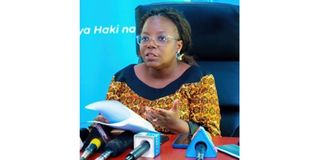
Presenting the report, LHRC executive director Anna Henga said the human rights situation significantly deteriorated in 2025 due to increased violations of civil and political rights.
She cited challenges in access to justice, including arbitrary arrests, prolonged detention and delays in case resolution.
The report also highlights constraints in access to health services, linked to shortages of personnel and infrastructure.
Ms Henga further noted a continued shrinking of civic space, including restrictions on media freedom, tighter regulation of journalists, and limits on freedom of expression and assembly.
LHRC researcher, Fundikila Wazambi, said five key rights were most affected during the reporting period.
He cited the right to life, with reported killings linked to crime, mob justice and law enforcement operations.
The right to liberty and security was also affected, with cases of arbitrary arrests and unlawful detention. The report also highlights concerns over equality before the law, noting inconsistencies in the administration of justice.
Violations of freedom from torture and inhuman treatment were reported, including cases of gender-based violence.
Rape cases accounted for a significant proportion of incidents, with children, particularly girls, among the most affected.
Freedom of religion and belief was also raised, with incidents such as the closure of Ufufuo na Uzima Church cited in the report.
The report documents at least 80 cases of abductions and enforced disappearances in 2025 involving political actors, journalists and civilians. It also cites internet disruptions during the election period as part of digital rights concerns.
Despite the findings, LHRC noted some progress, including the adoption of the National Criminal Justice Policy and a court decision on public interest litigation.
The organisation called for broader dialogue between government, civil society and development partners, saying accountability and institutional reform are necessary to prevent future violations and restore public confidence.