Inside Tanzania’s ambitious youth empowerment drive

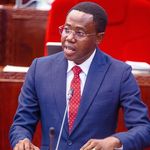
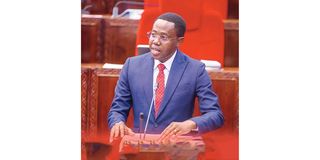
The Minister of State in the President’s Office (Youth Development), Mr Joel Nanauka, presents his docket’s 2026/27 budget proposals in Parliament in Dodoma Monday,April 20,2026. PHOTO | CORRESPONDENT

What you need to know:

  • The government says it aims to place youth at the centre of national development through financing programmes, policy reforms and institutional restructuring
Dar es Salaam. The government has unveiled an extensive multi-sectoral plan aimed at strengthening the economic, social and political empowerment of young people, as part of broader efforts to address unemployment, skills mismatches and structural barriers affecting Tanzania’s youth.

Presenting his docket’s 2026/27 budget proposals in Parliament in Dodoma, the Minister of State in the President’s Office (Youth Development), Mr Joel Nanauka, told Parliament that the government is intensifying interventions to place young people at the centre of national development through financing programmes, policy reforms and institutional restructuring.

The ministry has proposed a total budget of Sh35.96 billion, of which Sh30.10 billion is earmarked for recurrent expenditure and Sh5.85 billion for development projects. Of the development budget, Sh5 billion is domestic funding while Sh853 million is expected from external sources.

Mr Nanauka said young people continue to face several challenges that limit their full participation in the economy, despite forming the largest share of the country’s productive population.

Citing the 2021 Labour Force Survey, he said youth unemployment stands at 12.2 per cent, with women more affected at 16.1 per cent compared to 8.1 per cent for men. He also highlighted a persistent skills mismatch, noting that low-level skills account for 76.9 per cent, while intermediate and high-level skills remain below required benchmarks.

Other challenges include limited access to finance due to strict lending requirements, drug abuse, inadequate parental guidance, peer pressure, misuse of social media and rising cases of mental health concerns among young people.

According to the 2022 Population and Housing Census, Tanzania Mainland has more than 20.6 million youths aged between 15 and 35, representing 34.4 per cent of the population.

Mr Nanauka said this makes youth empowerment central to national productivity and economic transformation.

“The youth constitute more than half of the national labour force. Their productivity is therefore directly linked to economic growth and national development.”

To address these challenges, the Government has implemented several measures, including the revised National Youth Development Policy (2024) and various empowerment programmes aimed at enhancing skills development, employment creation and entrepreneurship.

A key institutional reform has been the establishment of a dedicated ministry for youth affairs through Government Notices No. 685 and 686, mandated to coordinate youth development policies, civic education, volunteerism, economic empowerment and youth welfare programmes.

Mr Nanauka said the move reflects the Sixth Phase Government’s commitment under President Samia Suluhu Hassan to ensure young people play a central role in national development.

In a major intervention, the Government allocated Sh200 billion to support youth-owned enterprises, start-ups and small and medium-sized businesses across sectors such as agriculture, mining, livestock, fisheries, manufacturing, ICT, education and social development.

Following the allocation, the ministry developed a National Youth Economic Empowerment Programme, complete with guidelines to ensure transparency, accountability and effective loan management. As of April 2026, a total of 30,384 loan applications had been received and were under review.

In the first phase, Sh48.6 billion has already been disbursed, benefiting about 10,000 young people engaged in productive sectors including agriculture, fisheries, creative industries, digital services and small-scale manufacturing.

A second phase has also been rolled out, with Sh2.5 billion allocated to support 888 youth through 36 projects expected to create approximately 4,440 jobs.

Additionally, youth continue to benefit from the allocation of four per cent of local government revenue, through which 5,199 youth groups accessed loans worth Sh52.168 billion in the 2025/26 financial year.

These funds have enabled young people to start and expand businesses, create employment opportunities and improve household incomes.

The government has also intensified capacity-building initiatives, training 15,753 young people in entrepreneurship, financial literacy, mental health awareness, business management and civic education. Training also covered opportunities from institutions such as the Tanzania Revenue Authority (TRA) and agricultural development agencies.

Youth were further sensitised on public procurement regulations, which reserve 30 per cent of government tenders for special groups, including 10 per cent for youth. As a result, 299 youth groups registered on the national electronic procurement system secured contracts worth Sh13.2 billion.

To strengthen engagement, the ministry conducted consultations in six regions—Songwe, Mbeya, Ruvuma, Mtwara, Dar es Salaam and Dodoma—reaching 8,120 young people. A total of 186 issues were raised, including unemployment, low incomes, lack of business infrastructure, limited access to capital and bureaucratic licensing procedures.

A national youth conference held in January 2026 in Dar es Salaam and attended by over 1,200 participants under the chairmanship of the Prime Minister, also provided a platform for youth to air concerns and propose solutions.

Looking ahead, the government has outlined key priorities for the 2026/27 financial year, including strengthening youth economic empowerment, increasing civic participation, promoting patriotism and civic education and improving youth welfare.

The ministry also plans to establish a national coordination system for youth affairs, develop a comprehensive youth database, review youth-related legislation and formulate a national strategy on youth, peace and security.

Mr Nanauka said the reforms are designed to ensure young people are not only beneficiaries of development programmes, but active participants in shaping Tanzania’s economic, social and political future.