Major airports in eastern Africa face WHO health regulation compliance peer review
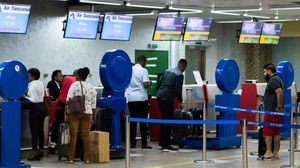
Delegates from Kenya, Ethiopia, Uganda, and Tanzania arrive at Julius Nyerere International Airport for the peer assessment of WHO International Health Regulation Core Capacities, led by The East, Central and Southern Africa Health Community (ECSA-HC).
The experts’ review led by the East, Central and Southern African Health Community (ECSA HC) assessed how each airport adheres to the World Health Organization (WHO)'s International Health Regulation (IHR) core capacities for the points of entries.
Dar es Salaam. A delegation of experts in epidemiological surveillance and port health services from Kenya, Tanzania, Uganda, and Ethiopia has concluded an assessment of compliances to International Health Regulation core capacities at four international airports in the region to establish the hubs’ capacities to handle public health emergencies.
The first-of-its-kind Peer-To-Peer’ review led by the East, Central and Southern African Health Community (ECSA HC) assessed how each airport adheres to the World Health Organization (WHO)'s International Health Regulation (IHR) core capacities for the points of entries.
The move comes amid heightened regional concern over the recent Marburg virus outbreak in Ethiopia and the need to strengthen aviation borders against potential disease transmission.
Dr Mohamed Mohamed, a Senior Medical Epidemiologist from ECSA HC led the delegation that was assessing the major regional international gateways, with support from World Bank-funded Health Emergency Preparedness, Response and Resilience Program (HEPRRP), which is implemented regionally by ECSA-HC and the Intergovernmental Authority on Development (IGAD).
“This is the first of its kind, where we, simultaneously, assessed four major international airports in our region,” he said, elaborating the unique nature of the review and saying the intense focus came from the coordinated approach to regional health security:
“For two weeks, we have been very busy conducting what we call International Health Regulations assessment of Core Capacity for four major International Airports in the Eastern and Horn of Africa,” Dr Mohamed said, listing them as Bole International Airport (Ethiopia), Julius Nyerere International Airport (Tanzania), Jomo Kenyatta International Airport (Kenya), and Entebbe International Airport (Uganda)
As the host country for the review, Tanzania facilitated the exercise. Dr Amour Seleman, Head of Port Health Services from Tanzania’s Ministry of Health noted the reciprocal benefits of the regional collaboration.
“It was a moment of learning from each other and peer review which is critical and without such exercises, we cannot know where our true gaps lie,” Dr Seleman said, emphasizing that the process benefits all participating countries equally by exchanging best practices.
Delegates from Uganda and Ethiopia join Jomo Kenyatta Port Health officials for a peer-to-peer assessment of International Health Regulations Core Capacities last week. (Photo courtesy: ECSA Health Community)
The review is not just a standard audit; it is a critical step towards designating these key travel hubs as globally certified health security zones. This process of designation ensures that these Ports of Entry (PoEs) are officially designated airports with the resources and systems to manage public health risks arriving via international travel.
“This is one of the major steps for designation of the Ports of Entries (PoEs),” he explained. “We want our airports or Ports of Entries to be capable of sustaining any emergency, especially for emergencies involving infectious disease outbreaks and disasters.”
This assessment is anchored in the International Health Regulations (IHR) of 2005, an international legal instrument binding 196 countries, including all WHO Member States.
The IHR (2005) was enacted to prevent, protect against, control, and provide a public health response to the international spread of disease while minimising unnecessary interference with world traffic and trade.
The original sanitary regulations date back to the mid-19th century, driven by cholera epidemics, but the 2005 revision adopted an all-hazards approach, requiring countries to develop mandatory Core Capacities.
The International Health Regulations (IHR 2005) were recently amended to strengthen global preparedness and response, with new provisions on surveillance, rapid information-sharing, equitable access to medical countermeasures, and enhanced accountability among Member States.
Core Capacities are simply the necessary public health programs and skills that countries must keep ready, according to Dr Remidius Kakulu, Principal Epidemiologist from Tanzania's Ministry of Health.
He describes them as the “emergency response essentials” that the WHO requires nations to have under the IHR 2005 agreement. This WHO tool is key because it establishes a uniform global standard for early detection, assessment, and rapid response to public health emergencies.
Dr Benedict Mushi, the Senior Knowledge Management and Public Health Specialist at ECSA-HC says the impetus behind the regional effort draws lessons from the recent global crisis.
“The Covid-19 pandemic served as a harsh lesson in the fragility of global borders and the consequences of fragmented health responses,” Dr Mushi stated.
“The lack of coordination, patchy surveillance, and absence of standardized health measures at many airports globally highlighted the urgent need to implement the IHR (2005) requirements fully.”
He says ECSA-HC's unique approach, facilitated by the HEPRRP, is designed to close this gap and boost regional defenses against future outbreaks.
“This is the void that ECSA-HC’s Peer-To-Peer approach, through the HEPRRP, is now uniquely filling, preparing the region for a scenario where should another pandemic hits, its major airports have the requisite capacities needed.”
According to Dr Mohamed, the intensive assessment across four major East and Horn of Africa airports was a major milestone to delve into how regional health security must be maintained through the core capacities.
“The first one is we are assessing whether they can have good communication and coordination during an emergency. You need to know who, during that emergency, is going to take charge, and where is the centre for communication,” Dr Mohamed detailed, noting the need for a clear chain of command during a crisis.
He added that the second area involves evaluating the “Core Capacity at all time,” ensuring that routine public health functions remain robust, including continuous surveillance and screening.
“If there's no emergency, we want the Port of Entry to continue doing surveillance. So, we want to know how they screen the passengers. How do they make sure that if there's an outbreak in any of the suspected persons, how do they actually do the follow-up. They do not import diseases to the country,” he said.
The third and most critical component is the stress-test of emergency response. “This is the Core Capacity during emergencies. Now, during emergencies always things operate differently,” Dr Benedict Mushi observed, adding that the teams are checking for preparedness against current threats. “We want to know how the airports have aligned themselves on that [current outbreaks like Marburg and cholera]. We need to see that we are going to follow all the standard operating procedures which need to be available at the Port of Entry.”
While Moses Ebong, Principal Medical Officer Ministry of Health – Uganda, acknowledged that “There are areas of improvement that we have identified at each of the airports we visited,” the comprehensive assessment is designed to identify and close these gaps. The findings will lead to a robust action plan for strengthening capabilities.
This is where Dr Mohamed confirmed, “And our aim now, after all this is to score them. all the gaps will be identified. And then we have an action plan. That action plan needs to be followed.”
He further explained that successful implementation of this action plan will lead to an external review process, certifying the airport as safe and compliant.
“We will call the WHO who are independent assessors to come and certify,” which then will signal to the world that the airport is safe. “Once airports follow the required guidelines, and have all the capacity, equipment and coordination, then we are sure that the airport is safe and ready to save the lives of passengers.”
In the end, this ECSA-HC regional initiative is aiming to establish a common, high standard of health security across the key travel corridors of the Horn and East Africa, transforming the regional response landscape by harmonising previously disparate practices.
“The unique thing we are going to agree, is the harmonization of these procedures,” Dr Mohamed concluded. “What we want is to harmonize those procedures,” ensuring safe and efficient handling of passengers and potential public health risks across the region