Muhimbili professor proposes genetic testing for autistic children in Tanzania
What you need to know:
He made the suggestion when presenting a paper titled: “Gaps in Knowledge, Prevalence and Care of Children with Autism in Tanzania,” during a professorial lecture on Wednesday that was attended by government officials, researchers, medical doctors from Muhimbili National Hospital (MNH) as well as medical students.
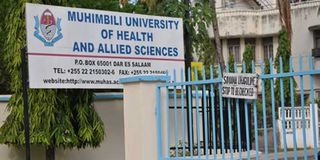
Dar es Salaam. A long-serving expert in paediatrics and child health, Professor Karim Manji as urged the Muhimbili University of Health and Allied Sciences (Muhas) to make use of the university’s state-of-the-art genetics laboratory to diagnose children with autism.
Professor Manji said autism—a disorder affecting children’s development and social skills—is still poorly diagnosed in Tanzania. But, he noted, the country could use the available resources to help identify the children with the condition and establish appropriate interventions.
He made the suggestion when presenting a paper titled: “Gaps in Knowledge, Prevalence and Care of Children with Autism in Tanzania,” during a professorial lecture on Wednesday that was attended by government officials, researchers, medical doctors from Muhimbili National Hospital (MNH) as well as medical students.
“Autism is still poorly diagnosed and poorly managed. This serious developmental disorder has social, societal, educational, psychological and economic impact on the family,’’ he said.
“These groups of children are deprived of any treatment or therapy and end up in institutions enduring terrible suffering for the rest of their lives,’’ he added.
“As we continue to work on establishing the exact cause of autism, we can make use of the genetics laboratory that exists at Muhas to try and diagnose the children. This means, samples of children with autism can be sent there for analysis as part of the plans to establish the true burden of the problem,’’ suggested the don.
The hi-tech lab which was donated by a prominent Turkish businessman, Ziya Karahan; has been providing genetic testing for about three years now, although The Citizen has previously quoted some officials who claimed that the lab was not being fully put to use.
Shortage of teachers
Professor Manji said there was a pressing need for relevant authorities to implement strategies that would help increase the number of teachers specially trained to handle autistic children.
According to data from the Ministry of Education, Science and Technology, the country has only 8 public schools registered for educating children with Autism. The total number of children in the 8 government schools is 105 (male 75 and female 30).
“Some of the good schools and resource centres have relatively and understandably high fees, whereby an average Tanzanian family may not be able to afford,’’ noted Prof Manji.
“It is clear that there is an imbalance of knowledge about infancy worldwide: Most infants are born in poor countries, and most of what we know about infant mental health comes from wealthier countries,’’ he explained.