Mwigulu flags loopholes for loss, misuse of public funds
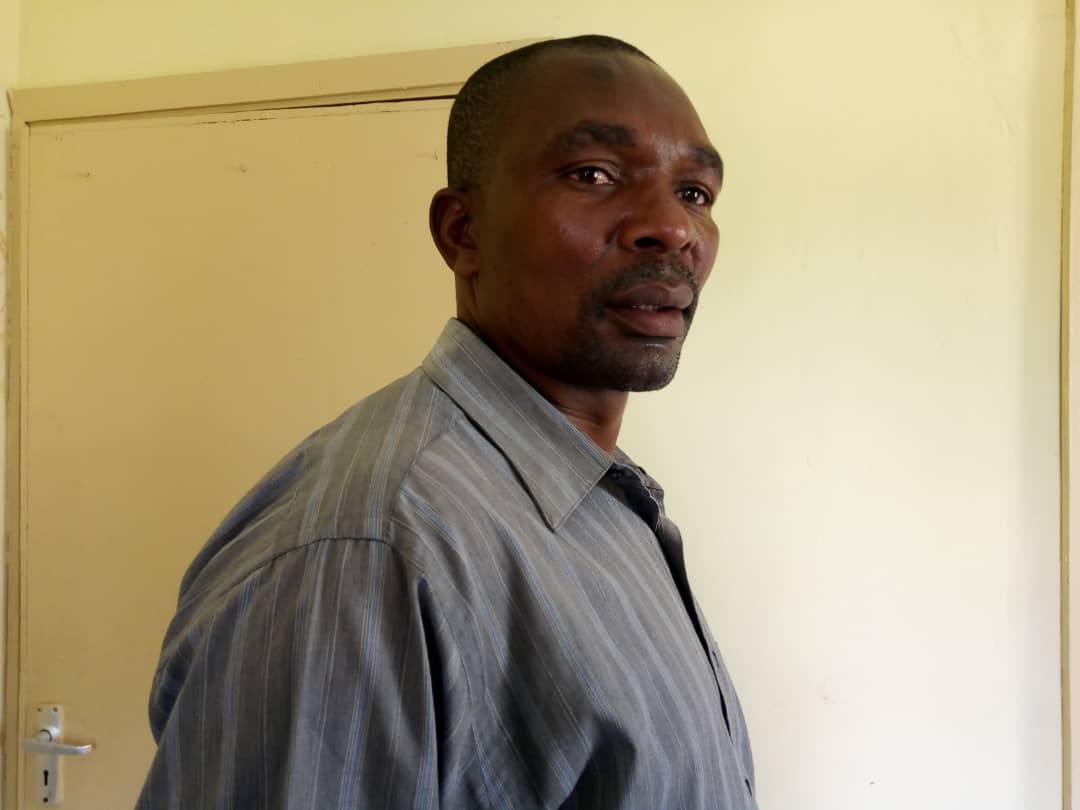
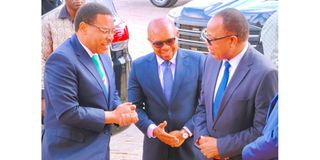
The Prime Minister, Dr Mwigulu Nchemba, greeting the Commissioner for Ethics of Public Leaders, retired Judge Sivangilwa Mwangesi (right) before addressing the leaders of the ethics secretariat in Dodoma yesterday. In the middle is the Minister of State, Office of the President (Services and Good Governance), Mr Ridhiwan Kikwete. PHOTO | PMO
Dodoma. The Prime Minister, Dr Mwigulu Nchemba, has identified four key areas he says remain the biggest loopholes for the loss and misuse of public funds—procurement, contracts, issuance of licences and revenue collection.
Dr Mwigulu made the remarks yesterday during a meeting with officials from the Ethics Secretariat for Public Leaders, held as part of his ongoing familiarisation tour of government institutions.
He also directed leaders across the country to prepare for a mandatory national declaration exercise in which every public servant will be required to list their assets and explain how they were acquired.
“I decided to let the country settle first because we have just come from a storm. If I trigger another immediately, it will not be ideal. But it is coming, and you will witness the commotion. It is unacceptable for people to feast on what belongs to others,” Dr Mwigulu said.
Procurement “number one source of loss”
The Prime Minister said procurement remains the leading area where public money is siphoned off, followed by valuation and revenue collection, and then contracts and the issuance of licences. He noted that systemic corruption is causing severe damage, citing cases where government projects have stalled because officials allegedly shared the project funds among themselves, leaving contractors unable to proceed.
In sectors like mining and land licensing, Dr Mwigulu condemned the exploitation of vulnerable applicants by corrupt officials.
“Go and investigate. Someone applies for a mining licence, but because of their vulnerability, officials see it as an opportunity, share the benefits among themselves, and deny the rightful applicant their due. This is also happening in land matters. It is unacceptable,” he stressed.
Ethics declarations to be enforced
Dr Mwigulu ordered that all public servants be compelled to fill in ethics declaration forms, starting with departments deemed to have high corruption risks. He directed that the process be fast-tracked in collaboration with the Prevention and Combating of Corruption Bureau (PCCB) and other agencies.
While affirming that owning wealth is not a crime, the Prime Minister maintained that the source of such wealth is what truly matters. He highlighted the current inefficiency where high-influence individuals, such as members of tender committees, often file cursory statements that are simply stored away, while individuals not directly involved in corruption-prone operations are still required to fill out comprehensive forms.
Ethics authorities urged to act
Earlier, the Minister of State in the President’s Office (Public Service Management and Good Governance), Ridhiwan Kikwete, said it was unacceptable for leaders to be widely accused of wrongdoing while ethics watchdogs remained silent.
Mr Kikwete said that even he had faced accusations, yet no authority had summoned him for questioning to establish the truth. “It is impossible for someone to have teeth and fail to bite. If the Commission does not act, we will continue to have leaders who lack patriotism in this country. We must act,” he said.
Lack of evidence a major obstacle
The Commissioner of Ethics for Public Leaders, retired Judge Sivangilwa Mwangesi, said the Commission was often hampered by a lack of evidence, as many complainants feared to come forward. He added that limited legal awareness among citizens contributed to the shortage of credible information needed to expose misconduct.
Judge Mwangesi said that in the last financial year, 62 cases were brought before the Commission, with 16 percent of the complaints found to be defective.