Over 360 students in Nyasa to gain digital skills through new ICT laboratory

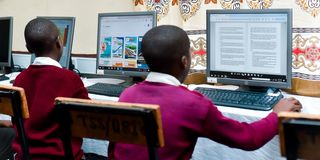
Nyasa. More than 360 students at Tingi Secondary School in Nyasa District, Ruvuma Region, are set to benefit from improved access to digital education and practical technology skills following the establishment of a modern Information and Communication Technology (ICT) laboratory aimed at enhancing learning outcomes and preparing students for opportunities in the digital economy.

The ICT laboratory, officially launched on February 26, 2026, was established through a corporate social responsibility initiative led by Helios Towers Tanzania to expand access to quality education through technology integration in schools.

Valued at over Sh30 million, the facility is equipped with 26 computers, a projector, smart television, whiteboard, maintenance equipment, and fully installed supporting infrastructure designed to support effective digital learning.

The project was implemented by Camara Education Tanzania in collaboration with district education authorities and the leadership of Tingi Secondary School, alongside capacity-building training provided to teachers to ensure sustainable use of the technology.

Nyasa District Education Officer, Paschal Berege, commended Camara Education Tanzania for mobilising support and Helios Towers Tanzania for financing the project, describing it as a significant boost to teaching and learning in the district.

“This project will be a great support in teaching and learning because the world is rapidly advancing in information and communication technology, which employs many young people globally. Investing in technology is therefore investing in youth employment,” he said.

Speaking during the launch, Helios Towers Tanzania Supply Chain Director, Baraka Andrew, said the company recognises the importance of preparing young people to actively participate in the digital economy as Tanzania continues to strengthen its digital transformation agenda.

“Even President Samia Suluhu Hassan continues to emphasize preparing our country to participate in the digital economy. We are encouraged to see students demonstrating how they will use these facilities to access information that was previously unavailable to them, and we expect academic performance to improve,” he said.

Camara Education Tanzania Director, Dayani Mbowe, noted that the laboratory will enable students to utilise computers for various digital learning purposes, including accessing past examination papers, books, and academic notes.

He added that the installation of ICT infrastructure together with teacher training has strengthened technology-based learning at the school and supported the introduction of a dedicated ICT subject.

Students also expressed appreciation for the new learning facility. Boniventura Mbunda said the laboratory will help students acquire technology skills and simplify learning through easier access to educational materials.

“The project will help us gain technology skills and access books and information through computers, unlike before when such resources were difficult to obtain,” he said.

Another student, Martina Koela, explained that learning has now shifted from theory to practice.

“Previously we learned ICT theoretically, but now we can practice using computers, search for information, and build skills that will help us in the future,” she said.

The establishment of the ICT laboratory reflects continued collaboration between private sector partners, education stakeholders, and government authorities aimed at improving education quality, expanding digital inclusion, and empowering Tanzania’s youth with skills needed to thrive in an increasingly technology-driven world.