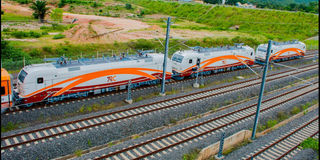
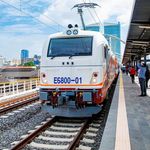
Mpwapwa. As the Government announces plans to curb damage to both the Standard Gauge Railway (SGR) and the old metre-gauge line, which have been repeatedly washed away by floods between Kidete and Godegode stations, residents say the proposed solution may not address the root cause of the problem.
They argue that flooding and damage persist because the dams are being constructed on only one side of the railway lines, while floodwaters originate from the opposite side and cross the tracks unchecked.
On Friday, January 2, 2025, Prime Minister Dr Mwigulu Nchemba announced plans to construct several dams, including the rehabilitation of pre-independence dams such as Hombolo, Kidete, Kimagai, Kidunda and Msagali. He said the dams would help resolve flooding that has damaged railway infrastructure.
Dr Nchemba made the remarks during a public rally in Gulwe Village, Mpwapwa District, while on an inspection tour of railway infrastructure that began in Morogoro Region.
“The Government is prepared to build dams, and implementation is expected to start as early as possible to save the railway infrastructure,” said Dr Nchemba. “I urge citizens to take part in protecting infrastructure built at great cost. Let us also protect the environment and avoid cultivating along water channels.”
The Minister for Agriculture, Mr Danile Chongolo, said the dams would also support irrigation farming, adding that the implementation process had already begun and funds were available.
However, the Minister for Home Affairs, Mr George Simbachawene, said that while the dams would benefit farmers and help reduce hunger, transport challenges would persist unless additional measures were taken.
Mr Simbachawene, who is also the Member of Parliament for Kibakwe in Mpwapwa District, said that without building dams on the opposite side of the railway, embankments would continue to be destroyed and rail lines washed away during the rainy season.
"Honourable Prime Minister, dam construction is beneficial to farmers. However, given the current ecological situation, experts should assess the mountainous areas where the water originates and consider constructing smaller dams upstream to reduce the speed of water before it reaches the railway,” he said.
He added that most existing dams were built decades ago on one side of the railway, while upstream areas that generate large volumes of water lack any structures to control flow before it reaches the railway infrastructure.
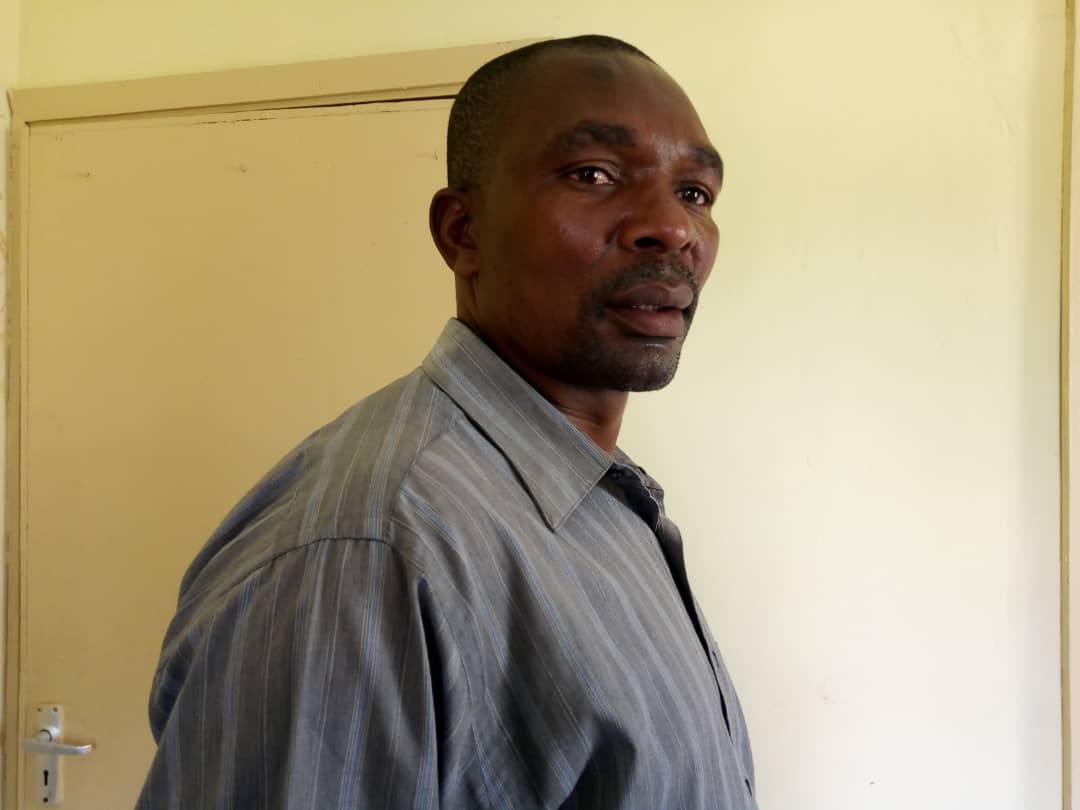
His concerns were echoed by the chairperson of Godegode Village, Mr Waziri Ramadhan, who said the dams would mainly benefit agriculture while railway infrastructure would remain vulnerable.
Mr Ramadhan warned that unless measures are taken to control runoff from the Kibakwe and Rudi mountains, the Government would continue to suspend railway operations during the rainy season, and even the high-speed rail embankment could be washed away.
He said several villages are located in fertile valleys surrounded by hills, making them suitable for large dams that would not require high construction costs due to favourable terrain.
According to him, the Government should explore such options in villages including Vibelewele, Kifugame, Gulwe and Mzase, which receive heavy runoff but also have land suitable for agricultural use if dams are constructed.