Dar es Salaam. As opposition party Chadema outlines its position, including demands for the unconditional release of its chairman, Tundu Lissu, political analysts in Tanzania say it is important for politicians to sit at the same table for dialogue and prioritise national interests.
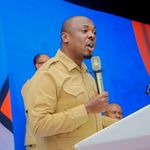
The analysts’ remarks come a day after Chadema Vice Chairman (Mainland) John Heche issued the party's 2026 New Year message, in which he said 2025 had been an unusual year for Tanzanians.
Speaking on Saturday, January 3, 2026, Heche said the party wants Lissu released unconditionally, arguing that he is not a traitor, did not lie and did not incite violence, but rather spoke the truth.
He said 269 days had passed since Lissu was arrested and remanded in custody over what he described as false, baseless and oppressive charges.
Other positions outlined by Chadema include demands for systemic reforms of the Independent National Electoral Commission (INEC), the enactment of a new Constitution, an independent international investigation into killings and abductions, and the withdrawal of a court case seeking to suspend the party’s activities.
Commenting on Chadema’s proposals on Sunday, January 4, 2026, political analysts expressed differing views, with some opposing the party’s push for major demands within a short period, while others supported the stance and called for dialogue and reconciliation.
Political analyst, Prof Ali Makame Ussi, said if there is an opportunity to bring politicians together for dialogue, it should be pursued.
However, he noted that before the events cited by Chadema, the party had not been allowed to conduct political activities in the previous administration, but when restrictions were lifted, some actions taken were later found to be contrary to the law.
In building a united nation, Prof Makame said it is important for politicians to engage in dialogue rather than issue statements that do not contribute to nation-building.
On the demand for a new Constitution, he said there is already readiness for constitutional reforms, including changes to INEC, aimed at fostering cooperation and unity.
“Pushing for everything to happen today instead of tomorrow is a political statement that may not necessarily bring a good future for the country. The Constitution is a long process, and no one can deliver a new constitution in a single day,” he said.
Generally, Prof Makame said Chadema’s statement focused more on party interests than on the broader national agenda and the country’s reform roadmap.
He said many of the reforms cited by the party have already been acknowledged by national leaders and incorporated into the CCM Election Manifesto, with commitments that they will be addressed within the five-year implementation period.
“The reforms have been discussed, promised by top leaders and included in the CCM manifesto for implementation within five years. This does not give room to bypass existing procedures. Constitutional reform is a long process,” he said.
Another political analyst, Prince Mwaihojo, commented on Chadema’s demand for investigations into abductions and killings, saying such probes do not necessarily have to be international.
“We can have our own commission, but it must inspire public confidence. What has eroded trust in current commissions is their structure and the directives they receive, which in turn strengthens Chadema’s argument,” he said.
He added that accountability before forming commissions could also help restore public trust in investigative bodies.
On legal cases facing the party and its leaders, Mr Mwaihojo said the government should review the justice system, arguing that arresting individuals before investigations are completed is problematic.
He said such practices are often used to intimidate and silence people, as suspects can remain in custody for long periods only for their cases to be dropped later without explanation.
Another political analyst, Dr Matrona Kabyemela, said issues raised by Chadema in its New Year message have been voiced throughout the year, while authorities have remained largely silent.
“At this point, we need engagement involving all stakeholders to move forward. The issues being raised need to be examined, assessed and some implemented this year to ease the existing political tension,” she said.
Meanwhile, teacher Samson Sombi said Chadema’s 2026 New Year 2026 reflects the state of Tanzania’s politics and the direction of opposition struggles in a challenging democratic environment.
“At the core of the statement is the demand for the release of party's national chairman Tundu Lissu, which Chadema views not as an individual matter but as a reflection of the state of the rule of law and political rights in the country,” he said.