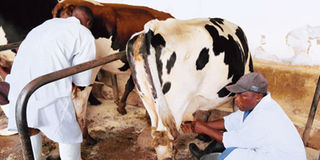
Iringa. Dairy farmers in Iringa, Mbeya, Njombe and Rukwa Regions have been suffering losses regularly because of their milk going sour before reaching the only factory in the southern highlands
ASAS Dairies is the only milk factory in the southern highlands that processes milk from hundreds of farmers.
The owner of the factory, Mr Fuad Abri told reporters yesterday that his firm has a capacity of processing over 50,000 litres a day.
ASAS Dairies processes milk from smallholder dairy farmers in the four regions, but disclosed that a lot of farmers incur losses because of poor transport.
Mr Abri said the factory buys fresh milk from roughly 2,000 farmers, disclosing that the number and the number is growing.
Nonetheless, the farmers suffer colossal losses because of poor transport, stressing that many litres of milk go bad before reaching the factory.
He named Busokelo in Mbeya Region as an area with promising dairy farmers, but their milk, especially during rainy season, is lost because of almost impassable roads.
“Roads in this area deserve special attention in order to raise the income of the farmers, which in turn will help boost production at our factory,” Mr Abri said.
Mr Abri asked the government to formalise dairy farming because it can employ many people countrywide.
Tanzania has the second largest livestock population in Africa after Ethiopia.
ASAS Dairies, he explained, promotes small holder farmers by giving them improved breed using artificial insemination and trains them on how to access markets.
The company, as a local investor was in January last year, described by Prime Minister Kassim Majaliwa as an outstanding promoter of the local content concept.
As of January last year, ASAS Dairies had 1,010 cattle, three Igingilanyi, Nduli and Mgongo farms with a total of 2000 acres.
ASAS Dairies is a strategic partner in the Southern Agricultural Growth Corridor of Tanzania (SAGCOT) Dairy Value Chain Partnership; the partnership seeks to improve livelihoods and support food security; it seeks end-to-end value chain solutions and it also seeks to demonstrate positive environmental impact. By 2020, it is forecast that per capita consumption of milk in Tanzania will reach 100 litres per year, from the current 45 litres per annum.