Samia defends how security forces handled October protests

President Samia Suluhu Hassan

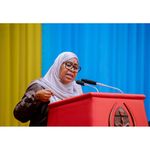
Dar es Salaam. President Samia Suluhu Hassan addressed the nation on December 2, 2025, explaining the government’s response to the election-related unrest that erupted on October 29. She detailed several factors that led to the security bodies’ decisive actions.

During her address to the Dar es Salaam Region Council of Elders at the Julius Nyerere International Convention Centre (JNICC), President Hassan stated that the unrest in Tanzania following the general election was not a spontaneous expression of public frustration.
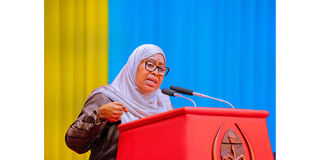

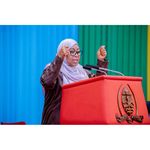
A section of elders clap during a meeting with President Samia Suluhu Hassan in Dar es Salaam yesterday. PHOTO | STATE HOUSE


Instead, she claimed it was a planned operation aimed at destabilizing and ultimately overthrowing the government.

Her remarks came as the country continued to face lingering tensions, sporadic acts of violence, and warnings from security authorities about efforts to mobilize young people ahead of December 9.

She asserted that the events of October 29 should not be viewed as protests but rather as “a manufactured event with a political agenda.”

According to President Hassan, intelligence assessments indicate that the chaos was meticulously planned, funded, and coordinated by actors both within and outside the country.

“What took place was a manufactured event, and those who orchestrated it were determined to overthrow our government,” she said. “This was not an accident. Those behind it had more significant intentions; they aimed to topple our state.”

She described the violence as “a broad project of evil” with identifiable sponsors, supporters and implementers.

The President explained that the individuals involved had varying degrees of awareness: some were fully conscious participants, others were misled by political promises, and a portion, she noted, were paid to take part in the unrest.

“We are accustomed to lawful demonstrations,” she added. “However, burning government projects, police facilities, and private businesses is not a protest. Those were organized riots with a specific purpose.”

President Hassan questioned why this orchestrated violence occurred on Election Day itself. “What lesser response was expected from us?” she asked.

“Should we have simply watched as those who plotted an overthrow succeeded? Would that still result in a functioning state?”

She compared Tanzania’s response to actions taken by governments globally when protests verge on insurrection. “We have seen in other countries that when demonstrations head in a dangerous direction, governments use strong measures,” she said.

Role of opposition parties

The President accused unnamed opposition parties of attempting to shift blame for their electoral decisions onto the government.

She said claims that opposition candidates were blocked from participating in the elections were false and aimed at “hiding their own embarrassment.”

“They knew they would not succeed because of the work we have done over the past five years and the public response to CCM’s campaigns,” she said. “No one prevented them from participating.

They refused on their own will after their internal discussions.” She said intelligence briefings showed that some opposition leaders avoided entering the polls to escape defeat.

“To conceal the embarrassment they would have faced, they triggered what happened,” she explained. “If there were rights they intended to demand, why choose Election Day?”

President Hassan said the internal fractures within opposition groups, including defections to other parties and disputes between political and activist wings, were being unfairly projected onto the government.

“These are their own internal issues; they should not blame us,” she said.

She expressed disappointment, recalling moments when she extended “a hand of reconciliation” during her early years in office. She said she financially supported some returning exiles, facilitated the dropping of cases, and allowed opposition parties to resume political activities, including peaceful demonstrations.

“I did all this believing I was speaking to mature Tanzanians,” she said. “But if you give someone political space and they use it to disrupt the country, that is not politics.”

The youth: Misled and mobilised

A significant portion of the President’s address focused on the involvement of young people in the October unrest.

“Our young people were drawn into the streets, chanting slogans they didn’t understand,” she said. “They were told they were demanding rights—what rights? Which ones, specifically?” She questioned the claim that the youth poured into the streets due to economic hardship.

“A person genuinely struggling for survival does not march chanting songs,” she argued. “Most young people facing hardship were at work. Those who joined had their own motives.”

According to the President, the unrest revealed a deeper national challenge that young people were growing up without proper guidance and patriotic education. “That is why I said we must establish a full Ministry of Youth, not just a unit within a larger ministry,” she explained.

“Our youth had no reason to be in the streets; they were simply sent there and made to chant things that were not in their interest.”

Religious institutions: “Stay within constitutional limits”

President Hassan also addressed concerns over the involvement of some religious voices in the unfolding political tensions.

“In leadership, you must accept that at times you will lose popularity,” she said. “But we must correct things and speak the truth.”

She reiterated that the Constitution does not grant any religious denomination the authority to issue directives overriding others.

“No denomination has constitutional or legal authority to overrule another,” she said. “Tanzania has no single owner. Nobody holds a certificate saying this country is theirs to run as they wish.”

She urged religious leaders to avoid assuming powers beyond their spiritual mandate.

“Do not drape yourselves in robes suggesting you can overrun this nation. We will run this country by its Constitution and its laws,” she stressed.

The President said she had observed divisions within some religious groups over public statements issued in recent weeks. Despite these disagreements, she urged religious leaders to promote unity, peace and adherence to national laws.

“If you do not like Samia, there is no need to disrupt the country,” she said. “Whether the leader is a man or a woman, authority is given by God. And we will defend this nation with all our strength.”

Foreign coordinators and external pressure

President Hassan warned that some of the unrest was supported by coordinators based outside Tanzania.

Some, she said, were motivated by personal economic difficulties abroad, while others were financially backed by actors seeking influence.

“Some are paid by those who want these events to happen,” she said. “They lack patriotism. And for some, Tanzania’s stability does not matter—they live abroad, unaffected.”

She also addressed what she described as attempts by foreign actors to “lecture Tanzania on how to manage its domestic affairs.”

“They say Tanzania should do this and that. Who are you?” she asked. “Is it because of the small amounts of money you give us?”

Her comments came days after the European Union Parliament adopted a resolution to suspend 156 million Euros (about Sh400 billion) in aid earmarked for Tanzania in 2026, pending investigations into alleged human rights violations.

The suspended funds amount to roughly 0.7 percent of Tanzania’s national budget for 2025/26, which stands at Sh56.49 trillion. Of this, Sh40.47 trillion is expected from domestic revenue, Sh1.07 trillion from foreign grants, and Sh14.95 trillion from domestic and external loans.

In its resolution, which was adopted by 539 votes in favour, no votes against, with 27 abstentions, the EU MPs said there should be a fair investigation into suspects of killings, enforced disappearances, torture and other violations in Tanzania and insisted on the need for an African-led inquiry commission.

“The money is too little,” she President Hassan. “We are now talking about doing business where both sides benefit.” The government, through the Minister for Foreign Affairs and East African Cooperation, Ambassador Mahmoud Thabit Kombo, has since confirmed ongoing negotiations with the EU, with the final decision on the cooperation resting with the EU Commission.

On calls for a new constitution

Responding to renewed demands for a new constitution, President Hassan said the government had never rejected constitutional reform.

“No one has refused to amend the Constitution of this country,” she said. She reminded the elders that the Criminal Justice Reform Commission she formed had travelled nationwide gathering citizens’ views, and that 90 percent of the short- and medium-term recommendations had already been implemented.

“The long-term issue remaining is the new constitution,” she said. “And I have said we will implement it.”

She added that the CCM election manifesto commits her to forming a commission within 100 days to establish national consensus before entering the constitutional process.

“How do you amend national laws when you are divided into pieces?” she asked. “We must first reconcile.”

Given the recent unrest, she said she had established a new investigative commission whose findings would inform the path forward.