Shying away from testing, men stall fight to end HIV
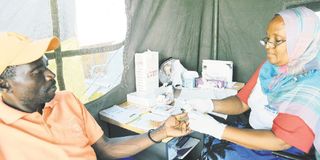
A man underoes voluntary HIV testing during an awareness campaign held in 2015 at Mnazi Mmoja Hospital in Dar es Salaam. PHOTO|FILE
What you need to know:
Challenges remain to convince more men, who are considered central in the fight against the HIV epidemic, but tend to shy away from the clinic when it comes to knowing their status
Musoma. A significant number of men are still shunning voluntary HIV/Aids and counselling despite the spread of awareness campaigns, turning themselves into a major stumbling block in efforts to eradicate the epidemic at the local government level, statistics reveal.
The case of Musoma Municipality could be the tip of an iceberg.
Records for the municipality, for example, show that between July and September this year a total of 7,700 people voluntarily turned out for HIV/Aids test. Out of these, 4,341 were women while 3,359 were men.
Challenges remain to convince more men, who are considered central in the fight against the HIV epidemic, but tend to shy away from the clinic when it comes to knowing their status.
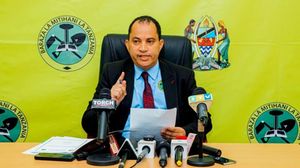
Presenting an HIV report during the Musoma Municipal full council meeting on Friday, the chairman of the HIV committee, Mr Shabani Kajala, said various institutions have joined hands with government to increase awareness. The efforts have not yielded much result.
“The turnout is still low, but we are looking for more effective means to bring men into the fight against HIV/Aids, on the basis of responsibility and behaviour change,” Mr Kajala told the meeting.
He reiterated the importance of knowing one’s status as the basis of stopping the spread of the infection.
“Knowing your health status is very crucial not only for yourself but also for the sustenance of the HIV/Aids fight because it will help policy makers plan and improve the current campaign,” he said.
According to Mr Kajala, men were generally reluctant to test for HIV/Aids.
The local government leader noted that current statistics show that a lot still needs to be done to educate men on HIV/Aids.
Records show that 16,732 people living with HIV/Aids in Musoma Municipality were under proper medical care and using ARVs. However, only 5,200, less than a third of these people are men.
Women involvement in the fight against HIV is encouraging in the municipality, but without the involvement of men, progress could stall.
Authorities says it is not clear why men shun voluntary testing, despite the general improvement in HIV/Aids services and the availability of ARVs.
Mr Ahmad Kitumbo, councilor for Mwigobero ward, said more needs to be done to educate men on the importance testing.
A study conducted last year in Uganda and Kenya shows that the promise of antiretroviral therapy to prolong health is a motivating factor for many men to participate in testing.
Published in Aids Care, a journal that focusses on the psychological and socio-medical aspects of HIV/Aids, the research also recommends flexibility in operating hours of HIV testing, including late evening and weekend times.
More also, researchers cite multiple convenient locations as facilitating factors enhancing male participating in HIV testing.
“Mobile testing reduced but did not eliminate barriers to men’s participation in a large-scale ‘test & treat’ effort. However, transformations in gender norms related to HIV testing and care-seeking are underway in eastern Africa and should be supported,” they noted.
In 2007, then-President Jakaya Kikwete and his wife Mama Salma participated in a public HIV/Aids test as part of the launch of Tunajali — a five-year, nationwide $56 million initiative to prevent HIV/Aids and provide treatment and care for individuals infected and affected by HIV/Aids.
Various national leaders also took part in the campaign aimed at fighting the spread of the disease. But glaring challenges remain.
For many Tanzanians, HIV/Aids testing remains stigmatised. Until recently, testing was carried out with little regard to confidentiality and followed up with ineffective and inappropriate counselling, according to Amref Health Africa.