Stakeholders push for end to corporal punishment in schools
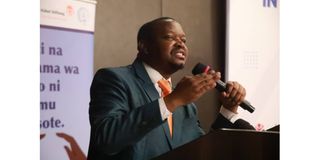
A representative of the Ministry of Education, Science and Technology, Mr Mussa Mnyeti, speaks during a stakeholders’ dialogue on ending corporal punishment.
Dar es Salaam. Education stakeholders have called for the abolition of corporal punishment in schools, arguing that the practice undermines children’s wellbeing and affects learning outcomes.
The call was made during commemorations of the International Day of Ending Corporal Punishment, where participants said physical punishment should no longer be used as a disciplinary tool in schools.
A child protection and child rights governance specialist from Save the Children, Barnabas Kaniki, said corporal punishment continues to pose serious risks to learners in the country.
He said the practice can lead to physical injuries and, in some cases, more severe outcomes, while also affecting children’s confidence and curiosity.
“Children making mistakes is part of growing up. When punishment is used, it hinders development and affects their ability to learn and innovate,” he said.
He added that corporal punishment also instils fear and discourages active participation in learning.
Mr Kaniki said despite global discussions on ending corporal punishment, awareness and engagement remain limited in some communities.
He cited a 2023 report by the Legal and Human Rights Centre (LHRC) indicating incidents involving excessive force in schools, some of which resulted in death or disability.
“These are only a few cases that have reached the public domain. Many others are settled privately. We cannot continue to risk children’s lives,” he said.
A student from Tandika Secondary School, Ms Hauleti Abdallah, said corporal punishment can disrupt learning and cause physical harm.
She said her younger sibling was once beaten for arriving late at school, sustaining injuries that affected attendance and performance.
As a result, she said, the learner missed lessons and sat for examinations without adequate preparation.
Ms Abdallah also raised concerns over non-physical forms of punishment, such as requiring students to bring money or school materials.
“In some cases, students are denied lessons if they fail to comply. This affects learners from low-income families and undermines their right to education,” she said.
Hakielimu programmes manager Makumba Mwemezi said violence-free learning environments are essential for children’s development.
He said corporal punishment has long-term psychological and academic impacts and should be replaced with positive disciplinary approaches.
Representing the Ministry of Education, Science and Technology, Mussa Mnyeti said the government is considering proposals to review laws governing school discipline.
He said the issue would be included in the 2026/27 financial year policy and legislative review process.
“We are aware of the existing education law and guidelines. We will take stakeholders’ proposals to Parliament for consideration of a revised framework,” he said.
He added that the government remains open to stakeholder input in shaping education reforms.