Dodoma. Standard Chartered has secured a syndicated financing package exceeding $2.33 billion to support the expansion of Tanzania’s Standard Gauge Railway (SGR), in a deal that underscores growing international confidence in the country’s infrastructure ambitions.
The funding will facilitate the construction of Lots three and four of the SGR, covering approximately 430 kilometres between Makutupora and Isaka, being implemented by Yapi Merkezi.
The wider SGR project, which stretches from Dar es Salaam to Mwanza, is among the largest infrastructure undertakings in Tanzania’s history and a key pillar of its economic transformation strategy.
According to the bank, the financing structure combines $1.32 billion in Export Credit Agency (ECA) support secured in 2025 and 2026, alongside $462 million in long-term funding from commercial banks and development finance institutions arranged earlier.
An additional $559 million facility backed by China’s export credit agency supports Lot 5, linking Isaka to Mwanza.
Standard Chartered acted as Sole Global Coordinator, Bookrunner, Mandated Lead Arranger, Facility Agent and Lender on behalf of the Ministry of Finance, coordinating multiple international partners, including ECAs from Sweden, Poland and Italy.
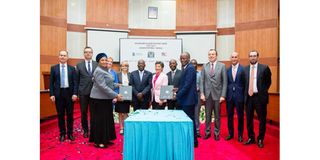
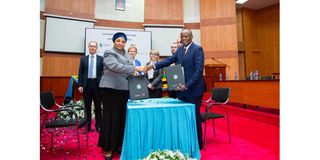
Speaking during the signing ceremony in Dodoma on Wednesday, April 29, 2026, Transport Minister Makame Mbarawa described the agreement as a major milestone in the implementation of a project he termed “one of Tanzania’s most strategic infrastructure investments.”
“This milestone represents another decisive step forward in enhancing regional economic integration,” said Prof Mbarawa, noting that the SGR is central to the government’s ambition to position Tanzania as a competitive regional logistics hub.
The minister said more than 2,100 kilometres of railway are currently under construction out of a planned 4,752-kilometre network spanning the Central, Northern, and Southern corridors.
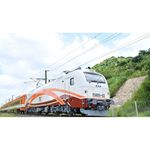
He added that the Dar es Salaam–Dodoma section is already operational, having transported nearly six million passengers and about 120,000 tonnes of cargo.
The operational line has also delivered measurable economic and environmental benefits, including a reduction of approximately 17 million litres of fuel consumption and more than 50 percent cut in carbon emissions due to the shift from road to electrified rail transport.
Prof Mbarawa said the new financing would accelerate progress on the Makutupora–Tabora and Tabora–Isaka sections, which are critical in linking central Tanzania to the Lake Zone and neighbouring countries such as Rwanda, Burundi, and the Democratic Republic of Congo.
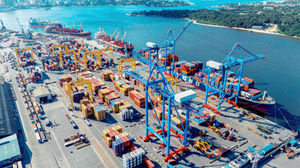
He noted that integration of the SGR with the Port of Dar es Salaam and the development of inland container depots in key locations, including Morogoro, Ihumwa, and Isaka, would significantly improve cargo handling, reduce logistics costs, and enhance supply chain efficiency.
“The SGR is not merely a transport project, but a catalyst for economic transformation, regional integration and sustainable development,” he said.
The project has already generated significant employment and local economic activity.
According to government figures, the SGR has created more than 30,000 direct jobs and about 150,000 indirect jobs, while engaging over 2,500 local suppliers and subcontractors.
Once completed, the railway is expected to dramatically cut travel and freight times.
Passenger journeys between Dar es Salaam and Dodoma have already been reduced from up to 12 hours by road to about three hours by rail.
Freight transport times are also projected to drop sharply, with cargo movement from Dar es Salaam to Mwanza expected to take about 12 hours, down from roughly 50 hours by road.
The government also projects that the SGR will increase rail’s share of freight transport from the current two percent to about 30 percent by 2030, easing pressure on roads and reducing maintenance and accident-related costs.
For Standard Chartered, the deal builds on its earlier role in arranging $1.46 billion in ECA-backed financing for SGR Lots 1 and 2 in 2020.
Standard Chartered Tanzania chief executive Herman Kasekende said the institution remains committed to supporting large-scale infrastructure projects that drive sustainable growth.
“We are excited for this railway project to position Tanzania as a premier logistics hub, boosting regional trade and job creation,” he said.
Register to begin your journey to our premium contentSubscribe for full access to premium content