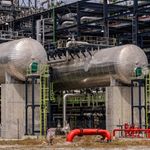
How Dangote’s proposed Tanga refinery seen as economic game-changer

Dar es Salaam. Days after prominent African businessman Aliko Dangote expressed his intention to support East African countries in building an oil refinery in the Tanga Region, business and economic stakeholders say the move will be a major catalyst for economic transformation across East African economies.

The plan was announced by Kenya’s President William Ruto, who said East African countries are engaged in joint discussions to establish a refinery at the Port of Tanga, expected to be modelled on Dangote’s large-scale refinery in Nigeria.

Speaking at an infrastructure financing conference in Nairobi last week, Mr Ruto said the refinery would be strategic for the region and would process crude oil from several countries, including the Democratic Republic of Congo, Kenya, South Sudan, and Uganda.

Our countries will benefit collectively as the refinery serves the regional market and reduces reliance on imported petroleum products, Mr Ruto said.

Currently, most East African countries import almost all petroleum products from the Middle East, leaving them exposed to supply disruptions and price volatility during geopolitical tensions in the region, recently seen amid Iran-related tensions and global market shocks periods.

At the same meeting, Mr Dangote said he is ready to collaborate with East African governments by leveraging experience and technology from his Nigerian refinery, which has a capacity to process 650,000 barrels of oil per day, provided there is strong policy commitment and investment from participating countries, as he recently stressed.

The development comes at a time when citizens in Tanzania, Kenya, Uganda, Rwanda, and Burundi continue to face rising fuel prices driven by global economic challenges affecting key sectors of the economy, including transport, manufacturing, agriculture, and services.

According to analysts, these costs are increasingly passed on to consumers through higher prices of goods and services, fueling inflation and eroding purchasing power levels across the East African region.

Economic and business analyst Prof Aurelia Kamuzora said the proposal to construct an oil refinery in Tanga is a key step for Tanzania and East Africa’s development, but its execution must be handled carefully to ensure it delivers the intended benefits for both economies.

Prof Kamuzora said the East African Crude Oil Pipeline (EACOP) experience shows that major strategic projects can succeed when well planned, but may stall or fail if poorly executed in practice cases.

She explained that such investments are a boon to the nation, as they bring capital, technology, and contracts for local companies, while creating jobs for skilled young people across various sectors.

Furthermore, she added that the construction of an oil refinery would improve access to petroleum products locally, reduce dependence on imports, and enhance investment climate conditions significantly.

Geopolitical conflicts often disrupt trade, so domestic refining capacity is crucial for building resilient economies, she said in her remarks.

The economist noted that Africa must pursue self-reliance by boosting local production instead of import dependence, saying this would strengthen economic position through expanded industrial capacity and domestically produced goods across the continent overall gains.

However, she added that sustainable results require a reliable market for such products and sufficient demand to make the investment viable in the long term within both regional and global markets.

Another economic and business analyst, Mr Oscar Mkude, said the Tanga refinery project is a strong initiative that, if implemented successfully, will significantly transform the economies of Tanzania and East African states.

Mr Mkude said the industrial sector is the backbone of economic growth because it boosts production, creates employment, and generates foreign exchange through exports, but cannot thrive without an adequate energy supply reliably ensured.

He noted that Tanzania has long exported raw materials instead of adding value locally, resulting in greater benefits accruing to other countries outside domestic value chains.

Mr Mkude said this is why the government has been emphasising local content policies in major strategic projects, including natural gas, minerals, and oil, to ensure citizens and local companies participate and benefit more effectively nationally.

According to him, East African countries must reduce bureaucracy that delays investment implementation processes across the region.

He said permits, negotiations, and other procedures sometimes take too long, discouraging investors significantly from overall investment.

“There must be discussions before investment, but if they take too long, investors lose interest,” he said, adding that removing bottlenecks would speed up implementation significantly across the region.

Mr Mkude added that if the project is implemented on time, it will open opportunities for other oil and gas sectors to grow, especially since many African countries with limited oil production are forced to export crude for refining at high cost abroad.

He explained the production sector is a major source of employment, noting that a single factory can employ hundreds directly, while more jobs are created as industries expand further within emerging industrial economies.

He also said exports generate foreign exchange, while continued reliance on imported finished goods creates jobs abroad instead of domestically benefiting other economies.

Mr Mkude described the project as good news for Tanzania as its benefits would remain within the country, while neighbouring nations also gain through trade and services.

He added that an oil refinery is key to ensuring a reliable energy supply for industries and production systems across regional economies overall.

However, he warned that despite the existence of investor-friendly laws, actions on the ground can sometimes push investors away, stressing the need for alignment between policy and implementation, and consistency is urgently required.