Dar es Salaam. The government and development partners have urged stronger implementation of programmes to reduce violence against women and children, while calling for gender equality to be reflected in national budgets to promote inclusive development.
The call comes as Tanzania prepares to implement the National Development Vision 2050, a long-term plan that advocates say offers an opportunity to strengthen social justice and ensure that development benefits all citizens.
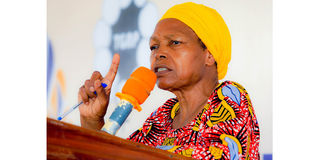
Tanzania Gender Networking Programme (TGNP) Board Chairperson Gemma Akilimali said the Vision 2050 rollout on July 1, provides a platform to align economic growth with social inclusion and protect the rights of women, youth, and other marginalised groups.
“The launch of Vision 2050 as a transformative step towards an inclusive and self-reliant nation reflects the country’s commitment to social justice, particularly through Gender Responsive Budgeting (GRB), which ensures national resources benefit everyone,” she said.
Ms Akilimali noted that this year’s national theme for International Women’s Day — Rights and Equality for Women and Girls: An Inclusive Foundation for Achieving Vision 2050 — comes at a critical moment as the country prepares to implement the development agenda.
She also highlighted the National Plan of Action to End Violence Against Women and Children (MTAKUWWA II) as a key pillar in combating violence.
Advocacy efforts, she said, have already contributed to political gains, with women now holding about 39.5 per cent of parliamentary seats, up from 37.4 per cent after the 2020 election.
“When we view women’s rights as a strategic investment, we create solutions that enable women to escape poverty. Investing in women lays the foundation for the inclusive society we aim to build,” Ms Akilimali said.
MTAKUWWA II Coordinator Alex Shayo said the programme focuses on eight strategic areas, including improving household economic capacity, strengthening parenting and family support systems, and expanding services for survivors to access legal, social, and psychological support.
He added that special child protection desks have been set up in primary schools to detect and respond to cases early, though some local protection committees remain ineffective.
TGNP gender-responsive budgeting analyst Happiness Maruchu stressed the importance of monitoring how government budgets are prepared and implemented to ensure they meet the needs of all gender groups.
She said sectors such as health, water, education, and social services have begun incorporating gender considerations into planning.
Pilot GRB initiatives are under way in Geita and Singida regions, and Tandahimba and Chalinze districts.
Lawyer Cajetan Tumaini of the Legal and Human Rights Centre (LHRC) added that cooperation between government, civil society, and communities is crucial to protect women and children’s rights and reduce inequality.