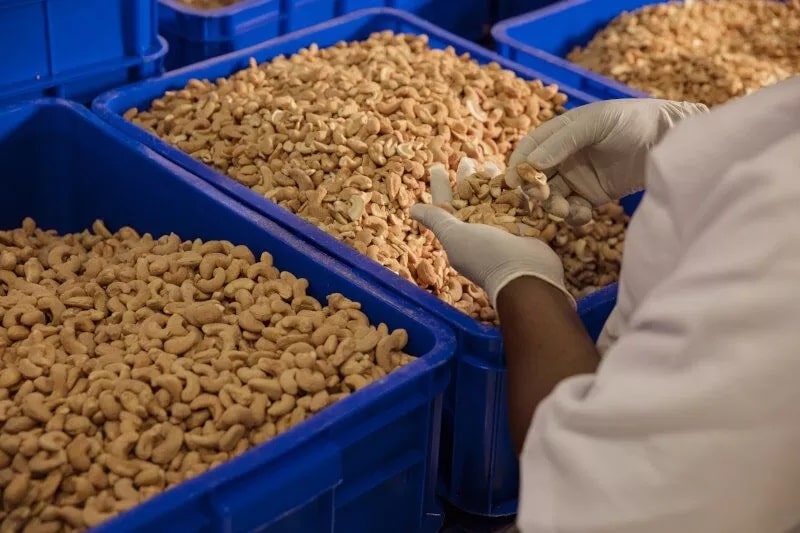
Dar es Salaam. Tanzania’s target of producing 750,000 tonnes of raw cashew nuts (RCN) in the 2026/27 season faces pressure due to a shortage of powdered sulphur in key producing regions.
The shortage comes despite strong sector earnings, with cashew exports generating Sh1.247 trillion ($479.7 million) in 2026, up from Sh1.036 trillion ($398.8 million) in 2025, according to the Bank of Tanzania Monthly Economic Review for the year ending May 2026.
Farmers in Tunduru, Ruangwa, Masasi, Newala and Tandahimba say limited access to subsidised sulphur is affecting preparations for the new season, raising concerns over possible yield declines if supply is not restored.
Tunduru Agricultural Marketing Cooperative Society (Tamcu) official Aziz Majasho said the Cashew Board of Tanzania (CBT) is rationing available stocks, leaving part of the demand unmet.
He said Tunduru initially received 64,188 bags distributed across nine wards, below requirements despite later additional allocations. “My allocation fell from 39 bags last season to 12 this year,” he said, adding that farmers expect no further supplies beyond current distributions.
He said some farmers are now turning to private suppliers where prices have increased sharply.
“In Tunduru, a bag that previously cost Sh15,000 to Sh20,000 now sells for about Sh45,000,” he said. A retired agricultural officer in Mtwara Region said the shortage is partly linked to global supply disruptions affecting imports through key transit routes.
He said delayed shipments have forced reliance on remaining stocks, worsening scarcity during peak demand. He said that rising fuel prices have increased the cost of spraying operations, affecting the adoption of liquid pesticides.
Fuel currently averages about Sh4,213 per litre, increasing operational costs for farmers using mechanised spraying.
“The machinery used for liquid spraying consumes significant fuel, making it costly for smallholders,” he said. He estimated that his district requires about 5,000 tonnes of sulphur, but supply remains below demand.
He warned that delays could affect the spraying window and called for urgent intervention.
Councillor Mohamed Mkokoto of Namalenga Ward in Masasi District said many farmers continue to prefer powdered sulphur due to long-standing use in cashew farming. He said this has slowed the adoption of liquid pesticides promoted by agricultural authorities.
The CBT has encouraged farmers to use liquid pesticides, saying they offer both preventive and curative protection, while powdered sulphur is mainly preventive. The government has set a target of 750,000 tonnes of cashew production in 2026/27 as part of a broader plan to reach one million tonnes by 2030.
Production reached 617,683 tonnes in 2025/26, up 17 per cent from the previous season, but still below the 700,000-tonne target.
CBT director general Francis Alfred declined to comment in detail, saying the issue had already been communicated to farmers.
Early this year, CBT agricultural planning manager Juma Yusuph urged growers to adopt liquid pesticides to combat the cashew mosquito bug, warning that delayed pest control could cause severe crop losses.
However, with sulphur shortages persisting, fuel costs rising, and farmers' reluctance to shift methods, stakeholders warn the production target may be difficult to achieve without urgent stabilisation of input supply chains.
Register to begin your journey to our premium contentSubscribe for full access to premium content