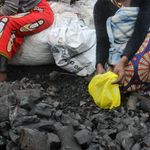
Dar es Salaam/Shinyanga. In Tinde, Samuye, Ishina Bulaindi, Nhelagani, and surrounding villages in Shinyanga Region, attention is iancreasingly shifting from the scale of the illegal charcoal trade to what communities, experts, and authorities believe could finally bring the sector under formal control and sustainable management.
The discussion comes as Tanzania continues implementing the National Clean Cooking Strategy (2024–2034), which targets 80 percent adoption of clean cooking solutions by 2034 as part of wider efforts to reduce reliance on biomass energy and protect forest resources.

In Shinyanga, where charcoal remains both a key household energy source and an important rural incoame earner, experts say the transition will depend more on restructuring the value chain and governance systems than on enforcement crackdowns alone.
A Ministry of Natural Resources and Tourism 2019 technical report estimates that about 95 percent of charcoal produced in regions such as Shinyanga operates outside the formal legal framework.
The report links this to widespread forest degradation, weak licensing systems, and low public revenue collection from the sector.
Government data further show that the Lake Zone, including Shinyanga, Mwanza, and Mara regions, loses about 193,424 hectares of forest annually, driven largely by fuelwood harvesting and unsustainable charcoal production.
The 2022 Population and Housing Census also indicates that more than 80 percent of households in Shinyanga still depend on biomass fuels for cooking, highlighting the scale of the energy transition challenge.
An energy and economics analyst from the University of Dar es Salaam, Mr Pascal John, says formalisation should be prioritised as the foundation for reform.
“What exists in places like Tinde is already a functioning economic system that supports livelihoods,” he said.
“The practical solution is to organise it legally and make it transparent rather than treating it purely as an enforcement problem,” he added.
He argues that village-level governance structures could play a central role in regulating production, transport, and forest conservation at the same time.
The Forest Act already allows villages to benefit directly from forest resources through royalties collected from village land.
If properly implemented, he says, this framework could transform communities into active managers of natural resources.
Villages such as Tinde and Samuye could establish Village Natural Resource Committees (VNRCs) linked to approved harvesting plans, reforestation obligations, and controlled transport permits for charcoal movement.
“That changes the incentive structure entirely. Communities begin to protect forests because they directly benefit from sustainable use rather than losing resources without formal returns,” he said.
At the community level, residents and local leaders say long-term solutions must include stronger participation in forest governance, tree planting, and awareness creation.
Resident Rebeka Hamduni said tree-planting programmes should be made a compulsory component of charcoal-producing villages to ensure environmental restoration keeps pace with extraction.
“If charcoal production continues, then communities should also plant trees continuously and systematically,” she said.
“People here already understand the importance of forests, so village-led initiatives can make a real difference if supported properly,” added Ms Hamduni.
Another resident, Mr Rajabu Njige, said alternative income opportunities are essential to reducing pressure on forests over time.
“If communities receive support for other economic activities, dependence on charcoal can gradually decline. Many people rely on it because it remains one of the most accessible sources of income,” he said.
Nyambui sub-village chairman Masesa Chaula said local leaders should be formally integrated into monitoring and enforcement systems to improve effectiveness on the ground.
“Village leaders know the routes being used and how the trade operates locally. If they are properly involved, monitoring becomes easier because communities themselves participate in protecting resources,” he said.
Mr Chaula said community-based forest management models linked to legal charcoal production could also support local development projects and improve accountability.
Tinde councillor Jafary Makwaya said sustainable solutions require stronger coordination between communities, forest authorities, and energy institutions rather than relying only on enforcement operations.
He said it is unrealistic to stop charcoal production immediately, given its importance to household incomes.
“The solution is not simply stopping people from producing charcoal because many families depend on it economically,” he said.
“What is important is creating a controlled system where production, transportation, and reforestation are managed together,” added Mr Makwaya.
Keisa Technology Company’s renewable energy expert Ephraim Maganga said production technology reform must also be central to any long-term solution.
He said inefficient traditional kilns waste large amounts of wood during production, increasing pressure on forests unnecessarily.
“Improved technologies such as Casamance kilns could significantly increase efficiency, improve output, and reduce the number of trees required for the same amount of charcoal,” he said.
The National Forest Policy Implementation Strategy (2021–2031) identifies inefficient charcoal production as a major driver of forest degradation and biomass loss in Tanzania.
Mr Maganga said technology adoption must be supported by financing and training to ensure rural producers can afford and effectively use improved systems.
Experts further say formalisation could enable villages to access funding from the Tanzania Forest Fund (TaFF) for reforestation, sustainable forest management, and development of community woodlots dedicated to energy production.
Register to begin your journey to our premium contentSubscribe for full access to premium content