Tanzania eyes skilled artisans to bridge vocational teacher shortage
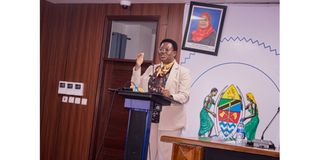
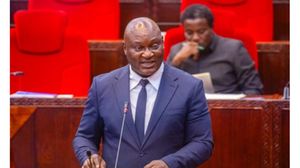
Permanent Secretary in the Ministry of Education, Science and Technology, Prof Carolyne Nombo, speaks during a meeting in Dodoma on Monday, July 13, 2026, where institutions under the ministry reviewed their performance during the 2025/26 financial year and priorities for 2026/27. PHOTO | HABEL CHIDAWALI
Dodoma. The government has acknowledged that a shortage of vocational education teachers persists despite ongoing recruitment, saying many approved positions remain vacant because too few qualified applicants are available.
However, it is preparing a strategy to involve experienced mechanics and workshop artisans in providing practical training to vocational students as preparations continue for the first double intake into Form One under the compulsory education programme in 2028.
The remarks were made on Monday, July 13, 2026, by the Permanent Secretary in the Ministry of Education, Science and Technology, Prof Carolyne Nombo, while opening a meeting of institutions under the ministry to review their performance during the 2025/26 financial year and priorities for 2026/27.
Her comments follow recent government efforts to strengthen vocational teacher capacity, including sending some instructors abroad, particularly to India, for technical training and exposure to modern teaching methods.
During the meeting held in Dodoma, Prof Nombo said the government remained committed to establishing vocational schools and was determined to ensure the programme is launched with training that meets international standards.
She said authorities were exploring ways to harness the expertise of experienced local artisans, who practise their trades daily, to support practical skills training, at least during the initial phase of implementation.
"As we move towards 10 years of compulsory education, we must think carefully. How can we fail to find teachers simply because of GPA requirements when there is a vehicle repair garage nearby?,” she examined.
“These are issues we must reconsider. I also want you to look at places such as Mwenge. How can we lack an art teacher when there are highly skilled people there?" questioned Prof Nombo.
She added that since the release of the Advanced Certificate of Secondary Education Examination results, she had followed public debate on social media, where many Tanzanians had shared constructive suggestions on programmes that should be offered by technical colleges and universities.
"I want you to examine those views so that you understand what Tanzanians need at this time. Another important issue is that our curriculum reforms must provide answers about students pursuing vocational education. After completing that stage, what comes next? We should enable them to continue along that pathway until they can even become professors," she said.
In a separate address, Prof Nombo said achieving the objectives of Development Vision 2050 would require stronger private sector participation and a sustainable financing model for higher education loans rather than relying solely on the central government budget.
Presenting a paper during the meeting, Planning Commission representative Josia Mwabezi said achieving the goals of Vision 2050 would depend on sound planning and effective implementation, warning that weaknesses in either would undermine national development targets.
He said the vision would be realised if the Ministry of Education successfully implemented its priorities, including expanding private sector participation and undertaking wide-ranging institutional reforms.