Tanzania targets research-to-market gap in innovation drive


Tanga. Government ministries and institutions have been directed to work together to ensure research prototypes and innovations with the potential to solve national challenges are taken through all necessary scientific, regulatory and accreditation procedures before being adopted and scaled up as locally made products.

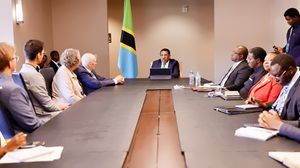
Prime Minister Mwigulu Nchemba issued the directive in Tanga yesterday while closing the National Education, Skills and Innovation Week, challenging the government to make better use of research generated by Tanzanian universities and institutions instead of continuing to rely heavily on imported solutions.

He insisted that an innovation should not end at an exhibition stand or remain in a laboratory once it has demonstrated potential. It should be tested, accredited, manufactured and taken to the people who need it.

“It is necessary that we move from exhibitions to the engineering of life,” Dr Nchemba said, calling for innovations displayed during the week to be produced in sufficient quantities and used in everyday life.

The directive puts commercialisation and public adoption at the centre of Tanzania’s innovation agenda at a time when the country is implementing Development Vision 2050, which places science, technology and innovation among the drivers of productivity and economic transformation.

Nchemba's intervention was particularly significant for health innovations, where promising research can take years to move from a prototype to an approved product.

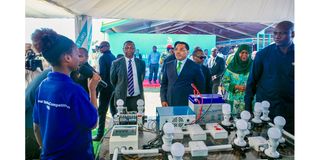
At the Tanga exhibition, researchers from Muhimbili University of Health and Allied Sciences (MUHAS) showcased work on a medicine targeting prostate disease, while Mbeya University of Science and Technology (MUST) demonstrated technology involving bees in cancer detection.

Rather than treating such innovations merely as research achievements, the Prime Minister directed the relevant ministries and institutions to ensure that products with scientific potential are taken through the full process required to establish their safety, effectiveness and quality.

He argued that once a locally developed medicine has passed the necessary research, laboratory and regulatory procedures, including international requirements, it should be recognised as a modern medicine made in Tanzania rather than being dismissed simply because it originates locally.

“The issue, therefore, is not choosing local products over foreign ones regardless of quality. It is giving proven local products a fair opportunity to compete,” he said.

That distinction is critical for health products, where accreditation and scientific evidence must remain non-negotiable.

Nchemba's position also reflects a wider government effort to close the gap between innovators and markets. Ahead of the Tanga event, the government said it would use public resources, the Samia Commercialisation Fund under COSTECH and other mechanisms to support innovations from development through mass production and distribution.

For innovations to scale, however, accreditation alone is not enough. They need customers.

This is where the intervention by Chairperson of the Parliamentary Committee on Education, Arts and Sports, Ms Husna Sekiboko, becomes important. She insisted that government institutions should be at the forefront of embracing and using locally developed innovations.

Nchemba reinforced that argument by calling on the government to become among the first users of quality Tanzanian-made products.

He cited components for bajajis and motorcycles that he saw at the exhibition, arguing that such products should not remain items displayed only during exhibitions.

“If we can produce them here, we can produce enough of them and take them to the market,” his remarks implied.

Such an approach could give local manufacturers their first reliable market, allowing them to increase production, improve quality, attract investment and eventually compete beyond Tanzania.

But the Prime Minister also raised another issue: branding.

He questioned why products made in Tanzania should sometimes carry labels that make them appear less sophisticated simply because their raw materials or knowledge originate locally.

He compared this with medicines manufactured abroad from plant-based materials and argued that a Tanzanian product that has completed the required scientific and regulatory process should be identified by what it is—not downgraded simply because it is made locally.

The push for local products comes alongside a strong warning from both Nchemba and Education Minister Prof Adolf Mkenda that standards must not be sacrificed.

Mkenda defended strict professional standards in areas such as medicine and aviation, arguing that Tanzania cannot produce competent professionals by lowering the requirements.

Nchemba backed him, saying the country needs excellent teachers, engineers, doctors and other professionals.