Moscow. Young students from around the world are being invited to take part in an international science competition that could earn them a place on a rare Arctic expedition aboard a Russian nuclear-powered icebreaker.
The “Icebreaker of Knowledge 2026” competition, organised with support from Russia’s state nuclear corporation Rosatom, is open to participants aged 14 to 16.
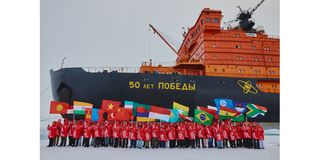
Winners will travel to the North Pole this August aboard the 50 Let Pobedy (“50 Years of Victory”), one of the world’s largest nuclear icebreakers. The project has been running since 2019 The Expedition to the North Pole offers an Organisers say the programme aims to encourage interest in science, technology and nuclear innovation among young people. The expedition is expected to bring together students from 23 countries. “Give your students the chance to embark on a truly unique expedition to the top of the world,” organisers say.
Namely, Armenia, Egypt, Myanmar, Bangladesh, India, Namibia, Belarus, Indonesia, Rwanda, Bolivia, Kazakhstan, Serbia, Brazil, China,Tanzania, Hungary, Kyrgyzstan, Turkey, Vietnam, Mongolia, Uzbekistan, Russia and South Africa.
Applications are now open at goarctic.energy and will run until 3 June 2026.
How does the competition work?
The competition will be conducted in three stages designed to test participants’ scientific knowledge, creativity and engagement with technology-related topics. The first stage, running from May 5 to June 3, will involve an online quiz featuring 30 questions on science and technology.
This will be followed by a series of five interactive educational webinars between May 18 and June 3, where participants will attend lectures and complete follow-up assignments.
In the final stage, scheduled from June 5 to June 15, contestants will submit a short creative video presentation based on a set topic.
The first two stages of the competition are open to anyone interested in the Arctic – you have to answer the quiz questions and watch the webinars until 3 June 2026.
The competition is part of wider efforts to promote education and international cooperation in nuclear and Arctic technologies.