Inside this landmark building in East Africa are walls, rooms, infrastructure, and furniture that reflect the struggle, dignity, and success of Kilimanjaro coffee farmers and the wider northern region.
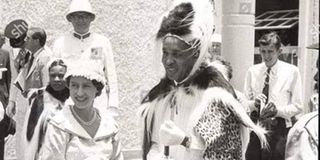
One of the most talked-about rooms is believed to have been occupied by Queen Margaret, who was said to be representing Queen Elizabeth II during the coronation ceremonies of Chagga Chief Mangi Thomas Marealle in 1956.
Since then, the room has remained part of a history passed down from generation to generation.
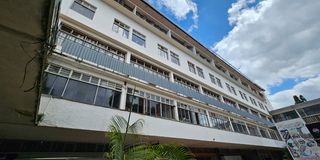
The Kilimanjaro Native Cooperative Union (KNCU) building, which houses a hotel and was established by local coffee farmers in 1956 in Moshi District, Kilimanjaro Region. PHOTO | JANETH JOSEPH.
Elders in Moshi recall that royal visits at the time were major events that demanded elaborate preparations to ensure the highest standards of hospitality.
It is these preparations that gave the room its special status, which continues to be remembered to this day.
However, the hotel’s reputation was not built on royal visits alone. Over the years, it also hosted several prominent figures, becoming an important part of Moshi’s social and economic history.
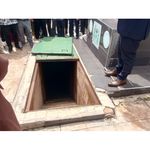
One of its most remarkable features is an old, large refrigerator that still stands out today. The fridge is said to have been capable of storing meat from more than two cattle at a time due to its size.
Many believe it was among the first refrigerators brought into the country during that period.
The hotel’s history is closely tied to the struggle for dignity by Kilimanjaro coffee farmers.
During the colonial era, some British hotel owners in Moshi reportedly discouraged African farmers from using establishments such as the then Livingstone Hotel.
This exclusion was seen as a deep insult to farmers who cultivated and sold coffee that significantly contributed to the local economy.
In response, cooperative leaders resolved to build their own hotel, a place where everyone would be served with equal respect and dignity, free from discrimination. The decision was not easy.
But the unity of farmers changed history. Each member agreed to contribute 15 cents from their coffee earnings. Funds were collected until they reached Sh2 million, a huge sum at the time.
With this, the farmers built not just a hotel, but a lasting symbol of pride, unity, and collective strength.
To this day, the Coffee Tree Hotel and the so-called Queen’s Room remain physical reminders of that history.
They stand as proof that buildings do not always speak in words, but through stories preserved within their walls.
KNCU elders speak
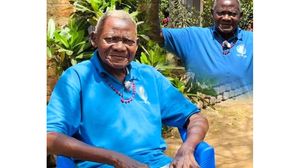
Recalling the history, one of the elders of the Kilimanjaro Native Cooperative Union (KNCU), Mr Charles Lyimo, says the building, financed through farmers’ contributions, brought great pride to the region.
“This hotel was the tallest building in town at the time. It had a lift. At that time, there was no other building with a lift. This was the only one in East Africa,” he says.
Mr Lyimo says the lift was among the first installed in a hotel building of its kind and that the structure was considered one of the most modern in East Africa, then comprising Kenya, Tanzania, and Uganda.
Why KNCU built the hotel
In a special interview with The Citizen sister newspaper, Mwananchi, Mr Lyimo says Kilimanjaro farmers faced widespread discrimination from European colonialists.
“There was a famous hotel in Moshi called the Livingstone Hotel (later Moshi Hotel), which was reserved for whites only. Europeans stayed upstairs while Africans were not even allowed into those areas,” he says, adding that this deeply angered the farmers.
“Why are we not allowed to stay upstairs like them?” they asked, before deciding to establish their own hotel through the cooperative.
Mr Lyimo says each farmer agreed to contribute by having 15 cents deducted from coffee sales, which funded the construction of the KNCU hotel, at the time the tallest building in East Africa.
“After the hotel was completed, the farmers rose and proved they could do it. They sat upstairs, eating meat and drinking beer while watching Europeans downstairs,” he says.
“This was a symbol of pride in their dignity and proof that Africans could also build, own, and manage large buildings just like Europeans,” he adds.
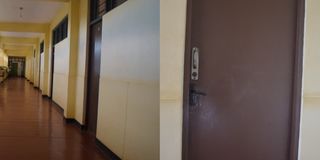
Room number 10, where Princess Margaret once stayed while representing Queen Elizabeth II at the coronation ceremony of Chagga Chief Thomas Marealle in 1956, at Coffee Tree Hotel (CTH), located within the Kilimanjaro Native Cooperative Union (KNCU) building, Kilimanjaro Native Cooperative Union. PHOTO | JANETY JOSEPH.
The arrival of the Queen
According to Mr Lyimo, in 1956, when Queen Margaret visited, she stayed in a special room number 10, which was equipped with all services befitting a royal guest.
He says the hotel also had large modern refrigerators at the time, capable of storing meat from more than two cattle.
Mr Lyimo says the refrigerators were among the first of their kind in the country and were imported from Germany.
“These refrigerators could store meat from more than two slaughtered cattle. At that time in Tanganyika, they were among the most modern and unique appliances ever brought into the country,” says Mr Lyimo.
Another elder, Mr Gabriel Ulomi, says that by 1956, Kilimanjaro had already made significant progress, including the construction of the hotel where the Queen stayed, which remains part of Moshi’s historical identity.
“KNCU was the first hotel in the Northern Zone to have a lift and among the first in East Africa to feature modern facilities in Moshi at that time. By 1956, the hotel was already operational and had become an important venue for receiving high-profile leaders and guests visiting the Kilimanjaro Region,” says Mr Ulomi.
“In 1956, Queen Margaret stayed at the KNCU Hotel during her visit to Moshi. At that time, the hotel was among the best in northern Tanzania. Its existence reflected the status of KNCU as a major institution owned by Kilimanjaro farmers and its significant contribution to the coffee economy,” he says.
Through its coffee quality, KNCU built a strong global reputation as a cooperative producing and managing premium coffee. This helped Kilimanjaro and Tanzania gain international recognition in the global coffee trade.
Register to begin your journey to our premium contentSubscribe for full access to premium content