The critics said the allocation was skewed and ignored priorities, considering that it was coming at a time when the nation was still smarting from the huge shock it suffered following last year’s pathetic Form Four performance in national exams which saw over 60 per cent of the candidates scoring Division Zero.
Dar/Dodoma. The Ministry of Education and Vocational Training was yesterday criticised for tabling a budget for the 2013/14 financial year which is lesser than that of 2012/13, despite mounting concern over the deteriorating standards in public learning institutions.
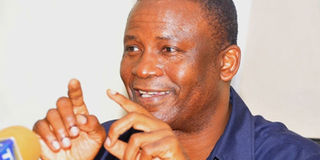
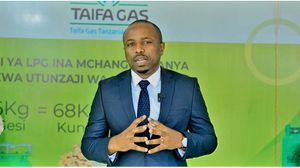
Dr Shukuru Kawambwa (pictured), who heads the key ministry, yesterday unveiled in Parliament a Sh689.68 billion budget, out of which a paltry Sh72.59 billion will be spent for development projects.
Dr Kawambwa allocated a whole Sh617.07 billion for recurrent expenditure to various departments and institutions in a move that immediately drew criticism from education stakeholders.
The critics said the allocation was skewed and ignored priorities, considering that it was coming at a time when the nation was still smarting from the huge shock it suffered following last year’s pathetic Form Four performance in national exams which saw over 60 per cent of the candidates scoring Division Zero.
Compared to Sh724.47 billion which was set for the ministry 2012/13, the Sh689.68 billion signifies a 4.8 per cent reduction in the budgetary allocation.
Dr Kawambwa, however, admitted in his budget speech that many educational projects failed to pick up in the last two years because of inadequate funds. The ministry also relies heavily on donor cash for most of its development projects.
In their critique, experts and a cross-section of MPs said the allocations and the policy measures proposed by the minister won’t adequately address the on-going education crisis.
Addressing a press conference in Dar es Salaam, the executive director of HakiElimu, Ms Elizabeth Missokia, said the minister’s speech didn’t provide any concrete measures in terms of budgetary allocations such the badly needed increase of staff and facilities to tackle the country’s educational mess.
Ms Missokia said people were keen to hear about the number of teachers the ministry would recruit to cater for staff shortage running into tens of thousands and how much has been set aside for their salaries and other emoluments.
“We are worried that the minister has just given the usual political sentiments on improving education without showing exactly how and the amount of money allocated for each of the policy measures,” she said.
Dr Kawambwa, who has ignored calls to resign over last year’s national Form Four exam debacle, yesterday faced further attack from observers, including from MPs, who faulted him for not revealing key factors that led to the poor showing of the 2012 candidates and measures to avoid such a disaster in future.
The stakeholders aired their views at a workshop, organised by HakiElimu, to view the ministry’s budget live on Television and offer immediate analysis.
Educationist Kitila Mkumbo of the University of Dar es Salaam said the minister’s speech fell short of expectations in several ways. “It was against majority’s expectations who expected the minister would explain the reasons for last year’s poor performance in exams and the way forward in the 2013/14 financial year,” he said.
He said he expected that the minister would have announced a salary increase for teachers but he didn’t, adding: “A satisfied teacher would obviously teach better.”
Dr Mkumbo, however, noted some positives, including the fact that the ministry planned to offer training to school heads and introduce a professional board for teachers.
At the same time, the Parliamentary Standing Committee on Social Services demanded that the government give reasons for the cancellation of the 2012 Form Four results. It said that in spite of the subsequent standardisation, the failure rate remained above 50 per cent.
Ms Zabein Mhita (Kondoa North–CCM) told the government not to blame the National Examinations Council of Tanzania (Necta) board because the grading system (fixed grade range) used to grade the candidates was approved by the State itself
Shadow minister for Education and Vocational Training Ms Suzan Lyimo said deterioration of education in Tanzania along with the increase in the number of Form One students who can neither read nor write was a result of ignoring advice from education stakeholders.
She added that there was no need to form a committee to probe last year’s bad Form Four results because education problems are well known to all.
Ms Margaret Sitta, who chairs the Parliamentary Standing Committee on Social Services, said the education sector problems have largely been caused by failure to end teachers’ grievances.
She advised the government to establish a Tanzania teacher’s service commission that would deal exclusively with teachers’ concerns.