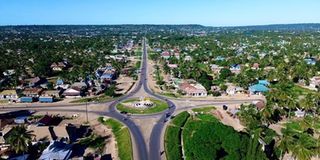
In 1970, Dubai’s skyline was nothing but barren sand. Today, it dazzles with the world’s tallest tower and a $120 billion economy. Yet in Tanzania—blessed with 57 trillion cubic feet of natural gas, over half a billion tonnes of coal, and titanium reserves sufficient for 10,000 spacecraft—children still study under mango trees, farmers transport cassava past idle gas pipelines, and Kilwa’s 13th-century ruins, once the heart of a Swahili gold empire, are neglected. This area, connecting Mtwara, Lindi, Ruvuma, and others, could be transformed by the Mtwara Development Corridor (MtDC) into a series of East African Dubais, liberating over 10 million Tanzanians from poverty.
The southern regions of Lindi, Mtwara, and Ruvuma suffer systemic neglect—a stark Tale of Two Tanzanias, where the South endures economic apartheid. Despite being part of Tanzania’s food basket, the region receives disproportionately low infrastructure funding. While the national investment-to-GDP ratio was 28 percent, Lindi languished at only 13 percent. The Liganga iron, titanium, and vanadium deposits—where iron mining is virtually free due to valuable byproducts—remain untouched, even as farmers lose 40 percent of their harvests, despite sitting atop gas fields that could fuel half a continent.