How authoritarianism exposed the hypocrisy of our elite class
By Erick Gwamaka
It was only a few years ago when almost all notable analysts, scholars and outspoken politicians retreated into their shells.
They were aware of the dangers of opposing the official position of the government. Toeing the line was not optional. It was mandatory.
Related
Indeed, as rightly pointed out by Chinua Achebe in his 1958 novel, Things Fall Apart, “Until the lion learns how to write, every story will glorify the hunter.”
In glorifying the hunter, everyone was dancing to the “development” tune, irrespective of what it took to build the much-touted public amenities.
No analyst, scholar or outspoken politician had the audacity to question the wisdom behind spending $2.9 billion (about Sh6.8 trillion at the prevailing exchange rate) to build the 2,115-megawatt Stiegler’s Gorge – now known as the Julius Nyerere Hydropower Station – around the same time the country had just commissioned the $1.225 billion Mtwara-Dar es Salaam natural gas pipeline.
No one saw the importance of questioning why the pipeline should be utilised by only less than ten percent of its capacity, while public funds meant to increase its use were diverted to other projects that were not that urgent. Also, no one questioned why the government borrowed heavily at commercial interests that left the country heavily indebted.
The narrative changed almost immediately from reducing Tanzania’s reliance on climate-dependent hydropower sources to a comparison of the cost per unit of electricity produced using water, natural gas, wind, solar and biomass, among others.
With the intent of glorifying the official government position, our noble analysts, scholars and outspoken politicians had no option but to toe the line.
When investors’ projects were being seized, no analyst, scholar or outspoken politician was wise enough to question the likely repercussions of the decisions. They all had to toe the line and the economic war, which never was, became the talk of the town and the outcomes of which are the current several cases at the International Centre for Settlement of Investment Disputes (ICSID) for which Tanzania is already paying through the nose.
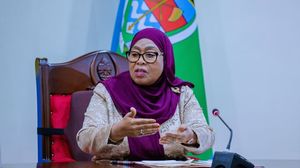
While the list could go on and on, the fact now is that it took the decision of the current Head of State, Samia Suluhu Hassan, to change the narrative.
People can now talk. Unfortunately, they no longer advise. They want their views to be taken as gospel truth even as they trash every explanation from the government in the advancement of what they want to be adopted.
Besides, much as debating the ongoing Intergovernmental Agreement (IGA) between Tanzania and the Emirate of Dubai in developing Tanzania’s ports is not a sin, opposing an issue of national interest on the basis of a hoax argument is probably why the late John Magufuli decided to whip everyone into line.
The first narrative was that the port has been sold for 100 years to Dubai Port (DP) World. Some even went as far as arguing that all of Tanzania’s sea and lake ports cannot be developed without the consent of Dubai. Then Tanzanians were told that the IGA between Tanzania and Dubai on port operations will live forever. The Americans would have called this the “BIG LIE”!
Much as the government has clarified all of the issues raised, those opposing the deal have never been short of a new argument to make against DP World, in essence, questioning the wisdom of the very same person who reinstated democratic tenets in Tanzania after years of one-man show.
Indeed, while political scientists argue that lying, manipulation, spinning, propaganda and deception, among others, are understood to be necessary and justifiable evils in political communication, the same should not be done in a manner that thwarts the national development agenda.
We have to draw a line between competitive politics and deliberate disinformation. The former is democracy and the later is not only a national security threat, but also a threat to democracy itself. Our elites know this very well.
If one cannot buy the explanation by the Speaker, the Prime Minister, some Cabinet ministers and some prominent business leaders among others, whose explanation then will they trust? And, if all the explanation falls on deaf ears, why should one not be compelled to believe that there could be some sinister motives – being advanced by some powerful individuals – through those opposing the deal for their commercial and political benefits?
Should we say Magufuli was right when he decided to silence everyone whenever he wanted to get things done, leaving everyone cowering in their shells?
Erick Gwamaka is a PhD candidate in Political and Administration sciences [email protected]
Register to begin your journey to our premium contentSubscribe for full access to premium content