Madam President, Without the Kigoma Shipyard, the SGR to Kigoma risks falling short

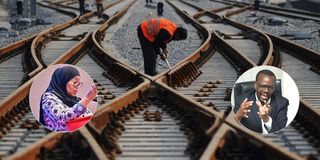
President Samia Suluhu Hassan is expected to launch the construction of the Standard Gauge Railway (SGR) from Tabora to Kigoma on Monday, July 20. It is a milestone worthy of recognition. For decades, the people of Kigoma have campaigned for a modern railway to connect the region with the rest of the country. That aspiration is finally becoming a reality, albeit later than many had hoped.

However, the railway was never an end in itself. It was envisioned as one component of a broader transport and logistics system capable of transforming Kigoma into Tanzania's western trade gateway and strengthening its role in the Great Lakes region.

Kigoma occupies a strategic geographical position. Through the Port of Kigoma, Tanzania serves eastern Democratic Republic of Congo (DRC), a region rich in minerals and with growing trade potential.

To fully exploit this advantage, rail transport must be integrated with efficient lake transport across Lake Tanganyika.

That is why the Katabe Shipyard project is as important as the railway itself.

Located only a short distance from where the President is expected to launch the SGR project, the Sh600 billion shipyard was designed to build and maintain cargo vessels capable of transporting freight across Lake Tanganyika. Yet construction, which began in October 2023 under a contract with Turkish firm Dearsan, has largely stalled because of funding constraints.

Without the shipyard, the SGR risks becoming primarily a passenger railway rather than the freight corridor it was intended to be.

The original plan was carefully designed. The shipyard would construct vessels capable of carrying between 3,000 and 3,500 tonnes of cargo, including up to 25 railway wagons or heavy vehicles and 65 passenger cars using roll-on/roll-off technology. Both the shipyard and the vessels were scheduled for completion within 36 months, aligning with the railway's development.

This was not simply an infrastructure project. It was an integrated transport strategy.

Following the shipyard agreement, the Tanzania Ports Authority entered into a strategic partnership with Chinese mining company Zijin to utilise the Port of Kigoma. Zijin is developing a major lithium project in Manono, about 400 kilometres from Kalemie in eastern DRC, targeting annual production of five million tonnes.

Much of that cargo is expected to move through Kigoma.

The Port of Kigoma is already experiencing rapid growth. Between 2024 and 2025, cargo volumes reportedly increased by about 300 percent. Moving equivalent volumes by road would require thousands of heavy trucks travelling daily between Kigoma and Dar es Salaam, placing enormous pressure on the country's road infrastructure.

The railway and the shipyard were therefore conceived as complementary investments. Freight would arrive by rail, be transferred directly onto vessels at Kigoma, transported across Lake Tanganyika to Kalemie, and return carrying minerals destined for the Port of Dar es Salaam. The new vessels were also expected to reduce travel time across the lake from approximately 24 hours to just six.

Unfortunately, that vision is now under threat.

Lithium production in Manono has already begun, yet Tanzania lacks sufficient vessels to handle the anticipated cargo. Existing capacity is limited, with most suitable vessels controlled by subsidiaries of Zijin. As a result, Tanzania risks missing an opportunity to capitalise on one of Africa's fastest-growing mineral supply chains.

The implications extend beyond Kigoma.

The DRC alone has the potential to generate more than 20 million tonnes of transit cargo annually through the Kigoma-Dar es Salaam corridor, including five million tonnes from Manono lithium project. For comparison, the Port of Dar es Salaam handled about 27 million tonnes of cargo in 2025. The scale of this opportunity is difficult to ignore.

This raises an important policy question. Why has a strategically important project stalled because of funding shortages when its long-term economic returns could be substantial?

The answer appears to lie not only in financing but also in weak coordination between government institutions.

The Marine Services Company Limited (MSCL), which oversees the shipyard, and the Tanzania Railways Corporation (TRC), which is constructing the SGR, both fall under the same ministry. Yet one project is moving ahead while the other remains largely dormant, despite both being designed to operate as a single integrated transport system.

Infrastructure projects cannot succeed when developed in isolation. Railways, ports, ships and logistics facilities must be planned, financed and implemented in tandem.

The delay also has important local consequences.

The Katabe Shipyard was expected to create about 1,000 direct jobs and stimulate broader economic activity in Kigoma. Employment would boost demand for housing, construction materials, transport services and agricultural products, creating the multiplier effects that large infrastructure investments are meant to generate.

For many residents, the project represented more than a shipyard. It symbolised the long-awaited economic transformation of a region that has often felt left behind in national development planning.

President Hassan's visit therefore presents an opportunity not only to celebrate the launch of the SGR but also to ask difficult questions about the missing link in the corridor.

Launching projects is important. Completing them—and ensuring they work together—is what ultimately determines whether they deliver meaningful economic transformation.

My appeal to the President is straightforward: visit the Katabe Shipyard, seek answers on why the project has stalled, and ensure that this strategic investment is revived.

Without the Kigoma Shipyard, the SGR reaching Kigoma risks falling short of the transformative vision that inspired it.

Zitto Kabwe is a former leader of ACT Wazalendo, former Member of Parliament for Kigoma Urban, and an economist who writes on development and the economics of geography.