Pluralism in education: Why East Africa must embrace multiple ways of knowing
What you need to know:
By Tage Biswalo
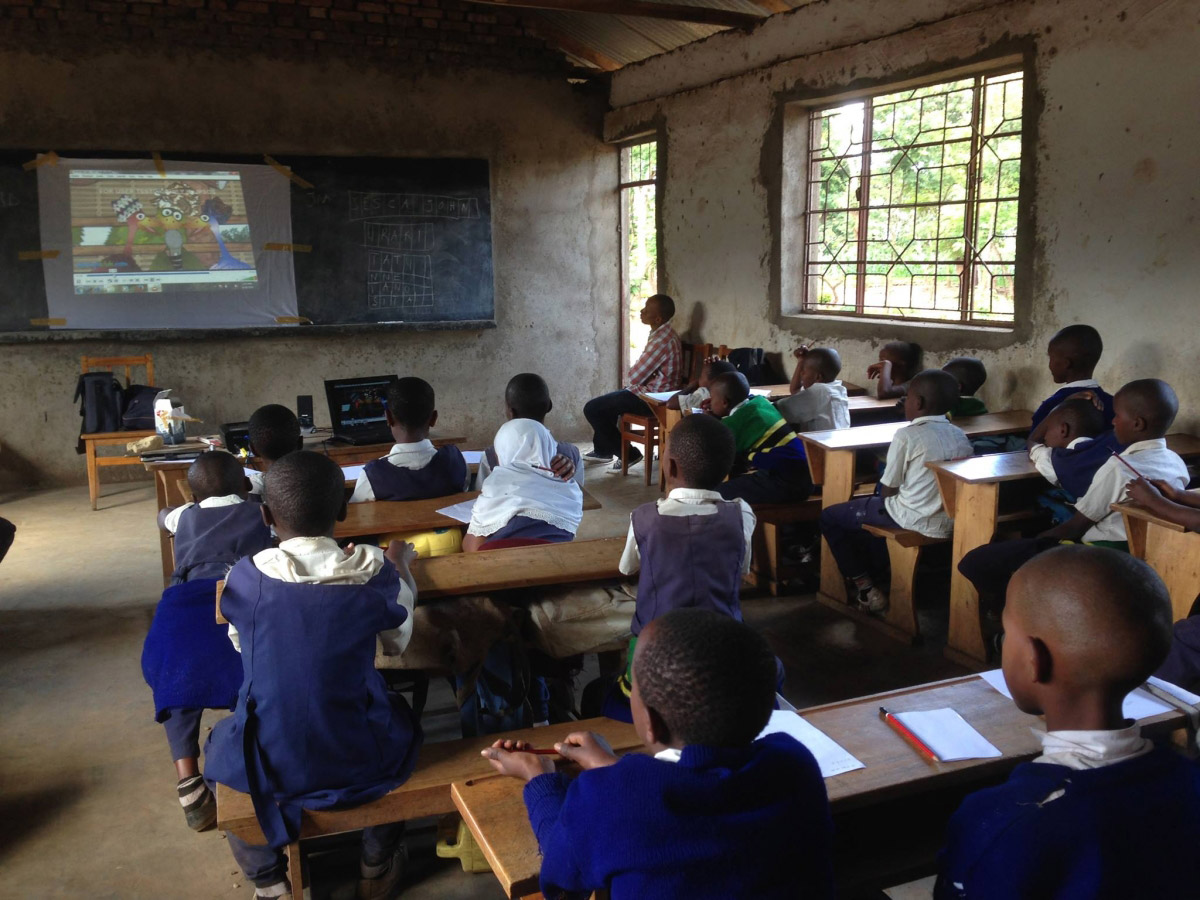
Across East African Community (EAC) member states, Kenya, Tanzania, and Uganda, education systems are undergoing profound transformation. New competency-based curricula, expanded access to schooling, and the growing influence of global knowledge economies are reshaping how young people learn and how teachers teach. Yet amid these reforms, a critical question often goes unasked: whose knowledge counts in our classrooms?
To respond to this question, let us look at Pluralism in education. It is recognising and valuing multiple ways of knowing, learning, and understanding the world. It is not a luxury for East Africa. It is a necessity.
For decades, education systems across the region have largely followed inherited colonial structures that privilege a narrow set of epistemologies, languages, and teaching traditions. Schools often emphasize standardized knowledge rooted primarily in Western academic frameworks while local knowledge systems, community histories, indigenous languages, and everyday forms of expertise remain marginal.
The result is a subtle but powerful disconnect. Many learners enter school with rich cultural knowledge grounded in community practices, local languages, and lived experience. Yet the classroom frequently requires them to suspend or even abandon those forms of knowing in favour of distant curricular frameworks.
When this happens, education risks becoming an exercise in assimilation rather than empowerment.
Why pluralism matters for East Africa’s future
Pluralistic education does not reject global knowledge. Rather, it creates space for dialogue between global, national, and local knowledge systems.
In practical terms, this means: teaching science alongside indigenous ecological knowledge relevant to climate resilience, integrating local histories and community narratives into social studies curricula, recognising multilingual realities by valuing African languages alongside global languages and encouraging critical dialogue rather than memorisation of singular “correct” perspectives.
For EAC countries facing complex development challenges, from climate change to urbanisation and technological transformation, solutions will not emerge from a single intellectual tradition. Innovation often arises when different knowledge systems interact.
Pluralistic classrooms cultivate precisely this capacity.
A foundation for social cohesion
Pluralism also has a deeper civic purpose. The East African region is culturally, linguistically, and religiously diverse. Schools are one of the few institutions where young people from different backgrounds encounter each other regularly.
An education system that acknowledges multiple perspectives prepares learners not only to tolerate difference but to engage with it constructively.
In societies where historical tensions sometimes surface along ethnic, linguistic, or political lines, pluralistic education becomes a quiet but powerful tool for social cohesion.
Aligning with current education reforms
Encouragingly, several EAC countries are already moving toward reforms that implicitly support pluralism. The competency-based curricula introduced in Kenya and Tanzania emphasise critical thinking, creativity, and problem-solving skills that thrive when learners engage multiple perspectives.
However, curriculum reform alone is not enough.
Pluralism must also shape teacher education, assessment systems, and classroom practice. Teachers need preparation to facilitate dialogue across knowledge traditions. Assessments must reward critical engagement rather than rote recall. And schools must build partnerships with communities whose knowledge has historically been excluded from formal education.
A call for educational imagination
The future of East Africa’s education systems should not be framed as a choice between tradition and modernity. That binary is misleading. The real challenge is how to bring diverse knowledge traditions into productive conversation.
Pluralism offers a way forward.
By embracing pluralistic education, EAC countries can cultivate learners who are intellectually confident, culturally grounded, and globally engaged. Such learners will not merely consume knowledge produced elsewhere; they will contribute new ideas rooted in the rich intellectual traditions of the region itself.
In a rapidly changing world, that may be East Africa’s greatest educational advantage.
Dr Tage Biswalo is an Assistant Professor specialising in Policy Studies at the Aga Khan University Institute for Educational Development, East Africa