With a background in telecoms engineering, I know one thing: traffic is traffic.
Whether it is cars on Morogoro Road or packets on a fibre cable, we are all trying to solve the same problem: how to move units efficiently through a constrained system.
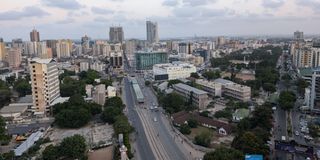
Both systems have highways, exchanges, bottlenecks, congestion, peak hours, and failures. Both obey queueing theory. Both punish bad designs brutally.
Which is why, every time I’m stuck in Dar traffic, I drift into a thought experiment: what if our transport planners were asked to design a telecom network? The answer is simple: the entire system would collapse before the first “hello” hit the airwaves.
Years ago, when I joined Celtel, we had a serious congestion issue on our backhaul links. Too much traffic was being hauled to the core network. A person in Bukoba calling another person in Bukoba had their call routed all the way to Dar for switching — then back to Bukoba. Imagine such a waste of resources. That’s zero intelligence.
But engineers fixed it. Distributed switching. You only bring traffic to the core if it needs core services. Everything else stays local.
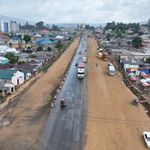
Now come to Dar. You want to go from Kunduchi to Pugu? First, you must go towards Wazo, Goba Njianne, Mbezi Mwisho, Kinyerezi, Ukonga and so on. A bypass could have shortened the journey tremendously. But our designs insist that, reagardless of destination, you must pass through the congestion zones. This is basically a 1990s GSM network that never got an upgrade.
There are many design sins in our planning which telecoms solved decades ago. One, transport planners treat the city centre like a mandatory switching node. Somehow, every journey must go through the CBD. Look at our BRT roads all running to the CBD from every direction.
Look at the SGR station pulling tens of thousands of people to the city centre. It is as if we asked, “Where is the most congested, expensive, least scalable place we can put this station?”
Telecom engineers abandoned this thinking years ago. We learned that forcing all traffic through one point is the fastest way to kill a network. So, we distributed switching. We localised traffic. We built intelligent routing.
If Dar roads worked like modern telecom networks, Mbezi Mwisho traffic would stay in Mbezi Mwisho. Ukonga traffic would stay in Ukonga. And the city centre would be a destination — not a connection point. Two, building more lanes instead of using better logic.
When a telecom network congests, we don’t build taller towers. We ask questions such as: Where is the bottleneck? What’s the traffic pattern? Can we reroute? Can we shape traffic? But our city planners immediately rush to provide a “concrete therapy.”
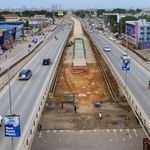
They see congestion and prescribe a 200‑billion‑shilling flyover. They widen roads. But extra capacity without intelligence is just a recipe for a bigger queue.
Three, our one‑giant‑highway syndrome. We love a single point of failure. Morogoro Road. Nyerere Road. Bagamoyo Road. These are major liabilities. Telecom engineers learned early that single‑path routing is suicide. That’s why we have redundancy, load balancing, MPLS, dynamic routing. If one path fails, traffic shifts automatically.
Imagine if Dar roads worked like OSPF. A jam on one highway? No problem — traffic reroutes through secondary paths. Instead, we get the opposite: if one highway jams, every alternative road also jams because they all funnel into the same doomed intersections.
Four, long‑distance traffic through short‑distance systems. We use expensive urban road space to carry traffic that should never be there in the first place. Transit lorries, cross‑city travellers, and commuters all fight for the same lanes.
In telecoms, this would be like routing international traffic through neighbourhood WiFi routers. Instead, engineers build bypasses. Backbones. Ring architectures. Traffic that doesn’t need to touch the core never touches it.
Dar, however, lacks true bypasses. No functional orbital roads. No serious freight corridors that avoid residential zones. Everything piles into the same arteries.
Five, failure to decentralise destinations. Telecom networks distribute content closer to users through edge computing and caching. That’s why Netflix and YouTube load fast even at peak hours. The data is already near you. Dar does the opposite. J
obs, services, offices, terminals, and power remain concentrated. So, people travel farther than necessary, more often than necessary, using the most expensive infrastructure possible.
It’s the urban equivalent of sending every letter to the CBD before delivering it next door. That’s why, although we have almost one‑tenth the vehicle density of Los Angeles, Dar is three‑times more congested.
If telecom engineers worked like this, we would still be on dial‑up.
The tragedy is having planners stuck in a mental model telecom engineers abandoned decades ago. We confuse movement with progress. We treat congestion as a problem that can only be solved by more construction, instead of looking at it as a systems problem.
In telecoms we learn that we cannot outbuild a bad network design. Building more lanes and more flyovers won’t solve our congestion problems. We probably should get good transmission and network engineers in our planning teams. That will revolutionise our infrastructure designs.
Register to begin your journey to our premium contentSubscribe for full access to premium content