Why Tanzania’s economy may withstand the oil shock

New Content Item (1)

The fires of the Middle East are in their sixth week. Across the Persian Gulf, the world watches a grinding, three-way psychological chess match between Washington, Jerusalem, and Tehran.

The dynamics are disparate. In Washington, Donald Trump finds himself haunted by the political spectre of a mid-term election year: he needs the war to end soon. In Jerusalem, Israel, having claimed only 50 percent of its pre-war objectives are achieved, views time as an ally. Under the American security umbrella, every extra day of conflict is an extra day to dismantle Iranian capabilities. Meanwhile, Tehran plays the long game. Despite 15,000 targets being struck, 2,000 dead, and 61,000 buildings being damaged, their strategy is to make the price of aggression so high that they are never targeted again.
Tehran master-card is the closure of the Strait of Hormuz. This narrow choke-point carries 20 percent of the world’s oil. Its disruption has already sent global markets into a tailspin.

Two weeks ago, while sitting on one panel, I was asked the inevitable question: How will this affect Tanzania? When I argued that the impact would be “mild” in the short term, the foreigners in the room looked at me with genuine amazement. How could an oil-importing African nation remain unscathed while the world’s energy arteries are being severed?

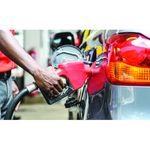
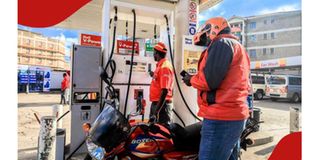
Some time has passed since that panel, and reality has begun to bite. Fuel prices in Tanzania have jumped by about Sh1,000 per litre, climbing to above Sh3,800 in Dar es Salaam. Does this invalidate my position?

I remain sceptical of this hike. While nations in Asia are taking drastic measures to preserve fuel—Tanzania has claimed a three-month strategic reserve. I suspect the current price surge is less about a physical shortage and more about a government strategy to force citizens to self-regulate consumption through the pain of the pocketbook.

To understand why I maintain a “mild” outlook, we must look past the headlines and into the structural DNA of the Tanzanian economy. We can analyse this through five critical categories:

The energy decoupling

Tanzania’s greatest defence is, ironically, its lack of energy sophistication. While we import about 5 billion litres of fuel annually, that represents only about 10 percent of our total energy supply. A staggering 85 percent of our energy still comes from biomass.

Crucially, we have “de-oiled” our electricity grid. We no longer rely on diesel or HFO for the lights to stay on. If the imported LPG (cooking gas) vanishes due to the Hormuz blockade, urban dwellers—two-thirds of whom already use charcoal—will simply pivot back to charcoal. It is environmentally tragic, but economically resilient.

Industrial insulation

We are not yet a manufacturing-heavy economy. Manufacturing contributes only 9 percent to our GDP. More importantly, our factories don’t run on oil: diesel (12 percent) is used almost exclusively for backup generators. Thus, the Tanzanian factory floor is, for the most part, immune to the impact from the Persian Gulf.

The Chinese connection

We import the lion’s share of our consumer goods from China. Unlike Western manufacturers, China’s industrial base is underpinned by coal. While the Hormuz crisis impacts global logistics, Iran has notably allowed ships destined for China to pass unimpeded. This means the unit cost of our imported goods will see only marginal increases.

Logistics

This is our Achilles’ heel. Imported fuel accounts for nearly 100 percent of our transportation. When the tank is expensive, everything moved by a truck becomes expensive. However, there is a “Tanzanian Way” that defies global logic. The food feeding Dar, for example, comes from many regions, thus moderating logistics cost. Our supply chains are short, local, and informal. This acts as a shock-absorber against global freight spikes.

Monetary discipline

Tanzania has maintained a remarkably stable inflation rate below 5 percent for over a decade. Currently, it sits under 4 percent. Even if logistics costs push inflation up by 2 percent, we remain well within the “safe zone” for an emerging economy. I do not see the “doomsday scenarios” of $150-$200 per barrel on the near horizon for us.

I think we will survive this shock without too much disruption. Our lack of structural economic sophistication is our greatest defense. Because we are not deeply integrated with global energy chains, and because we maintain a basic dependence on locally produced food, we can absorb shocks that can shatter more advanced nations.

We saw this during the COVID-19 crisis. While the world locked down and economies imploded, Tanzania emerged largely unscathed, despite the total collapse of sectors such as tourism.

Beyond the short term, the question is one of duration. No one truly wants a long war. Nations like China, Pakistan and India are already applying pressure to stop the bleeding. I think it is unlikely this conflict will persist for another three months.

For Tanzanians, while we will feel the pinch at the pump, but the fundamental pillars of our life—our power, our food, and our industry—are anchored in our own soil, not the shifting sands of the Middle East.

I think we will be fine.