Why your contribution to the fight against HIV/Aids cannot wait
By Stephen Mhando
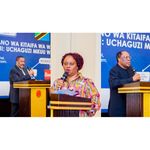
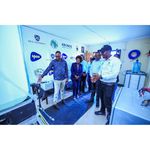
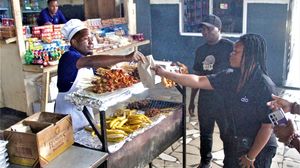
At this year’s Kili Marathon in Moshi, the GGML Kilimanjaro Challenge Against HIV/Aids Trust set up a booth at the People’s Expo, a first for the Kili Challenge at any public forum of this kind.
For three days, the team engaged with runners, spectators, and community members, raising awareness of the Trust’s work and welcoming pledges in support of Tanzania’s national HIV/Aids response. It was an energising activation. It was also a revealing one.
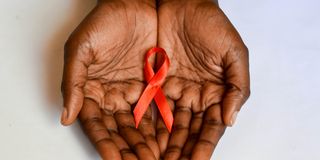
According to the Tanzania HIV Impact Survey (THIS) 2022–2023, released in 2024, conducted by TACAIDS and the National Bureau of Statistics, HIV prevalence among adults in Tanzania stands at 4.4 percent, representing approximately 1.548 million adults living with the virus. Each year, around 60,000 new infections are recorded among adults. These are not abstract figures. They are people in our communities, our workplaces, our families. And yet, at a public expo in the shadow of Kilimanjaro, with a free HIV test available right there at the booth in partnership with TACAIDS, some visitors chose to walk away.
One exchange stayed with the team. A visitor, upon being invited to test, declined with a Swahili phrase that has lingered: “Bora nisijue. Nikijua ndo nitaanza kuumwa.” That means “Better not to know. Because once I know, that is when I will get sick.”
It is the kind of logic that is difficult to argue with in the moment, precisely because it is so deeply human. It is also, in the context of what we know about treatment, testing, and care, precisely the kind of thinking that costs lives. The same survey found that 82.7 percent of adults living with HIV in Tanzania are aware of their status, meaning that for nearly one in five people living with the virus, the picture looks a lot like that visitor at the booth: unaware, and perhaps preferring it that way. Stigma and wilful ignorance are not relics of an earlier era. They are present, alive, and standing at our expos declining a free test.
This is precisely why the work of the Kili Trust cannot slow down. Since 2002, Geita Gold Mine Limited has channelled resources through the Trust toward HIV prevention, treatment, and care across Tanzania, in partnership with TACAIDS. The Kili Challenge exists to mobilise individuals and organisations, from the private sector, civil society, and beyond, to contribute to that effort. Because the national response cannot rest on the government alone. Ni Jukumu Letu Sote.
While in Moshi, the team had the opportunity to visit Kikundi Cha Jali Afya Yako Epuka Maambukizi Mapya Fata Ushauri Nasaha (KIJAEFA), one of the Trust’s incoming beneficiaries, and the visit served as a powerful reminder of what that contribution means in practice. KIJAEFA was founded by a woman known warmly as Mama Quida, in collaboration with a doctor working in the community. Established in 2007 in the villages of Magongini, Kikavu, and New Land on the Tanzania Planting Company (TPC) Sugar Land reserve, the group came into being at a time when people were dying without explanation and disclosure was rare. When members were educated on the importance of knowing and sharing their status, many came forward. Today, KIJAEFA’s 23 members, mostly women and some retired TPC workers, are not waiting to be saved. They are producing artisanal soap and, with the support they hope to receive through the Kili Challenge, will move into fortified maize flour production, seek Tanzania Bureau of Standard (TBS) certification, and supply schools to address malnutrition, while using digital platforms to extend their reach.
KIJAEFA has survived largely on intermittent support, a one-million-shilling contribution from the local government in 2014, and occasional small individual donations. What the Kili Trust’s support represents to them is continuity and growth. It is the difference between a group that endures and a group that transforms.
That is the lifeline a pledge to the Kili Challenge makes possible. What if we gave up?