Harnessing data to sustain Katuma River’s ecosystem

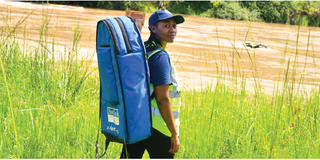
Water Resources Manager Nasra Nassoro at the Lake Rukwa Basin Water Board (LRBWB).

By Asha Msoka and Bruno Richard

In the soft morning light along the Katuma River in western Tanzania, Nasra Nassoro stands knee-deep in the flowing water, calmly directing her team as they lower a flow monitor into place.

The device hums gently, recording the river’s speed, depth, and volume.

For Nasra, Water Resources Man­ager at the Lake Rukwa Basin Water Board (LRBWB), this is more than routine fieldwork. It is a moment of quiet triumph.

“I have worked here as a hydrologist for 15 years,” Nasra reflects.

“This area has unique potential in terms of biodiversity richness, but we struggled to manage our water resources across the Katuma catch­ment and maximise its benefits.

The IKI Katuma project has com­pletely transformed our ability to understand and make informed deci­sions,” she adds.

The Katuma River is the beating heart of one of Tanzania’s most ecolog­ically diverse and economically vital regions.

Rising in the Mwese and Mpanda Mountains on the Ufipa Plateau, it winds through Katavi National Park, one of the country’s most untouched and wildlife-rich protected areas, before emptying into Lake Rukwa.

Seasonal floods recharge the ecosys­tem and sustain habitats that support Tanzania’s growing tourism sector.

Beyond the park, the Katuma sup­ports over one million people who rely on it for clean drinking water, small-scale irrigation, livestock watering, fisheries, and everyday enterprises.

The RS5 Acoustic Doppler Current Profiler positioned in the Katuma River to collect high-resolution flow measurements for water resources assessment.

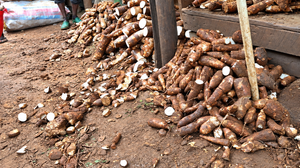
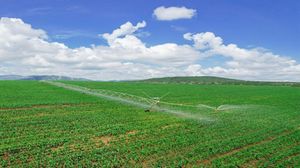
In recent years, the catchment has also become a strategic national food basket, playing a key role in food secu­rity and export earnings.

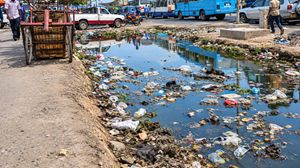
However, the river’s significance has also brought growing pressure. Rapid agricultural expansion, illegal water abstraction, widespread deforestation, informal fishing dams, and artisanal gold mining have disrupted natural flows, increasing sedimentation and degrading water quality and quantity.

These pressures have intensified competition among water users and have threatened the park’s wildlife.

For years, the Lake Rukwa Basin Water Board’s faced challenges due to limited access to reliable data, ham­pering effective river management.

Monitoring stations were sparse, and sections of the river lacked meas­urements altogether.

Field visits were often time-con­suming and occasionally dangerous. Consequently, water permits, alloca­tions, and enforcement decisions were often reactive and based on incom­plete information.

“Without accurate data, estimating available water or safe allocation levels felt like guesswork,” Nasra explains.

Turning data into better water management

A turning point came in 2024 with the launch of the International Cli­mate Initiative (IKI)-funded Katuma project, implemented by SNV in part­nership with GIZ, the Lake Rukwa Basin Water Board, and local stake­holders.

From the earliest discussions, Nasra and her colleagues helped shape the initiative, ensuring it addressed real on-the-ground needs.

After researching technologies suited to the catchment’s conditions, SNV selected an Acoustic Doppler Current Profiler (ADCP), a portable device that delivers accurate discharge data, following its research into robust technologies suited to the catchment’s conditions.

Crucially, the project focused on building users’ skills, confidence, and independence.

Nasra and her team of more than 10 hydrologists received intensive hands-on training and ongoing mentoring, covering the full data lifecycle: field protocols, collection, storage, analysis, interpretation, reporting, and dissem­ination.

For the first time, the Board gained access to reliable, real-time hydrolog­ical information.

Teams can now update rating curves, track seasonal flow patterns, and generate evidence to guide water abstraction permits, flood-risk plan­ning, and infrastructure investments.

The improved data also allows them to anticipate dry-season shortages, reduce conflicts between upstream irrigators and downstream needs, guide farmers toward more sustain­able practices, and safeguard envi­ronmental flows essential for Katavi National Park’s ecosystem.

A field assistant paddles a canoe while towing the RS5 ADCP/hydrological instrument across the lake to measure water depth and volume.

Community becomes steward of the river

Nasra played a pivotal mentoring role throughout. She coordinated monitoring schedules across the catchment, organised field teams, and ensured colleagues were trained in both data handling and communica­tion.

Over time, Nasra’s own leadership grew alongside her technical expertise, leading to her well-earned promotion to Water Resources Manager.

The benefits ripple outward to com­munities through trained gauge read­ers like Hilary Daudi Kapenegele, a member of the Katuma Water Users Association.

“I never fully realised how this data would also benefit us directly, at com­munity and individual levels, as farm­ers and livestock keepers,” Kapenegele shares, adding: “Now we understand its value, and we discuss findings in vil­lage meetings to decide on necessary actions,”

The project is also developing acces­sible visual tools, such as clear charts, dashboards, and simple graphics that make complex hydrological infor­mation understandable to everyone, including schoolchildren.

Kapenegele notes proudly: “We hear that the project will create appealing visuals so that even a second-grade child can grasp the water situation in the Katuma River. I feel proud to be a gauge reader for our village.”

These efforts are cultivating a cul­ture of shared stewardship. Commu­nities are becoming informed partners in managing the catchment rather than passive recipients of regulations.

A replicable model ready for water basins

The Katuma experience was inten­tionally designed as a replicable model. By investing in local institutions and professionals like Nasra, the project offers an approach that could be adapt­ed Tanzania’s nine other water basins.

Reliable data, skilled teams, and engaged communities provide a strong foundation for sustainable manage­ment anywhere.

Challenges remain

Climate variability, population growth, and increasing demand con­tinue to pressure the river.

Nasra remains realistic: “Katuma has improved significantly. We are not where we once were, but not yet where we aim to be. More investment is need­ed, but now we have the evidence and confidence in advocating for it.”

The IKI Katuma project demon­strates the power of targeted, peo­ple-centred support. Modern equip­ment opens possibilities, but it is train­ing, mentoring, and leadership devel­opment that turns tools into enduring change.

As Tanzania confronts escalating water challenges, Nasra’s story offers both inspiration and a clear pathway toward integrated, evidence-based water management, fair water alloca­tion, flood and drought resilience, and long-term climate adaptation.

This project is supported by the International Climate Initiative (IKI) of the Federal Government of Germany. Within the Federal Gov­ernment, the IKI is anchored in the Federal Ministry for the Envi­ronment, Climate Action, Nature Conservation and Nuclear Safety (BMUKN). Selected individual pro­jects are also the responsibility of the Federal Foreign Office (AA).