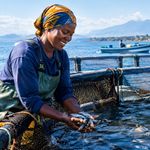
Since 1970, the Japan International Cooperation Agency (JICA) has provided nationwide support to Tanzania through both soft and hard assistance schemes under two major programs. These initiatives have focused on improving productivity, commercialization, and industrialization in the agriculture sector, including fisheries and livestock, in alignment with the country’s development priorities, thereby contributing to economic growth and the social development of Tanzania.
Happy Nane Nane to all the hardworking farmers of Tanzania!
The Japan International Cooperation Agency (JICA) recognizes and appreciates the dedication of farmers and the vital role they play in feeding the nation and building a more sustainable future. We are proud to work alongside farmers and the Government of Tanzania to support agricultural development and promote co-created innovative solutions that empower farming communities.
JICA remains committed to strengthening its support for Tanzania’s agricultural sector by enhancing productivity, improving livelihoods, and developing human resources, guided by the spirit of partnership and shared growth.
Agriculture is a key sector for achieving the goals of Tanzania Vision 2050 and driving the country’s future economic growth. At the same time, the sector faces various challenges, including climate change and food insecurity.
Drawing on JICA’s long history of cooperation in Tanzania, we will continue to foster co-creation and collaboration with the Government of Tanzania, the private sector, development partners, farmers, and other stakeholders to advance sustainable agricultural development.
“Together, let us build strong partnerships that will shape the future of agriculture and ensure prosperity for generations to come.
Happy Nane Nane Day!”
Program 1: Promoting Commercialization / Industrialization of Agriculture
Project for Empowerment and Promotion of Agriculture Through Use of SHEP Approach (TANSHEP2) : April 2025-October 2029
JICA’s SHEP Approach promotes the farmers to conduct market survey before starting cultivation to decide which crops to produce, so that the farmers can effectively increase their income. With the concept of “Anzia Sokoni, Malizia Shambani, Kwa Kipato Zaidi”, Ministry of Agriculture (MoA) and President’s Office - Regional Administration and Local Government (PO-RALG) in collaboration with JICA has started the 2nd phase of the project, aiming to disseminate the SHEP approach nationwide.
Tanzania Agricultural Inputs Support Project (TAISP): April 2023-June 2028 (Co-finance with AfDB)
TAISP is a 70 million USD concessional loan project which would sustain the availability of agricultural inputs mainly on quality seeds and fertilizer, aiming to improve productivity and profitability of priority crops (wheat, sunflower, and rice). The estimated total number of direct beneficiaries are 1,200,000 households, equivalent to 4,800,000 persons, in which 40 percent are women and youths.
Agricultural and Rural Development Two Step Loan Project (TSL): January 2025- January 2030
JICA is collaborating with Tanzania Agricultural Development Bank (TADB) for the provision of medium and long-term sub-loans to a group of farmers and other beneficiaries. The project is expected to contribute to the improvement of agricultural productivity through access to affordable capital. (Target crops: rice, maize, wheat, sunflower/ horticulture crops for women & youth).
Program 2: Strengthening Rice Productions
The Project for Strengthening Capacities of Stakeholders of Rice Industry Development (TANRICE3): June 2023-June 2028
In the 1970s, JICA has established the Kilimanjaro Agricultural Training Center (KATC) to strengthen the function system of training methods suitable for farmers’ fields. Then, through technical cooperation projects, TANRICE1 and TANRICE2, JICA has provided technical training on rice cultivation nationwide mainly in the irrigated areas, which increased the productivity of farmers from 3.2 t/ha to 4.5 t/ha. In the ongoing TANRICE3, JICA is working to improve productivity in rainfed rice production areas, in addition to training in irrigated rice cultivation technology. It is expected that the number of farmers adopting the rice production techniques recommended by this project will increase, which would lead to more rice production in Tanzania.
Agricultural Mechanization Advisor: May 2024-May 2027
JICA has dispatched experts to support the promotion of agriculture mechanization while strengthening the functions and sustainability of AFICAT*. The project is expected to contribute to the improvement of agricultural productivity in Tanzania.
*AFICAT (Africa Field Innovation Center for Agricultural Technology) is an Initiative for promoting advanced technology and agricultural mechanization in Sub Saharan Africa through public-private partnership.
EAC Regional Rice Development Strategy Promotion: April 2026 – April 2029
The East African Community (EAC) has adopted the East African Rice Development Strategy (ERDS), which aims to double rice production in the region by 2030. To support this goal, a JICA expert is working to strengthen EAC’s capacity to implement the strategy and promote rice trade within the region.
3. Others
The Project for Co-designing Neglected Zoonosis Intervention through One-Health, Education, and Public-Private Partnership: July 2024-June 2029
A project which aims to address the challenges posed by neglected zoonotic diseases such as brucellosis and zoonotic tuberculosis which are prevalent in Tanzania’s livestock sector. The project is implemented through collaboration of the Japanese universities and Tanzanian universities, aiming to establish a brucellosis and zoonotic tuberculosis control approach in the Morogoro Region.