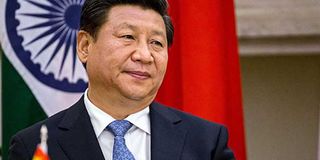
The One Road, One Belt initiative was initiated by the Chinese President, Mr Xi Jinping, in 2013, seeking to build trade routes through the creation of a network of railways, roads, pipelines, and utility grids, which would link China and Central Asia, West Asia, and parts of South Asia and East Africa at an estimated cost of $4-8 trillion.
Dar es Salaam. The Chinese Embassy in Tanzania is planning to organise a forum, which will deliberate on how Tanzania can benefit from China’s ‘One Road, One Belt’ initiative.
The One Road, One Belt initiative was initiated by the Chinese President, Mr Xi Jinping, in 2013, seeking to build trade routes through the creation of a network of railways, roads, pipelines, and utility grids, which would link China and Central Asia, West Asia, and parts of South Asia and East Africa at an estimated cost of $4-8 trillion.
So far, more than 60 countries, with a combined gross domestic product of $21 trillion, have expressed interest in participating in the plan.
In attendance at the planned Dar es Salaam event will be China-based Tanzanian students and their local counterparts, members of the business community, economic experts and officials from the Chinese and Tanzanian governments, a Tanzanian student who is currently pursuing a PhD in International Relations at Shandong University in China, Mr Suleiman Haji, said.
“We (students studying in China) have asked the Chinese Embassy in Tanzania to organise the forum after realising that the ‘One Road One Belt’ initiative is not well known in the country,” he explained.
He said the initiative may play an important role in Tanzania’s economic development if implemented well.
“Compared to other African countries, Tanzania has geographical advantage when it comes to implementation of the initiative. The huge land for investments and settlements, Indian Ocean and three major lakes as well as being surrounded by landlocked countries gives it more advantage,” he noted.
Also being a trade partner with the Eastern and Southern regional blocks makes Tanzania a more competitive country for the initiative.
According to him, if Tanzania is to implement the initiative, China will help her to construct rail and road infrastructures, ports, airports, Export Processing Zones and Industries.
However, Tanzania is not alone implementing the initiative, according to him, Kenya, Ethiopia, Djibouti and Egypt are among the African countries that are directly benefiting from the six-economic corridor project, spanning 68 countries and covering over 60 per cent of the world population.
“Tanzanians must be aware that it is not alone though it has significant advantages. Other countries like Ethiopia are ahead of us and are doing well,” he noted.
According to him, the initiative will also facilitate major projects in the power and financing sectors.
So far, the Chinese Ambassador, Ms Wang Ke, is working on the envisaged forum.
“I am looking forward to setting a date that will be favourable for both students who are in China and those who are taking their studies in Tanzania,” she noted.
Experts are there to explain about the initiative and its important role for Tanzanian development and the government is well supportive, according to her.
In advance, she explained the forum is set be conducted in December this year or July 2019, when all students will be on their holidays.